Salmon Sushi Bake
I still remember the first time I made Salmon Sushi Bake for a crowd: the apartment smelled like warm rice and toasted sesame, the oven hummed, and by the time I slid a tray out everyone was hovering like it was the most important thing on Earth. It is, in my opinion, the best kind…
I still remember the first time I made Salmon Sushi Bake for a crowd: the apartment smelled like warm rice and toasted sesame, the oven hummed, and by the time I slid a tray out everyone was hovering like it was the most important thing on Earth. It is, in my opinion, the best kind of comfort food that pretends to be fancy. If you want a compact, crowd-pleasing form, I once adapted it into baked salmon sushi cups and everyone lost their minds. This version, though, is the one I keep returning to: Salmon Sushi Bake that is creamy, slightly spicy, and just salty enough to make you reach for a second piece.
How I First Fell for This Dish
My recipe uses 2 cups dry sushi rice, rinsed, cooked with 2 cups water so the ratio is simple and forgiving. Rinse the sushi rice under cold water until the water runs clear, then cook the rice with 2 cups of water in a rice cooker or on the stovetop according to package directions. The slightly vinegared rice is the grounding element, so once it is done I transfer the rice to a large bowl, pour 1/4 cup seasoned rice vinegar over it, and gently fold in; let it cool slightly before touching it so you do not mash the grains. While that is cooling, I preheat the oven to 400°F (200°C) because the salmon needs to be ready before assembly.
The Secret Behind Perfect Salmon Sushi Bake
A lot of the magic comes from the salmon and the creamy topping. I season a 1 1/2 lb salmon fillet with 1/2 tsp salt, 1/2 tsp pepper, and 1/2 tsp garlic powder, then bake it for 15-20 minutes until cooked through. Let the salmon cool and then flake it into a bowl; this is where texture matters. I mix in 8 oz imitation crab meat, chopped, with 1/2 cup Japanese mayonnaise, 4 oz cream cheese softened, 1 Tbsp sriracha, and 1 Tbsp low sodium soy sauce until everything is combined. The cream cheese gives it body, the Japanese mayo brings that slightly sweet umami flavor, and the sriracha adds a friendly heat. If you are curious about a straightforward take on the idea, this is my riff on the classic salmon sushi bake I first saw online.
Building the Bake: Ingredients and What They Do
When I tell friends what goes into this, they always want the full list, so I say it out loud like a little spell: 2 cups dry sushi rice, rinsed, 2 cups water, 1/4 cup seasoned rice vinegar, 1/2 tsp salt, 1/2 tsp pepper, 1/2 tsp garlic powder, 1 1/2 lb salmon fillet, 8 oz imitation crab meat, chopped, 1/2 cup Japanese mayonnaise, 4 oz cream cheese softened, 1 Tbsp sriracha, 1 Tbsp low sodium soy sauce, 2 Tbsp furikake, Spicy mayo made simply with mayo, sriracha, and a squeeze of lime juice, green onion chopped, sesame seeds, roasted seaweed, avocado slices, cucumber, and a simple Halal eel sauce made from soy sauce, sugar, and water reduced. I lightly press the cooled rice into a 9×13 baking dish and sprinkle 2 Tbsp furikake over the top before spooning the salmon mixture across it; the furikake is a tiny but decisive flavor bomb—salty, fishy, and crunchy.
Getting the Texture Just Right
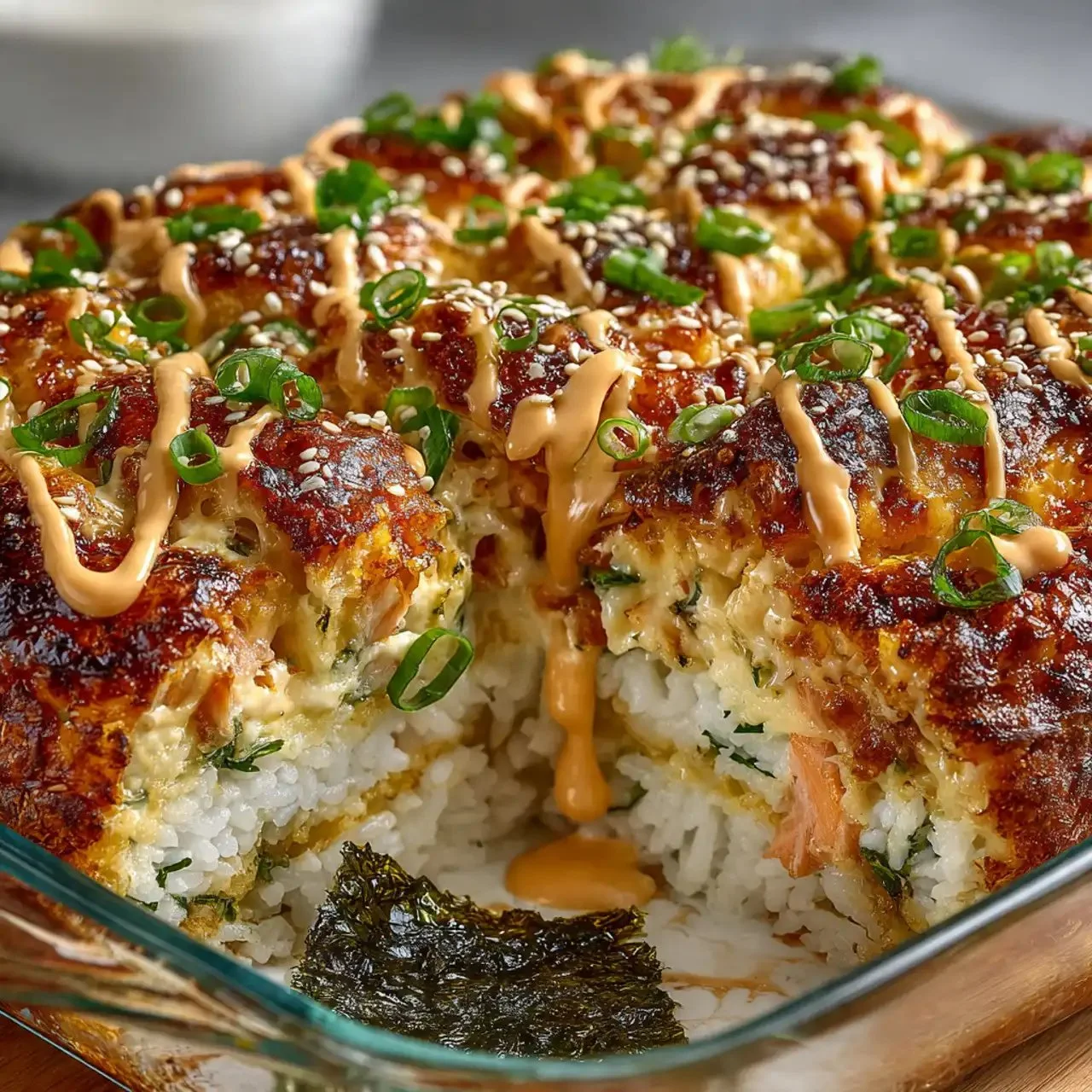
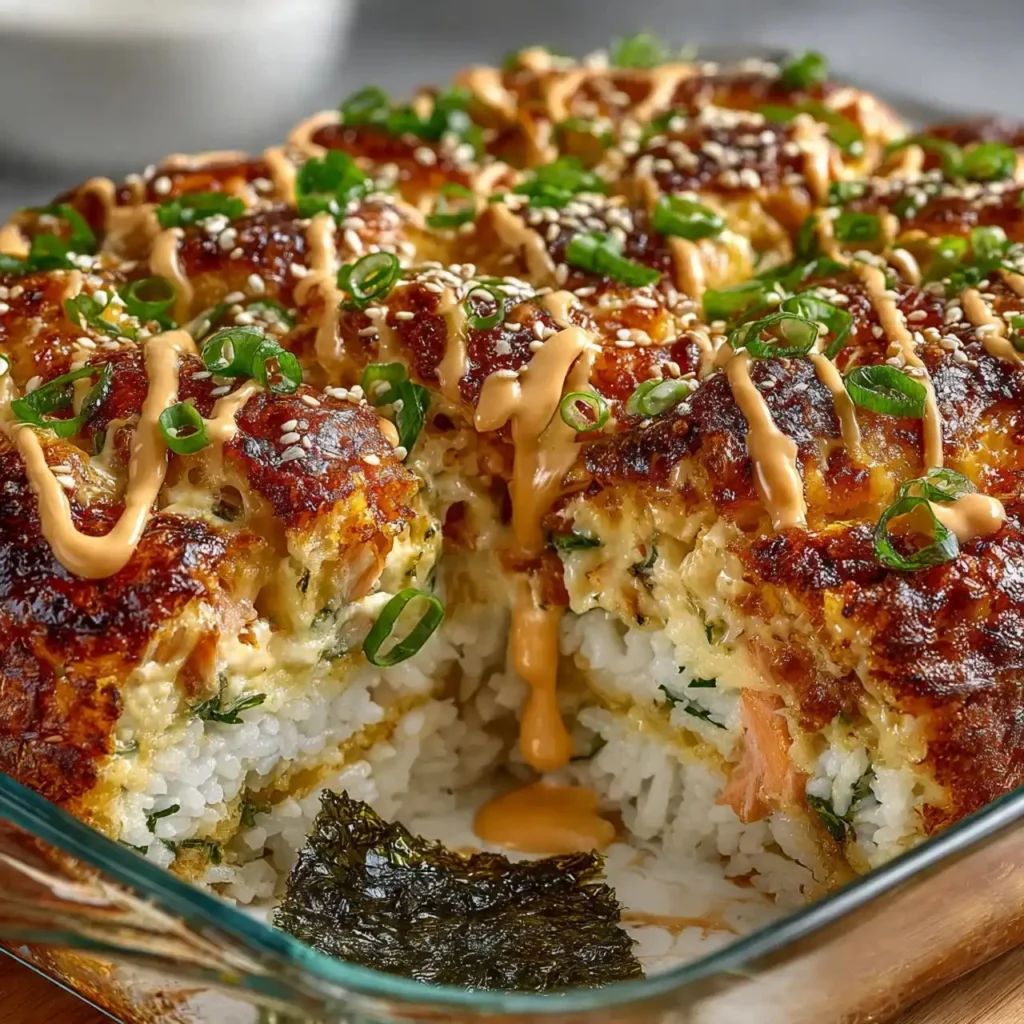
You know it is done right when the top bubbles and gets a little golden under the broiler and the rice layer holds together when you scoop. After spreading the salmon-crab mixture over the rice, I put the tray under the broiler for about 4 minutes until it is golden and bubbly. A couple of tricks I always follow: let the rice cool slightly before pressing so the grains stay distinct, use softened cream cheese so the mixture is silky and mixes uniformly, and watch the broiler like a hawk because it goes from golden to burnt in thirty seconds. If you want more heat, I sometimes follow a spicy version that bumps the sriracha and adds toasted chili oil for aroma. When it shimmers and the top makes a soft sizzle as you pull it from the oven, it is calling your name.
I have three small hands-on tips that save the day: first, season the salmon just enough—remember the mayo and soy sauce will add salt; second, make the spicy mayo by mixing plain mayo with sriracha and a splash of lime juice to cut the richness; third, if you want a saucy glaze, whisk soy sauce with a little sugar and water and simmer until syrupy to mimic a Halal eel sauce. These are things I learned after a burnt batch, a bland batch, and a too-sweet batch respectively.
Finishing Touches and Leftovers
The finishing touches are the best because they are joyful and colorful. Garnish the broiled bake with that spicy mayo, a scattering of green onions, and sesame seeds. Serve with squares of roasted seaweed for scooping and slices of avocado and cucumber for cream and crunch. The contrast between the warm, creamy topping and the cool avocado is what people keep raving about. If you are wondering how to know when it is done right, listen for the gentle bubble and look for the browned edges; the salmon filling should be hot through but not dried out.
If you need to make this ahead, assemble everything except broiling and keep it covered in the fridge for up to a day; when guests arrive, broil for the 4 minutes and serve. Leftovers keep well in an airtight container for up to three days and revive nicely under a 350°F oven for 8-10 minutes, or gently crisped in a skillet. I sometimes turn leftovers into sushi bowls the next day with fresh cucumber, more furikake, and a drizzle of the homemade eel sauce. For variations, swap the salmon for smoked salmon or a can of tuna for a pantry-friendly option, or make a vegetarian version with roasted shiitake mushrooms and a touch of miso for umami. Another playful twist I enjoy is adding tempura flakes for crunch on top just before serving.
I love this recipe because it feels like a celebration you can make on a Wednesday. It fills the kitchen with scents that mean comfort: warm rice, toasted sesame, tangy vinegar, and the faint char of broiled mayo. It is approachable but impressive, simple ingredients made into something layered and special. There is nothing pretentious about it, only honest, crowd-pleasing flavor.
Conclusion
If you want to see the viral origin that inspired many of these tweaks, I often check back to the version on One Happy Bite for ideas. For a clear how-to and a slightly different technique, this FeedMi Recipes guide is a handy reference. Give it a try, and when you pull that tray from the oven and hear the little sizzle, you will know you made something worth making again.
Salmon Sushi Bake
Ingredients
Method
- Rinse the sushi rice under cold water until the water runs clear.
- Cook the rice with 2 cups of water in a rice cooker or on the stovetop according to package directions.
- Transfer cooked rice to a large bowl, pour 1/4 cup seasoned rice vinegar over it, and gently fold in. Let it cool slightly.
- Preheat the oven to 400°F (200°C).
- Season the salmon fillet with salt, pepper, and garlic powder.
- Bake the salmon for 15-20 minutes until cooked through.
- Let the salmon cool and then flake it into a bowl.
- Mix flaked salmon with chopped imitation crab, Japanese mayonnaise, softened cream cheese, sriracha, and soy sauce until combined.
- Press cooled sushi rice into a 9x13 baking dish and sprinkle with furikake.
- Spoon the salmon-crab mixture across the rice layer.
- Broil in the oven for about 4 minutes until it is golden and bubbly.
- Garnish with spicy mayo, green onions, and sesame seeds.
- Serve with roasted seaweed, avocado slices, and cucumber.