Savoury Cheesecake with Roasted Beetroot
How I Stumbled Into This There are recipes that feel like celebration and then there are recipes that quietly become part of your weekday rotation because they are that good. My Savoury Cheesecake with Roasted Beetroot started as a weekend experiment when I wanted something that looked impressive on a plate but could be made…
How I Stumbled Into This
There are recipes that feel like celebration and then there are recipes that quietly become part of your weekday rotation because they are that good. My Savoury Cheesecake with Roasted Beetroot started as a weekend experiment when I wanted something that looked impressive on a plate but could be made mostly ahead. I remember peeling 400g shallots, peeled, and 8 garlic cloves, peeled, and thinking I had perhaps bitten off more than I could chew, only to end up with the most silky, earthy topping. If you like the kind of roasting that fills the house with an almost sweet perfume, this will feel familiar — the scent of caramelising shallots and the earthy perfume of 150g raw beetroot, cut into wedges, is impossible to resist. If you need a side to pair with it, I often reach for something autumnal like maple roasted parsnips because the textures and warmth play so nicely together.
The Heart of the Dish
At its core this is not about one showy ingredient but the way a few small decisions change texture and balance. For the base I use 3 slices gluten-free sliced bread blitzed to fine crumbs and mixed with 70g Pecorino cheese, finely grated, and 70g unsalted butter, melted. A little black pepper, press into a 22cm springform tin and bake until golden, and you get a nutty, crisp foundation. For the filling I lean on three soft cheeses: 300g full fat soft cheese blended with 300g feta, at room temperature, and 250g lighter mascarpone, at room temperature. Fold in 4 eggs, beaten, the bright lift of 1 lemon, zested, 2 spring onions, finely chopped, and 1 tbsp thyme leaves. The result is tangy, rich and utterly different from a sweet cheesecake — but just as satisfying.
Cooking It Through
I always start by preheating the oven to 200°C (180°C fan) and greasing a 22cm springform tin so I am ready to go. The roasting is where the magic begins: I toss shallots and garlic with 1 tbsp olive oil, and season with salt and pepper. In a separate bowl I do the same with the beetroot because I like to keep their flavors distinct while they roast. Then I spread the vegetables in a roasting dish, keeping beetroot separate, and cover with foil. They go into the oven for 40 minutes covered, which lets the shallots sweat and caramelise without drying out, and then I uncover and roast for another 10 minutes until soft. Cooling them completely and then chilling helps the juices settle; cold roasted vegetables make a beautiful, tidy topping later. While the vegetables chill, I blitz the gluten-free bread to fine crumbs and mix with the pecorino, melted butter, and a little black pepper. Press that mix into the prepared tin base and bake for 15-20 minutes until golden, then let it cool slightly.
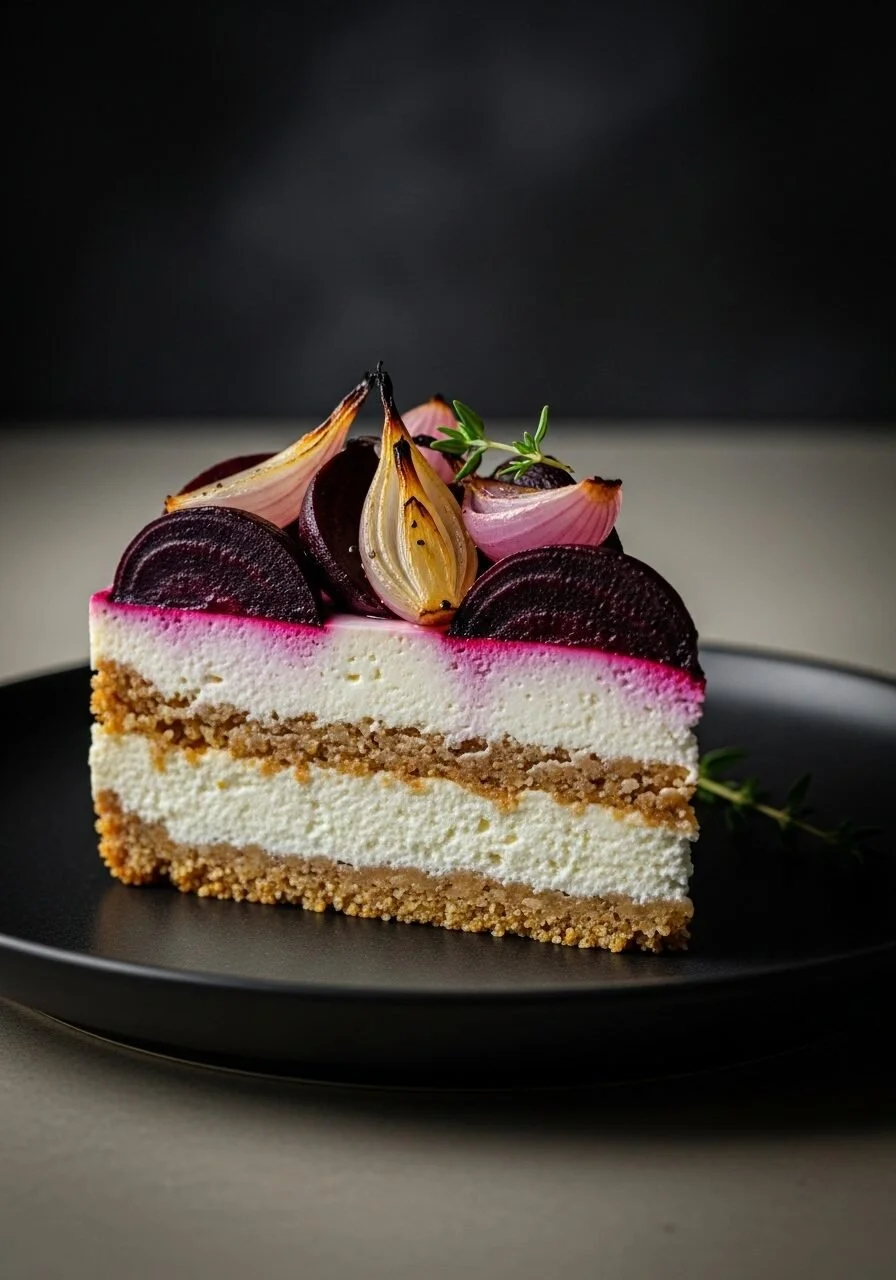
When it is time for the filling I blitz all filling ingredients — soft cheese, feta, mascarpone, eggs, lemon zest, spring onions, thyme — until smooth and silky. Pour the filling over the cooled base and bake for 45-50 minutes until set but slightly wobbly in the center; that slight wobble is the giveaway that it will finish set as it cools without becoming dry. I let the whole thing cool completely in the tin, then chill for at least 5 hours or overnight so the flavors marry and the texture firms up properly. When I am ready to serve, I unmould the cheesecake, top it with the chilled roasted vegetables and garnish with fresh thyme. The moment you cut it you get a soft, creamy interior with the sweet bite of Pecorino in the base and the jewel-bright roast beetroot on top.
Little Secrets I Use
One of the reasons this works so well for me is a handful of tiny habits. First, I always chill the roasted vegetables completely before topping the cake; warm vegetables release juices and make the topping sloppy. Second, room temperature cheeses blend into a silkier filling — take the time to bring the feta and mascarpone out of the fridge. Third, when pressing the base into the tin I use the bottom of a measuring cup to get an even, compact crust; this keeps the slice intact when plated. I also taste and adjust seasoning before baking; feta brings salt, so I often add only a pinch more salt if needed. If the top starts to brown too quickly during the longer bake, I loosely drape foil over the tin for the last 15 minutes.
How do you know when it is done? Look for that slightly wobbly center — it should not be liquid but should move gently when the tin is nudged. After chilling for 5 hours or overnight it will be firm enough to slice cleanly yet retain that luscious creaminess.
What to Serve and Keep for Later
I love to serve this with a crisp green salad and a vinaigrette that echoes the lemon zest from the filling. A few peppery rocket leaves or a fall harvest composed salad like the one I sometimes make with roasted squash bring a bright counterpoint; the texture of the cake pairs beautifully with roasted vegetables and something vinegary, so try it alongside fall harvest salad with roasted butternut squash for a seasonal plate. Leftovers keep well: I cover the cheesecake tightly with cling film and keep it in the fridge for up to three days. If I need to store slices, I wrap them individually so I can grab a piece for lunch. It also freezes surprisingly well; freeze in portions wrapped in foil and thaw in the fridge overnight.
Tweaks I Make and Ways to Play
There are a few ways I adapt this depending on mood and pantry. If you want a nuttier base, swap some breadcrumbs for crushed walnuts or pecans. For a herbier filling, fold in a tablespoon of chopped dill or swap thyme for rosemary if you like a stronger piney note. If feta is too assertive for your crowd, use 200g feta and 100g cream cheese instead to mellow the tang. For a sweeter contrast, serve with a drizzle of aged balsamic over the roasted beetroot; the dark syrup adds a glossy, sweet tang that elevates the whole thing.
Why do I love this recipe? It is the balance of textures and colors: the purple beetroot piled on creamy pale filling, the salty bite of Pecorino in the golden crust, and the soft, buttery cheeses. It feels special for guests and yet forgiving enough to make on a busy weekday if you plan ahead.
Conclusion
If you want to see a variation that inspired me, there’s a lovely rendition online that shares some of the same vibes; you can compare notes with this version at Savoury cheesecake with roasted beets – spoonenvy.com.
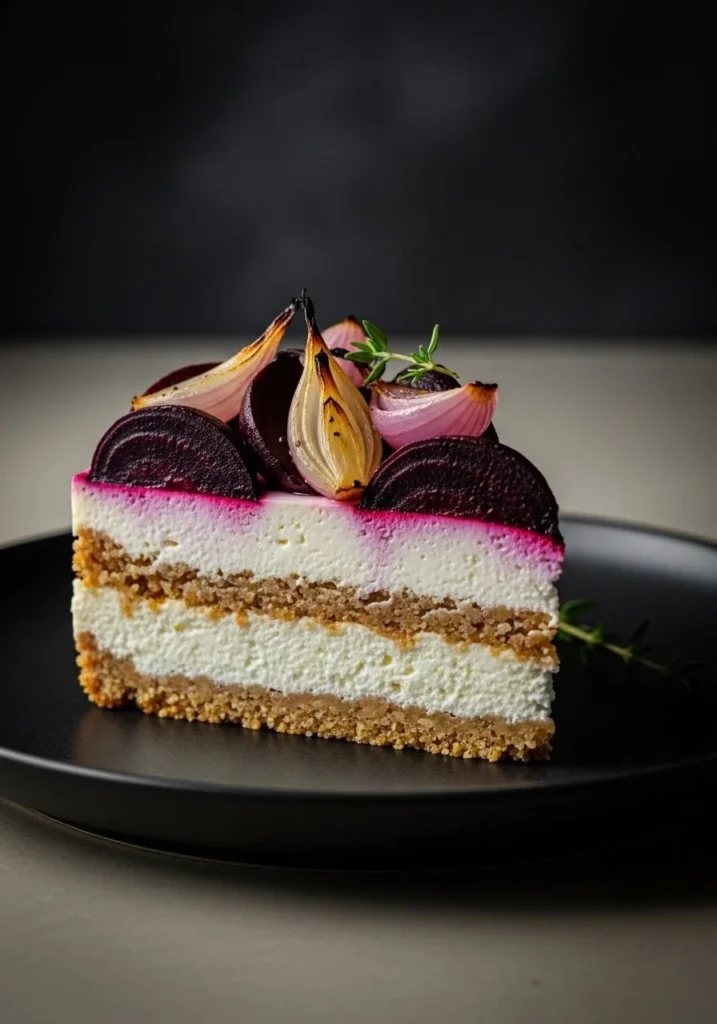
Savoury Cheesecake with Roasted Beetroot
Ingredients
Method
- Preheat the oven to 200°C (180°C fan) and grease a 22cm springform tin.
- Toss shallots and garlic with olive oil, and season with salt and pepper.
- In a separate bowl, toss the beetroot with olive oil, salt, and pepper.
- Spread the vegetables in a roasting dish, keeping beetroot separate, and cover with foil.
- Roast covered for 40 minutes, then uncover and roast for another 10 minutes until soft.
- Allow the vegetables to cool completely and chill in the fridge.
- Blitz the gluten-free bread to fine crumbs and mix with Pecorino, melted butter, and black pepper.
- Press the mixture into the prepared tin base and bake for 15-20 minutes until golden.
- Let the base cool slightly.
- Blitz all filling ingredients until smooth and silky.
- Pour the filling over the cooled base.
- Bake for 45-50 minutes until set but slightly wobbly in the center.
- Let the cheesecake cool completely in the tin.
- Chill for at least 5 hours or overnight before serving.
- Unmould the cheesecake and top with chilled roasted vegetables.
- Garnish with fresh thyme and serve.