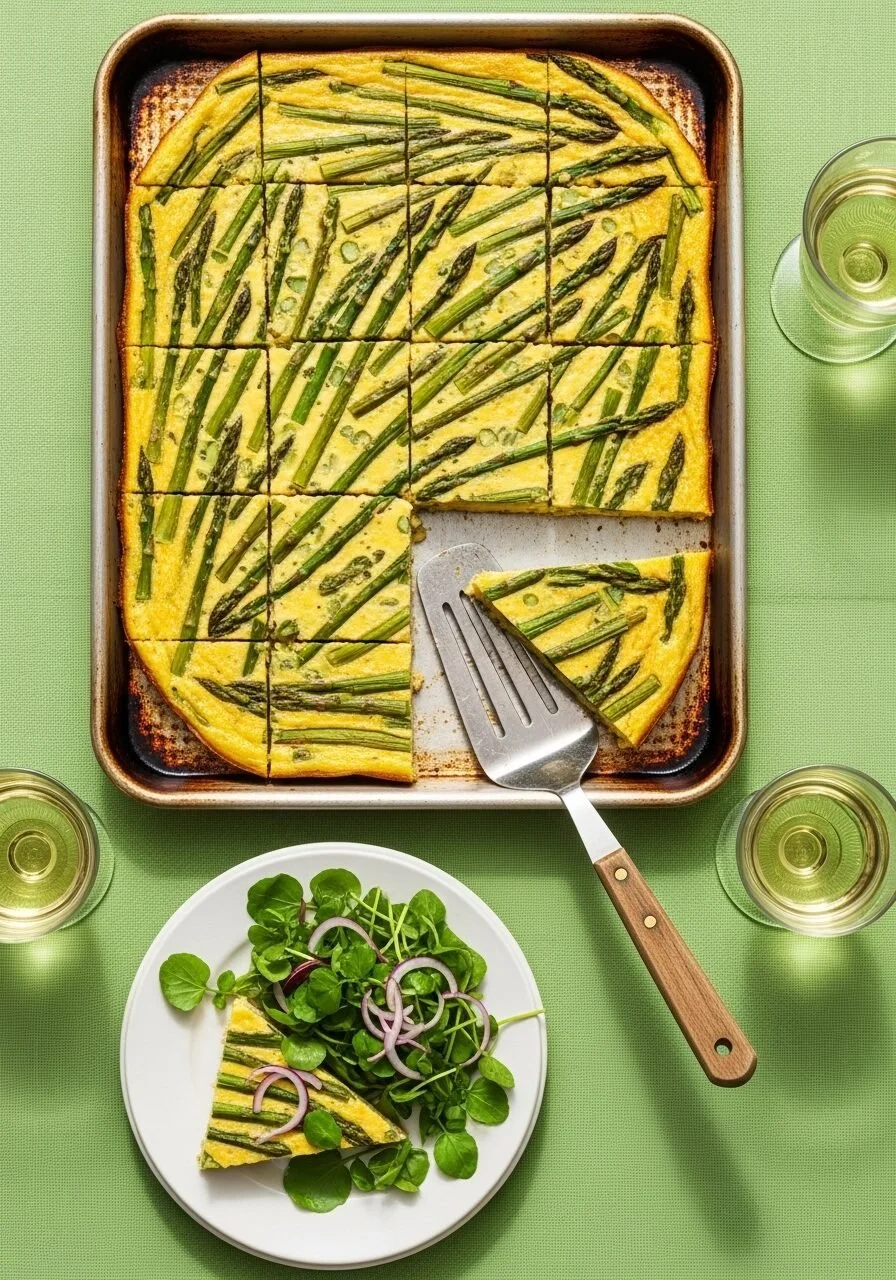
Sheet Pan Asparagus Frittata
A Springtime Treat that’s Easy and Delicious There’s something about spring that always brings a burst of inspiration into my kitchen. With vibrant greens popping up everywhere and the year’s first asparagus making its debut, I find myself gravitating toward light and fresh dishes. One of my absolute favorites is a Sheet Pan Asparagus Frittata….
A Springtime Treat that’s Easy and Delicious
There’s something about spring that always brings a burst of inspiration into my kitchen. With vibrant greens popping up everywhere and the year’s first asparagus making its debut, I find myself gravitating toward light and fresh dishes. One of my absolute favorites is a Sheet Pan Asparagus Frittata. It’s a recipe that marries simplicity with elegance—a dish perfect for a leisurely brunch or even a quick weeknight dinner.
Whenever I whip up this frittata, it’s like capturing a piece of springtime in a pan. The rich, creamy eggs mingle beautifully with the crisp-tender asparagus and delicate baby spinach, while the crumbled goat cheese provides a tangy finish that ties everything together. If you’ve never made frittata in a sheet pan before, you’re in for a treat, and trust me, it’s worth every minute spent in the kitchen.
The Wonderful World of Ingredients
Let’s talk about the ingredients—it’s where the magic begins! For this recipe, you’ll need a lovely pound of asparagus, trimmed down to get rid of those tough ends. I usually slice the bottoms about a quarter of an inch thick, leaving those gorgeous tops intact. Then, what’s a frittata without eggs? You’ll want a dozen large ones. Add in a cup of milk, which lends a lovely creaminess to the dish. A splash of Dijon mustard kicks in a subtle tang—don’t skip it!
Seasoning is key, so bring in kosher salt and fresh cracked pepper to taste. For some vibrant greens, two cups of baby spinach really elevate the frittata. And, of course, we can’t forget the goat cheese—about 2.5 ounces, crumbled, provides flavor and creaminess that’s simply hard to resist.
Getting Started
Now, let’s dive into the cooking process. First, preheat your oven to 375°F. This is where the anticipation starts building! Lightly grease a rimmed baking sheet with a bit of olive oil—it’s essential for ensuring that your frittata won’t stick.
While that’s heating up, let’s prepare the asparagus. Trimming those tough ends and slicing the bottoms can be quite therapeutic. I often think about how asparagus is one of those vegetables that looks so regal, especially when you have it lounging in your pan awaiting its moment of glory.
Once everything is ready, whisk the eggs, milk, Dijon mustard, salt, and pepper together in a large bowl. You want it to be frothy at this stage; it gives the frittata that lovely airy texture as it bakes. I love to whisk it by hand, feeling that intimate connection with my food. You’d be surprised how something as simple as whisking can become a mindful moment.
Now, toss in those sliced asparagus pieces and the baby spinach, stirring gently before pouring the mixture into your greased baking sheet. It’s such a vibrant sight—greens swimming in a sea of golden egg mixture.
The Finishing Touches
Here comes the fun part! Scatter those long asparagus spears on top and sprinkle the crumbled goat cheese evenly across the surface. Don’t be shy—this is what’s going to make each bite sing.
Slide that pan into the oven and settle in for about 20 to 22 minutes. I love to rotate the pan halfway through; this ensures even cooking and browning. As it bakes, the aroma wafts through the kitchen, reminding everyone that something scrumptious is on the way. The eggs will puff up to glorious heights, and you’ll know it’s done when the center no longer jiggles.
The Perfect Finish
Let the frittata rest for about five minutes once you take it out of the oven. This is crucial; it helps the eggs set up perfectly for slicing. When you finally cut into those squares, the colors are just divine—golden, green, and white, all saying, “Eat me!”
I typically serve this frittata warm, but it’s also wonderful at room temperature. If you have any leftovers, they keep beautifully in the fridge and warm up nicely in the microwave or a quick pan on the stovetop—as if spring could linger a little longer on your plate.
Making it Your Own
One of the things I adore about this frittata is how flexible it is. You can swap out ingredients based on what you have on hand. Love mushrooms? Toss in some sautéed ones for an earthy flavor. Want a twist? Try using feta cheese instead of goat cheese—it’s a whole different vibe! You could even add cooked bacon or smoked salmon for a delightful non-vegetarian variation.
Creating Memories in the Kitchen
Every time I make this dish, I am reminded of sunny weekends spent with friends, gathering around the breakfast table, sharing laughter and good stories. It’s such a joy to share this recipe with others, to let them discover how something so simple can bring real happiness to the table.
So, whether you’re hosting a spring brunch or just looking for a satisfying family meal, remember that a Sheet Pan Asparagus Frittata is not just a recipe—it’s a reason to gather, to enjoy, and to celebrate the beauty of seasonal cooking. Happy cooking!
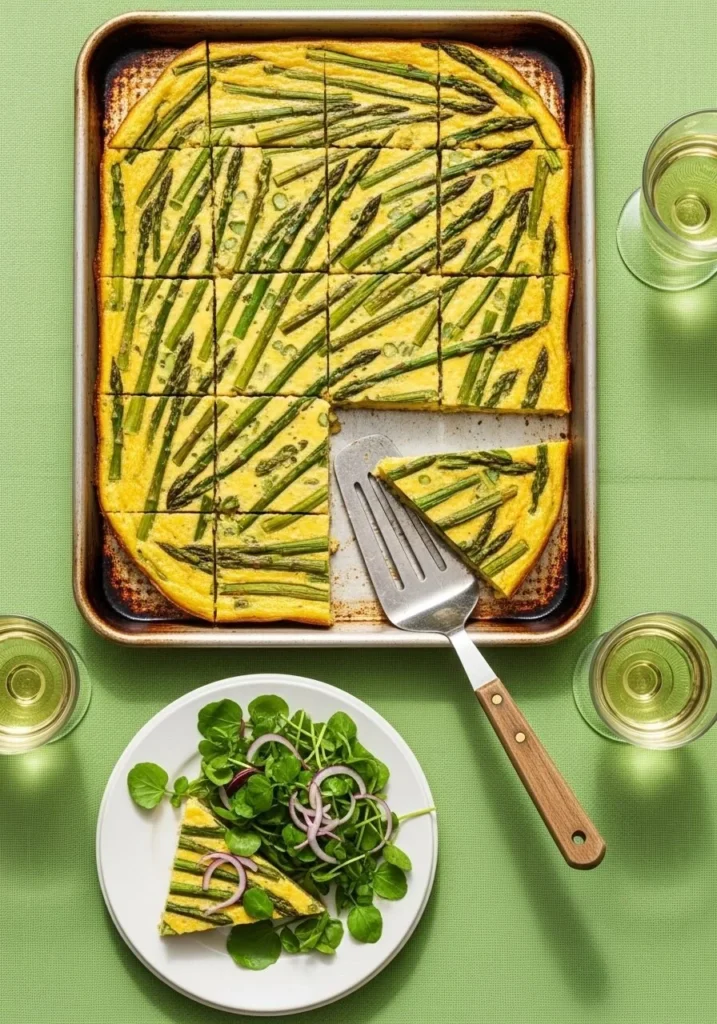
Sheet Pan Asparagus Frittata
Ingredients
Method
- Preheat your oven to 375°F and lightly grease a rimmed baking sheet with a bit of olive oil.
- Trim the tough ends of the asparagus and slice the bottoms about a quarter of an inch thick.
- In a large bowl, whisk together the eggs, milk, Dijon mustard, salt, and pepper until frothy.
- Fold in the sliced asparagus and baby spinach gently before pouring the mixture into the greased baking sheet.
- Scatter the long asparagus spears on top of the egg mixture and sprinkle the crumbled goat cheese evenly over the surface.
- Bake in the oven for 20 to 22 minutes, rotating the pan halfway through for even cooking.
- The frittata is done when the eggs have puffed up and the center no longer jiggles.
- Let the frittata rest for about five minutes before slicing it into squares.
- Serve warm or at room temperature. Leftovers can be stored in the fridge and reheated in the microwave or on the stovetop.