Sheet Pan Asparagus Frittata
I dragged a sheet pan out of the cabinet this morning and decided to turn a pile of spring vegetables into something that would feed a crowd and still feel like Sunday. I first stumbled onto a version of this in an experiment a few years back, and I still reference a slightly different approach…
I dragged a sheet pan out of the cabinet this morning and decided to turn a pile of spring vegetables into something that would feed a crowd and still feel like Sunday. I first stumbled onto a version of this in an experiment a few years back, and I still reference a slightly different approach when I need reassurance about oven times: the variation I tried months ago reminded me how forgiving this dish can be.
Ingredients (summarized)
- About one pound of trimmed green stalks—snap the woody ends off and you’re set.
- A dozen large eggs to make a thick, pan-wide custard.
- Around a cup of milk to loosen the eggs without making them soggy.
- A spoonful of sharp mustard to wake up the flavor.
- Salt and freshly cracked pepper, adjusted to your taste.
- Two heaping cups of tender baby spinach.
- A small log’s worth of tangy goat cheese (roughly two and a half ounces) for crumbles on top.
Why I love this method
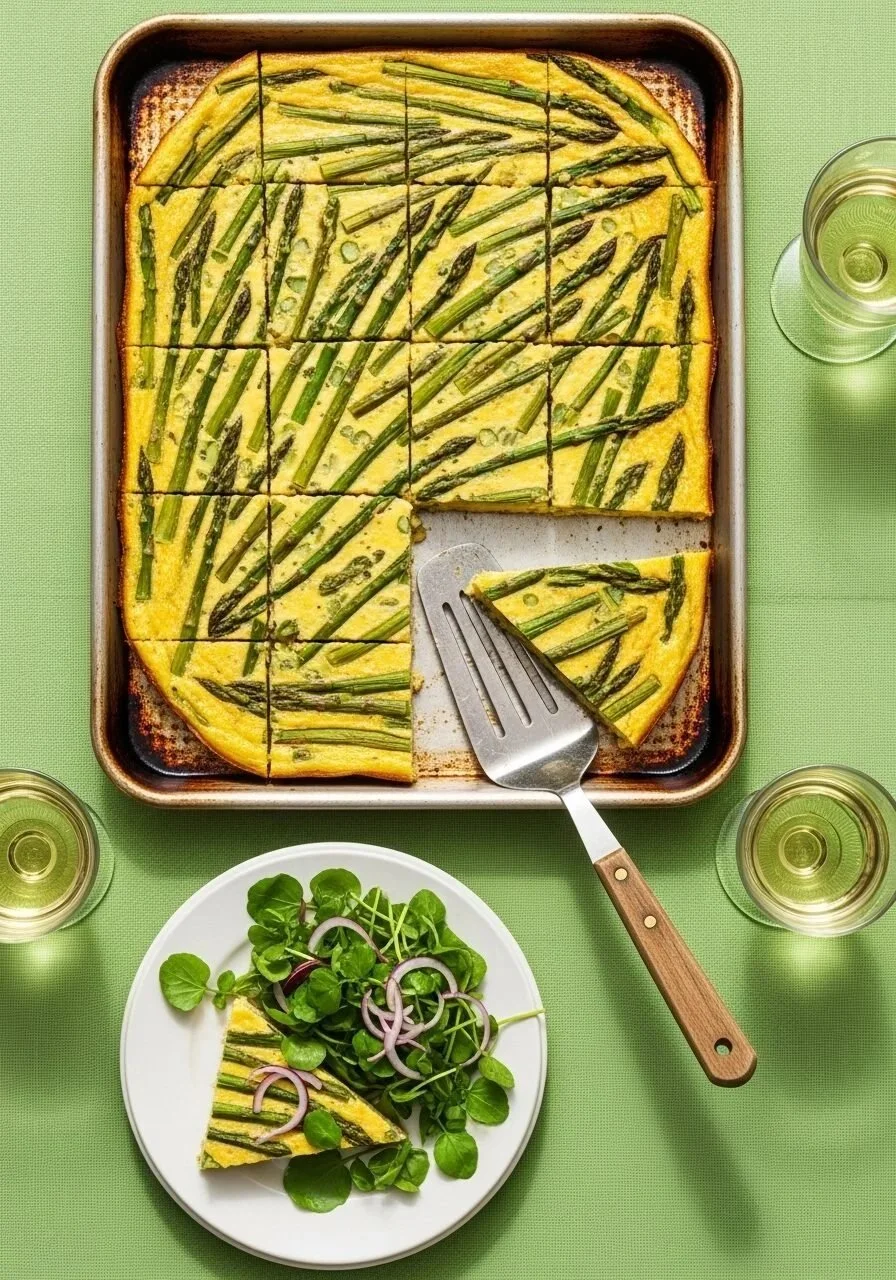
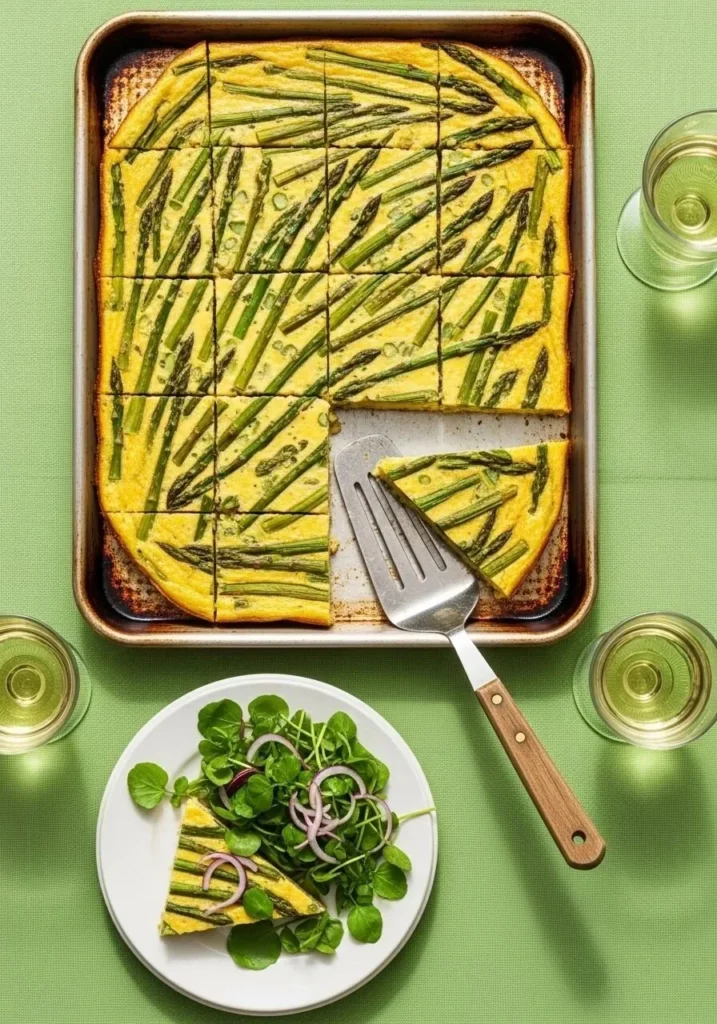
I don’t fuss with individual tartlets or fussy molds. Everything goes on one rimmed sheet, which makes the assembly feel more like painting: asparagus placed with intention, spinach scattered, egg mixture poured in, goat cheese dotted on last. The result is rustic—edges golden and slightly blistered while the center stays silky. I sometimes poke holes with a knife to test doneness; sometimes I use a thermometer. Either way, it’s forgiving, which is the real reason I use it on busy mornings.
A loose method (this is how I do it)
Preheat your oven so the air is steady and hot; I aim for around 375°F. I toss the asparagus on the pan with a splash of oil and a sprinkle of salt, and roast for 8–10 minutes so the tips begin to char lightly—this deepens the flavor. Meanwhile, I whisk the eggs and milk until well mixed, stir in the Dijon, and season. Spinach goes straight into the eggs; it wilts into the mix and disappears into pockets of green when baked. I spread the roasted asparagus back on the pan, pour the egg mixture evenly, and sprinkle the goat cheese. Bake for about 20–25 minutes, checking around 18 minutes: you want the center set but not rubbery. If the top browns faster than the interior sets, I tent with foil for a few minutes.
A few practical notes
- If you prefer a silkier texture, reduce the heat slightly and add 2–3 extra minutes of baking time.
- To prevent sogginess from the spinach, make sure it’s chopped into manageable pieces so it releases its moisture into the eggs rather than pooling.
- I sometimes give the pan a quick blast under the broiler for 1 minute to color the top—watch it the whole time.
Serving ideas and swaps
This keeps wonderfully for leftovers; I slice it into squares and reheat gently in a skillet or microwave. Swap goat cheese for feta or leave it out and add a handful of grated parmesan for a nuttier finish. For a heartier meal, toss in halved small potatoes roasted alongside the asparagus (you’ll need to par-cook them first). For a brunch potluck, I adapted dressing and seasoning ideas from a few sources when I needed to stretch portions and keep it warm: the notes I used for scaling up helped me time everything.
Timing and equipment
I use a standard half-sheet rimmed pan; if you go smaller, the frittata will be thicker and need longer to set. If you absolutely must fold this into muffin tins, reduce the bake time by half and watch carefully. For organized meal prep, bake it the night before and reheat at a low oven temp to avoid overcooking.
A quick troubleshooting paragraph
If the edges cook far faster than the center, your oven rack might be too close to the heating element. Move the pan to the middle rack and lower the temp by 25°F next time. Too wet? Try increasing the eggs-to-milk ratio slightly or pre-roasting the asparagus a touch longer to evaporate excess moisture. Want more herb brightness? Toss in chopped chives after baking rather than before.
Variations I actually use
- Lemon zest and thyme during spring months; it brightens the goat cheese.
- Red pepper flakes and smoked paprika when I want some heat and smoke.
- Sliced preserved lemons with black pepper for an unexpectedly Mediterranean twist—my guests always ask for the recipe. Also, when serving a crowd, these potluck-friendly tweaks from my earlier notes came in handy: potluck-friendly tweaks I documented.
Conclusion
If you want more inspiration or a slightly different technique, I often consult other home cooks’ takes like Sheet Pan Frittata – Kath Eats for plating ideas, and for a spring-green-forward riff I compared notes with Sheet Pan Frittata with Spring Greens – The View from Great Island. One small limitation I discovered: when I tried to double the recipe on a single sheet, the center took noticeably longer to set than the edges, so I now split it across two pans for even cooking.
Spring Vegetable Sheet Pan Frittata
Ingredients
Method
- Preheat the oven to 375°F (190°C).
- Toss the asparagus on a rimmed baking sheet with a splash of oil and a sprinkle of salt.
- Roast for 8–10 minutes until the tips begin to char lightly.
- Meanwhile, whisk the eggs and milk until well mixed, then stir in the Dijon and season with salt and pepper.
- Add the spinach to the egg mixture and allow it to wilt.
- Spread the roasted asparagus back on the pan and pour the egg mixture evenly over the vegetables.
- Sprinkle crumbled goat cheese on top.
- Bake for 20–25 minutes, checking around 18 minutes. The center should be set but not rubbery.
- If the top browns faster than the center sets, tent with foil for a few minutes.