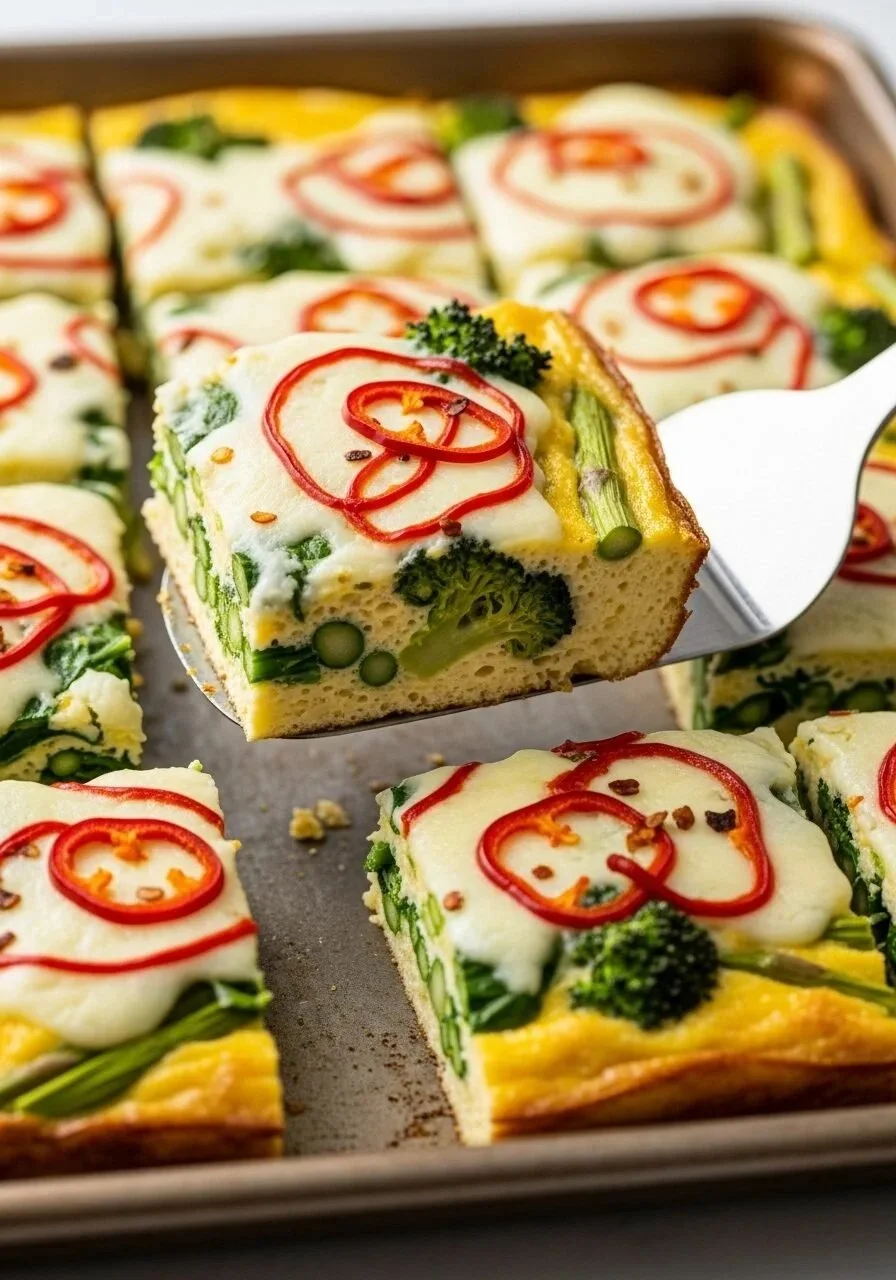
Sheet-Pan Frittata
The late-summer light in my kitchen makes broccoli look like a tiny constellation, which is how I found myself building a sheet-pan frittata one evening — a tray baked dish that is forgiving and more casual than a skillet omelet. I riffed on a few ideas I’d seen online and on the fly I added…
The late-summer light in my kitchen makes broccoli look like a tiny constellation, which is how I found myself building a sheet-pan frittata one evening — a tray baked dish that is forgiving and more casual than a skillet omelet. I riffed on a few ideas I’d seen online and on the fly I added a handful of greens and a good spoonful of farmers’-style cheese; if you want a similar sheet-pan idea done with asparagus, I learned a couple of tricks from a version with asparagus that translate well here.
Ingredients (what I used)
- Butter and a drizzle of olive oil to coat the pan so things release easily.
- A few cups of small broccoli florets — I trim them into bite-sized pieces so they cook quickly and evenly.
- One large shallot, sliced thin, and a generous pile of garlic cloves, smashed just enough to loosen their flavour.
- Baby kale (a small bag) for wilt and color.
- Ten large eggs for a sturdy but tender custard.
- A mix of whole milk and heavy cream to get that silky texture without being too heavy.
- Finely grated Pecorino Romano for that sharp, salty note.
- About 8 ounces of a creamy farmers’ cheese or part-skim ricotta folded in for pockets of creaminess.
- Salt, freshly ground black pepper, and chili crisp for finishing.
How I approached the bake
I preheat the oven so it’s reliably hot when the tray goes in. I toss the broccoli, shallot and smashed garlic with olive oil on the sheet, seasoning lightly. They roast first, developing a few browned edges; this concentrates their sweetness and cuts the raw-garlic bite. Midway through that roast I scatter the kale so it wilts but doesn’t turn papery.
While the veg is happening I whisk the eggs with the milk and cream, seasoning the mixture and stirring in most of the grated Pecorino. The farmers’ cheese goes in last; I drop it as small dollops across the pan rather than trying to blend it completely — those soft pockets sneaking through the frittata are my favorite part.
When the vegetables are tender and browning, I pour the egg custard across the sheet, return it to the oven, and watch the edges set first; a quick jostle of the pan tells me how the middle is faring. Ten to twenty minutes will do depending on your oven and the pan’s thickness — it should be puffed and just set, not watery. I finish under a broiler for a minute only if I want a bronzed top.
A couple of technique notes I picked up along the way
- Using both butter and a neutral oil to grease the pan helps prevent sticking and adds a faint nuttiness.
- Smashing garlic and leaving the skins on during the roast tames the sharpness; they’re easy to peel afterward and the flavor is sweeter.
- If you prefer more structure and less creaminess, swap in a bit less whole milk and a touch more egg; for a richer custard, increase the cream fraction.
I also compared different sheet-pan approaches as I tested timing: a guide for another pan-baked version helped me dial in oven time, and I kept a mental note of the pan size that makes serving easy for a crowd — it reminded me of a similar tray method that uses slightly different ratios for a denser set.
Serving, storage, and tiny variations
I like to let the frittata rest for five to ten minutes before slicing so the custard stabilizes. It slices nicely into squares and is great warm or at room temperature; cold, the texture firms up but is still pleasant if you used the farmers’ cheese rather than something overly wet.
Leftovers keep well refrigerated in an airtight container for a couple of days. Reheat gently in a low oven or eat chilled. If you want to scale up for a group or a potluck, you can follow the pan-sizing notes I experimented with — my notes were inspired by a big-batch sheet-pan idea for gatherings, and I found it helpful when planning portions for more people: a potluck-sized frittata reference.
A quick flavor tip: a spoonful of chili crisp drizzled right before serving adds texture and a bright, spicy finish that contrasts with the ricotta-like dollops; I almost always reach for it.
Conclusion
If you want another take on the sheet-pan method with thoughtful ingredient adjustments, I recommend the exploration at Sheet Pan Frittata at 101 Cookbooks, which shows how simple shifts change the final result. For an Italian-inspired perspective and variations worth trying, see this detailed write-up at Sheet Pan Frittata | Italian Food Forever.
One thing I learned the hard way: make sure your garlic doesn’t burn during the roasting stage — overcooked garlic can turn the whole pan bitter, so watch the oven and stage the kale and garlic so they finish at the same time.
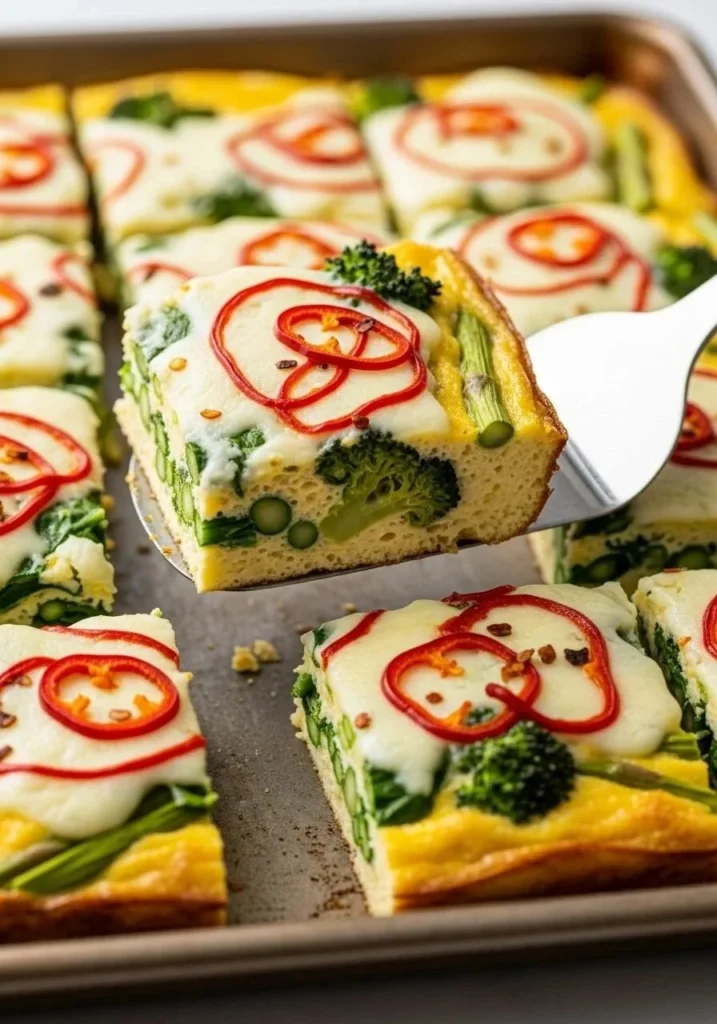
Sheet-Pan Frittata
Ingredients
Method
- Preheat your oven to 400°F (205°C).
- Coat a sheet pan with butter and a drizzle of olive oil.
- Toss broccoli, shallot, and garlic with olive oil, lightly seasoning with salt and pepper.
- Roast the vegetables in the preheated oven until they develop browned edges, about 15-20 minutes.
- Midway through roasting, scatter the baby kale over the vegetables to wilt.
- In a bowl, whisk together eggs, milk, cream, and remaining Pecorino Romano, seasoning well.
- Fold in the farmers' cheese in small dollops.
- Once the vegetables are tender and browned, pour the egg mixture over the sheet pan.
- Return the pan to the oven and bake for 10-20 minutes, or until puffed and set.
- Optional: Finish under the broiler for a minute for a bronzed top.
- Let the frittata rest for 5-10 minutes before slicing.
- Serve warm, at room temperature, or chilled with a drizzle of chili crisp.