The Best Overnight Sourdough English Muffins (So Easy!)
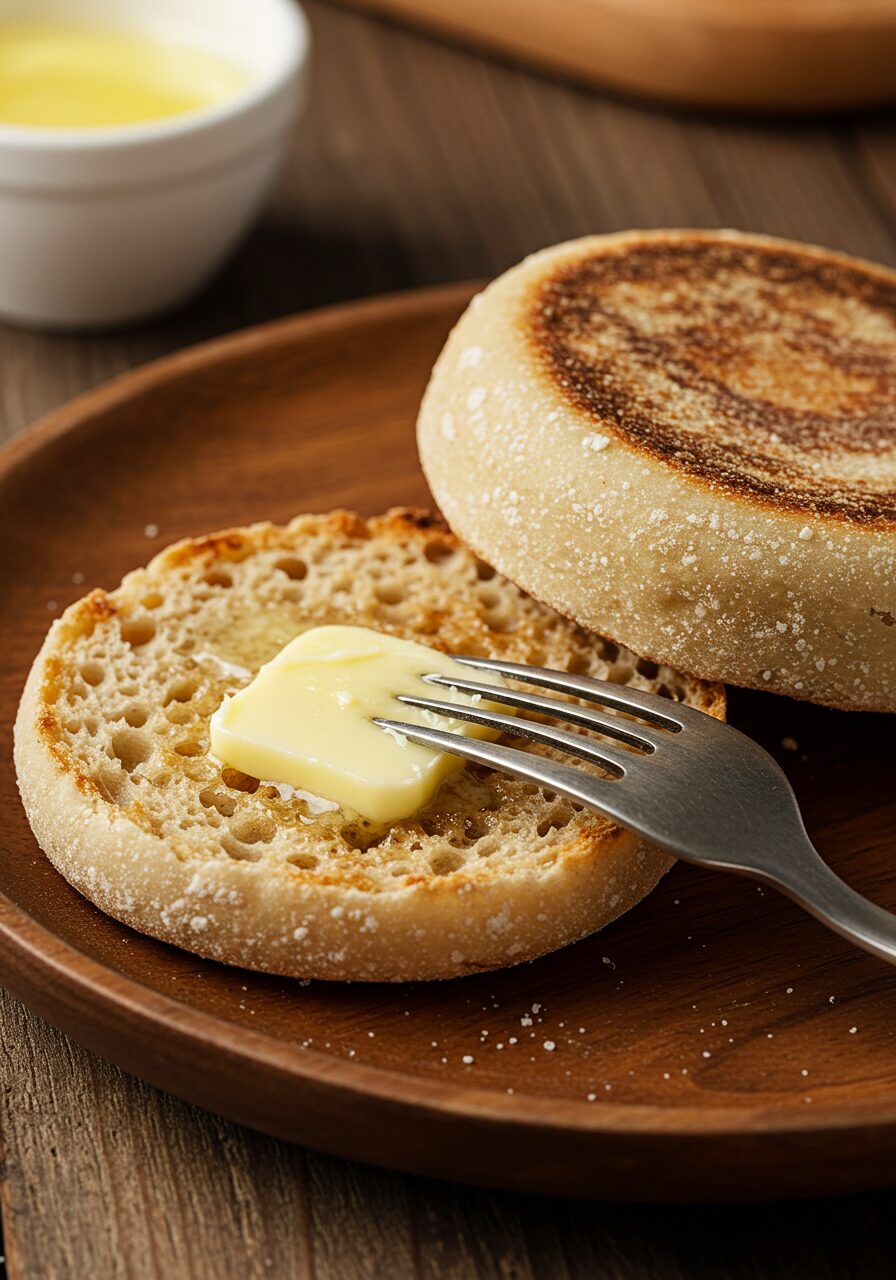
Hello, fellow bakers! If you’re a fan of sourdough, you know the deep satisfaction that comes from transforming a bubbly starter into something truly magical. And if you’re a fan of English muffins, you know there’s nothing better than splitting one open to reveal a landscape of glorious nooks and crannies. Today, we are bringing…
Hello, fellow bakers! If you’re a fan of sourdough, you know the deep satisfaction that comes from transforming a bubbly starter into something truly magical. And if you’re a fan of English muffins, you know there’s nothing better than splitting one open to reveal a landscape of glorious nooks and crannies. Today, we are bringing these two beautiful worlds together with this incredible, surprisingly Easy Sourdough English Muffins Recipe. This is the recipe that will make you fall in love with your sourdough starter all over again.
Imagine waking up in the morning to a beautiful, fermented dough, ready to be transformed. This recipe uses a simple overnight process that develops the most wonderful, tangy sourdough flavor. The resulting muffins are light, fluffy, and have that signature chewy texture we all adore. Cooked on a skillet to perfection, they are an absolute triumph. Don’t be intimidated by the process; I’m going to walk you through every simple step.
Why This is the Sourdough Recipe of Your Dreams
This recipe is a true joy to make and even more of a joy to eat. Here’s why it’s so special.
- Incredible Sourdough Flavor: The long, slow overnight fermentation develops a beautiful, complex, and tangy flavor that you simply can’t achieve with commercial yeast alone.
- That Perfect Texture: These muffins have it all—the slightly crisp, cornmeal-dusted outside, the soft and chewy inside, and, most importantly, all those amazing nooks and crannies just waiting for melted butter.
- The “Work While You Sleep” Method: This is the beauty of overnight sourdough. You mix the dough the night before and let your starter do all the hard work of developing flavor and structure while you sleep.
- Easier Than You Think: While it’s a two-day process, the actual hands-on time is very minimal. It’s a fantastic recipe for sourdough beginners and seasoned bakers alike.
- Cooked on the Stovetop: There’s no need to preheat your oven! These muffins are cooked to perfection right on your stovetop in a skillet, giving them their classic shape and texture.
Gather Your Simple Sourdough Ingredients
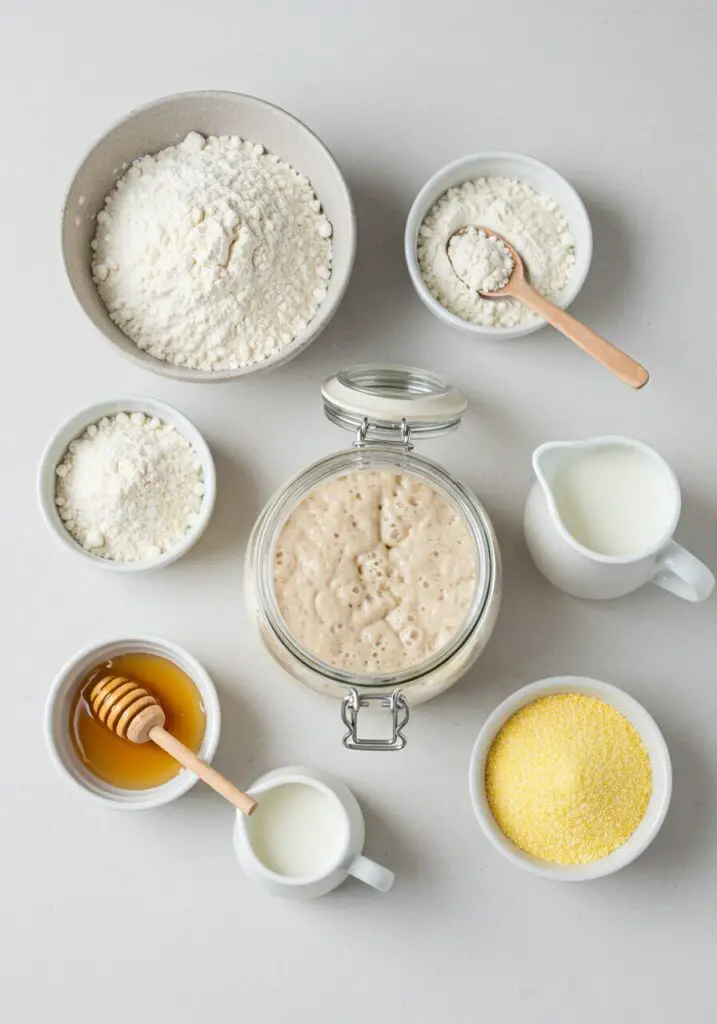
You only need a handful of basic ingredients and your trusty sourdough starter.
For the Active Sourdough Starter (Leaven):
- 1 tablespoon (15g) Sourdough Starter (from your mother starter)
- ⅓ cup + 1 tablespoon (50g) All-Purpose Flour
- 3 ½ tablespoons (50g) Water
For the Dough:
- ½ cup (100g) Active Sourdough Starter (the leaven you just made)
- 1 tablespoon (20g) Honey: Sugar or maple syrup also work.
- 1 cup (240g) Milk
- 3 cups (360g) All-Purpose Flour
- 1 teaspoon (5g) Fine Sea Salt
- ¼ cup (40g) Cornmeal (or semolina), for sprinkling
Crafting Your English Muffins: Step-by-Step Guide
Let’s embark on this delicious sourdough journey. It’s all about timing and patience.
Day 1: Feed Your Starter & Make the Dough
- Feed Your Starter (Make the Leaven): About 8-12 hours before you plan to mix your dough (for example, in the morning on Day 1), you’ll build your leaven. In a clean jar, mix 1 tablespoon of your sourdough starter with 50g of all-purpose flour and 50g of water. Stir until combined, loosely cover the jar, and let it rise at room temperature. It’s ready to use when it has at least doubled in size and is full of bubbles.
- Make the Dough (That Evening): In a large bowl, add 100g of your active starter and the rest of the dough ingredients (honey, milk, flour, and salt). Use your hands to mix until a shaggy dough forms and there are no dry bits of flour left. Cover the bowl and let the dough rest for 30-60 minutes.
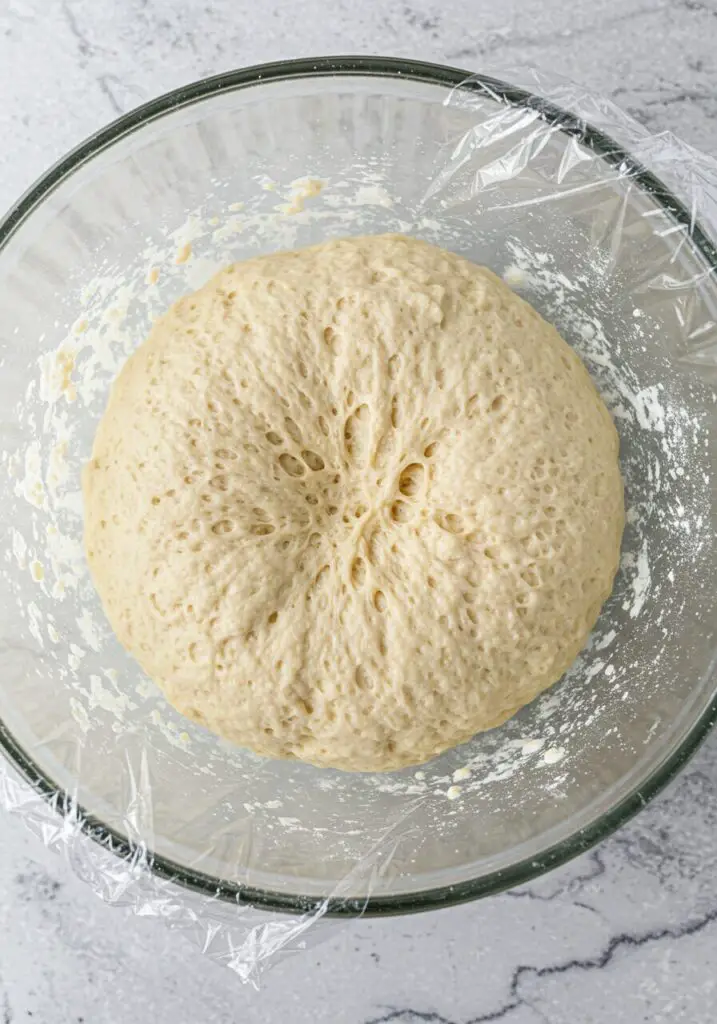
- Knead and Ferment: Turn the dough out onto a lightly floured surface and knead it by hand for about 5 minutes until it’s smoother and more cohesive. (Alternatively, you can use a stand mixer with a dough hook on low speed). Place the dough back into the bowl, cover it, and let it ferment on your counter at room temperature (around 65-70°F) overnight, for 8-12 hours.
Day 2: Cut and Cook
- Cut the Muffins: The next morning, your dough should look puffy. Turn it out onto a well-floured surface. Gently flour the top of the dough and press it out with your fingertips until it’s about ½-inch thick. Sprinkle a parchment-lined baking sheet generously with cornmeal. Use a 3-inch biscuit cutter to cut out your rounds. Place them on the prepared baking sheet.
- The Final Rise: Sprinkle the tops of the muffins with more cornmeal. Cover them with a tea towel and let them have a final, short rise at room temperature for about 1 hour.
- Cook on the Skillet: Preheat a non-stick skillet over LOW heat. This is very important! Place about 4 muffins into the dry skillet, spaced about 2 inches apart. Cover the skillet with a lid and cook the first side for 4 minutes.
- Flip and Finish: Gently flip the muffins over, cover the skillet again, and cook for an additional 4 minutes on the other side. They are done when they are golden brown on both sides and an instant-read thermometer registers about 200°F in the center. Let them cool on a wire rack before splitting open with a fork.

Wise Tips for Sourdough Success
- Measuring Flour: For the most accurate and consistent results in sourdough baking, a digital kitchen scale is your best friend. If you don’t have one, use the “scoop and level” method described in the notes to measure your flour.
- Low Heat is Your Friend: When cooking the English muffins, a low and steady heat is crucial. If your pan is too hot, the outside will burn long before the inside has a chance to cook through.
- Don’t Cut, Split! To preserve all those beautiful nooks and crannies that sourdough works so hard to create, always split your finished English muffins open with a fork, not a knife.
Overnight Sourdough English Muffins
Ingredients
Method
- 12 hours before mixing dough, combine 1 tbsp starter, 50g flour, and 50g water in a clean jar. Let rise at room temperature until doubled and bubbly.
- Add 100g active starter and the rest of the dough ingredients (except cornmeal) to a large bowl. Mix until combined. Rest for 30-60 minutes. Knead by hand for 5 minutes. Place dough back in the bowl, cover, and let ferment at room temperature for 8-12 hours (overnight).
- Turn dough onto a floured surface and press out to ½” thickness. Use a 3″ biscuit cutter to cut rounds. Place them on a parchment-lined, cornmeal-dusted baking sheet. Sprinkle tops with cornmeal, cover, and let rise for 1 hour.
- Preheat a non-stick skillet over LOW heat. Place muffins in the skillet, cover, and cook for 4 minutes. Flip, cover, and cook for another 4 minutes, until the center registers about 200°F. Cool on a wire rack.
Frequently Asked Questions (FAQ) – Sourdough English Muffins
- What does “active sourdough starter” mean?
It means the starter has been recently fed and is at its “peak” activity—bubbly, at least doubled in size, and ready to make your dough rise. This recipe builds a specific amount of active starter (a leaven) for the dough. - My dough seems really sticky. What should I do?
Sourdough can be sticky! If you live in a very warm or humid climate, you might want to start with a little less milk, as suggested in the notes. Don’t be afraid to use a good amount of flour on your work surface and hands when kneading and shaping. - Can I do the long fermentation in the refrigerator?
Yes. If you’d like to slow down the fermentation, you can place the covered bowl of dough in the refrigerator for 1-3 days after kneading. This will also develop an even tangier flavor. Just let it sit at room temperature for an hour or two to warm up before shaping. - How do I store homemade sourdough English muffins?
Store them in an airtight container or bag at room temperature for up to 5 days. They also freeze beautifully! Place them in a freezer-safe bag for up to 3 months.
Conclusion
There is a deep and quiet satisfaction that comes from mastering a classic sourdough bake. This Sourdough English Muffins Recipe is a truly wonderful and rewarding project. The moment you split open that first warm muffin, revealing the beautiful, tangy, chewy interior, you’ll know it was worth every moment. I hope this guide helps you on your sourdough journey and brings a delicious new tradition to your breakfast table.