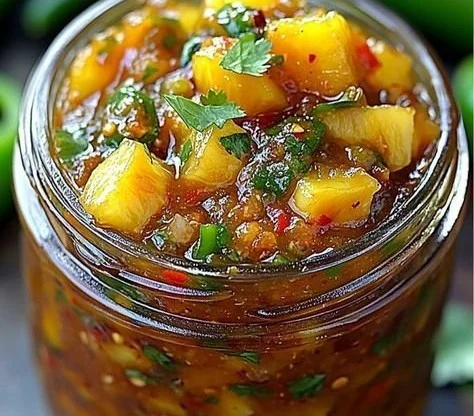
Spicy Pineapple Jalapeño Chutney
The first time I made this chutney I accidentally left the seeds in two jalapeños and learned a very useful lesson about restraint. I wanted something bright to cut through rich snacks—so I paired it with my favorite warm cheese bites and a bit of crunch from pineapple; that idea grew out of an experiment…
The first time I made this chutney I accidentally left the seeds in two jalapeños and learned a very useful lesson about restraint. I wanted something bright to cut through rich snacks—so I paired it with my favorite warm cheese bites and a bit of crunch from pineapple; that idea grew out of an experiment with air-fryer brie and pineapple bites and I liked where it led.
A note before we get hands-on: I keep my prep simple. I used roughly one cup of pineapple, cut into small dice so each spoonful has fruit; two jalapeños were my happy medium (three would be for a dare). There’s a small half-cup of finely diced onion and two smashed cloves of garlic. For the balance that turns this into a chutney rather than salsa, I stirred in a splash of apple-cider vinegar and a few spoonfuls of brown sugar, then seasoned with a pinch of ground ginger, black pepper and salt. The exact sweet-acid-salty balance is what makes this sing.
How I cook it — because I describe everything in the order I actually did it: I start by warming a tablespoon of neutral oil over medium heat and gently sweat the onion until it loses its raw edge. I add the minced garlic for a minute, then the pineapple and chopped jalapeños go in; I like the fruit to soften and release its sugars before the vinegar arrives. After a couple of minutes, I splash in the vinegar and sprinkle in the brown sugar, then the spices. I reduce the heat and let it simmer, uncovered, stirring occasionally, until the mixture thickens and the pineapple pieces are translucent but still have a little bite. The whole process takes about 15–20 minutes depending on how thick I want it.
Texture and timing: if I want a spoonable, rustic chutney I leave the fruit chunks intact and stop when the liquid has reduced by about half. If I need a smoother spread, I mash gently with a fork or pulse once in a food processor—being careful not to turn it into a purée. Salt and acid are easy to add at the end; I taste, adjust, and often add one more shake of pepper.
A few practical tweaks that I learned: remove the jalapeño seeds and membranes if I want gentle warmth; keep them if I want a persistent heat. Fresh grated ginger can replace the ground ginger for a sharper bite. For a deeper caramel note, I sometimes let the sugar brown slightly in the pan before adding the vinegar, but this makes the chutney darker and more molasses-forward.
Serving ideas (short list, from things I tried): it’s great on grilled fish, absolutely lovely with roasted pork, and brightens up weeknight bowls. I even spooned it over a weekday roast—an unexpected success. It also paired remarkably well with a braised chicken I cooked using a brown-sugar glaze; the chutney cut through the richness and added a lively kick to the dish I made from brown-sugar pineapple chicken last week.
Storage and make-ahead: I let the chutney cool to room temperature, then spoon it into a clean jar and refrigerate. It keeps well for up to a week and, in my experience, the flavors meld and improve overnight. Freezing is possible in small containers for about two months; thaw slowly in the fridge and stir before serving.
A playful use I tested: spoon a little chutney into the bottom of a pan before building a small pineapple upside-down cake — the tartness and heat make the top more interesting than straight caramel alone. If that intrigues you, think about my take on a cranberry pineapple upside-down cake that swaps sweetness for more complex contrasts.
Final practical tips:
- I always taste after cooling because heat mutes both sugar and spice.
- If the chutney is too tart, a pinch more brown sugar fixes it; too sweet, I add another splash of vinegar.
- For canning or long-term shelf storage, follow standard water-bath canning safety procedures rather than my fridge method.
Conclusion
If you’re chasing a recipe that balances sweet fruit with jalapeño heat, the detailed version I consulted for inspiration is a solid reference: Sweet and Sour, Hot and Spicy Pineapple Chutney.
Personal note: I discovered that the final heat level is very sensitive to how aggressively I chop the jalapeños—finer chopping released more capsaicin than I expected, so now I err on the side of a coarser dice unless I want a real kick.
Pineapple Jalapeño Chutney
Ingredients
Method
- Heat a tablespoon of neutral oil over medium heat in a skillet.
- Add the finely diced onion and sweat until translucent.
- Add the minced garlic and cook for an additional minute.
- Incorporate the diced pineapple and chopped jalapeños, allowing them to soften and release their sugars.
- After a few minutes, add the apple-cider vinegar and brown sugar to the mixture.
- Season with ground ginger, black pepper, and salt.
- Reduce the heat and let the mixture simmer uncovered, stirring occasionally, until thickened and the pineapple is translucent but still has some bite, about 15-20 minutes.
- Taste the chutney after cooling and adjust seasoning with extra vinegar or brown sugar as needed.