Spicy Pineapple Jalapeño Chutney
I still remember the first time I made this chutney: I thought pineapple belonged only in upside-down cakes, and then a jalapeño changed my mind. If you like pairing sweet-spicy condiments with soft cheeses, I often serve mine alongside air-fryer brie and pineapple bites because the contrast is irresistible. What I keep on the counter…
I still remember the first time I made this chutney: I thought pineapple belonged only in upside-down cakes, and then a jalapeño changed my mind. If you like pairing sweet-spicy condiments with soft cheeses, I often serve mine alongside air-fryer brie and pineapple bites because the contrast is irresistible.
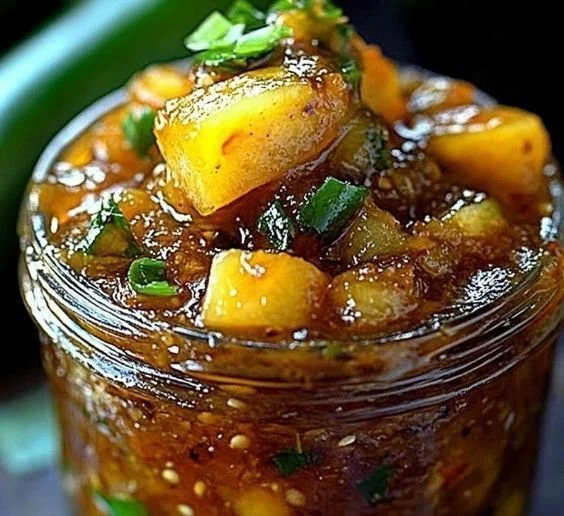
What I keep on the counter when I’m about to make it: a very ripe tropical fruit, a couple of fresh hot peppers (I lean toward two unless guests ask for milder), a heap of granulated sugar, apple cider vinegar for that bright tang, a knob of ginger, and gentle warming spices—salt, turmeric and a crack of black pepper. I prefer to chop the fruit into uneven chunks rather than a uniform dice; the rustic texture makes each spoonful interesting.
I cook it more like a conversation than a recipe. First I sweat the jalapeños briefly in a heavy skillet just to soften them and coax out their aroma, then I add the pineapple and sugar and let the two make friends over medium heat. Next, the vinegar goes in—about half a cup for balance—followed by grated ginger and the small amounts of turmeric, salt and black pepper I mentioned earlier. Simmer until the pineapple softens and the syrup thickens; expect bubbling, an intoxicating smell, and occasional stirring so it doesn’t cling to the pan.
Timing: short and patient. It takes maybe 20–30 minutes to reach a jammy consistency depending on the heat and how finely you chopped the fruit. If you like it glossier, cook a touch longer; if you prefer larger pieces, pull it off sooner. I rarely follow a rigid set of steps; instead I rely on sight and sound—the chutney will reduce and sing softly in the pan when it’s nearly done.
Serving-wise, this chutney has been my secret weapon for savory-sweet dinners. Spoon it over grilled chicken (it pairs surprisingly well with brown-sugar glazed preparations), or dollop it next to a cheese board. The pineapple’s brightness and the pepper’s heat make even mundane weeknight proteins feel celebratory. For a different dessert angle, I’ve also spread a little under the batter of a cake for contrast when I make a pineapple upside-down—see how that might layer into ideas like the cranberry-pineapple upside-down cake I once riffed on.
A few practical notes: I prefer granulated sugar to brown because it yields a clearer syrup and lets the fruit’s tang sing. Ginger I grate fresh—about a teaspoon; powdered ginger won’t give the same pop. Turmeric and black pepper are tiny players here but they add background warmth and a hint of color that keeps the chutney from tasting one-dimensional.
Storage and use: cool completely, jar, refrigerate. It keeps for a couple of weeks chilled, and I find the flavors round out after 24 hours—if you can wait that long. Reheat gently when using as a glaze.
For a savory dinner, try spooning this chutney over roasted thighs or mix a spoonful into plain yogurt for a vibrant dip. If you’re into experimenting, substituting a milder chile or removing seeds tames the fire without losing the personality of the chutney. And when I serve it to friends who aren’t used to spicy fruit condiments, I always offer slices of crusty bread for tasting—people usually go back for seconds.
If you’d like a leaner, quicker iteration for an appetizer, I’d recommend briefly sautéing smaller pineapple pieces on higher heat so they caramelize and then stirring in the rest of the ingredients only until warmed through; the charred edges add another dimension. Or, for a heartier supper, toss a spoonful into a skillet with onions and soy for a tropical glaze that clings to meat.
I also experimented with doubling the recipe once; it worked, but I noticed the heat scales nonlinearly—doubling jalapeños made it significantly spicier than I expected, so adjust to taste. Oh, and don’t be shy about straining if you want a smoother spread for pastries.
Cooking notes aside: if you’re curious about different flavor directions or want the source that inspired my ratios and technique, I looked at a very helpful reference while developing this chutney and it influenced my balance of sweet, sour and heat.
Conclusion
For a complementary perspective on a sweet-and-spicy pineapple chutney that helped shape my approach, I consulted Sweet and Sour, Hot and Spicy Pineapple Chutney while experimenting. One limitation I discovered during preparation: the heat level can intensify after resting, so err on the milder side with jalapeños if you’re making this ahead.
Pineapple Chutney
Ingredients
Method
- Chop the pineapple into uneven chunks.
- Chop the jalapeño peppers.
- In a heavy skillet, sweat the jalapeños over medium heat until softened and fragrant.
- Add the chopped pineapple and granulated sugar; cook until they begin to meld.
- Stir in the apple cider vinegar, grated ginger, turmeric, salt, and black pepper.
- Simmer until the mixture thickens and the pineapple softens, stirring occasionally to prevent sticking.
- Cook for about 20-30 minutes to reach a jammy consistency.
- Cool the chutney completely, jar, and refrigerate.
- The chutney will last for a couple of weeks in the fridge.
- Reheat gently when using.