Spring Flower Shortbread Cookies
How I Discovered Spring Flower Shortbread Cookies The first time I made these Spring Flower Shortbread Cookies, it was a gray April afternoon and I needed a little color on the kitchen counter. I had a stash of edible flowers from a farmer’s market and a butter-softening problem that turned into the happiest accident. I…
How I Discovered Spring Flower Shortbread Cookies
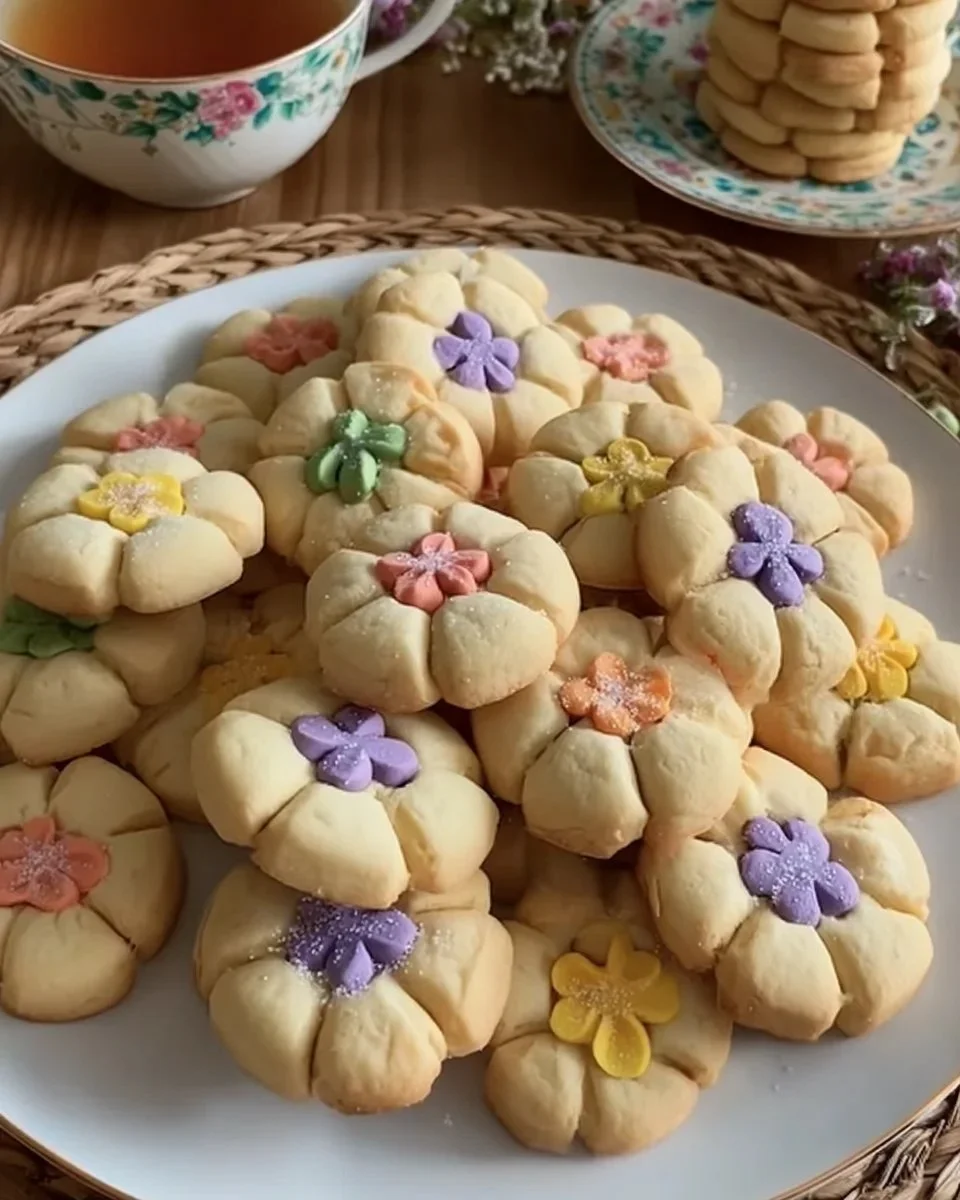
The first time I made these Spring Flower Shortbread Cookies, it was a gray April afternoon and I needed a little color on the kitchen counter. I had a stash of edible flowers from a farmer’s market and a butter-softening problem that turned into the happiest accident. I wanted something simple enough for a lazy afternoon yet pretty enough to take to a friend’s baby shower, and that combination of buttery shortbread and delicate floral petals felt like the answer. If you enjoy floral baking experiments, you might also like my take on an eggless decorative cookie I found once at an eggless butterfly shortbread idea, which taught me how forgiving shortbread dough can be.
The small list of things you’ll actually need
I love that this recipe asks for so little: 2 cups all-purpose flour, 1 cup unsalted butter, softened, ½ cup powdered sugar, 1 teaspoon vanilla extract, ¼ teaspoon salt, Edible flowers (such as pansies, violets, or nasturtiums), Granulated sugar, for sprinkling. That’s it. When I say “softened” butter I mean it should give a little when you press it but still be cool, because how the butter behaves determines whether the cookies are melt-in-your-mouth or a bit dense. If you want a riff on this idea later, I sometimes look at a bright citrus shortbread riff for inspiration at a vegan lemon curd shortbread variation to imagine how lemon zest would lift the whole thing.
The way I make them, step by step (but not a rigid list)
I start in the same way every time: Preheat your oven to 350°F (175°C). Line a baking sheet with parchment paper. I find that doing those two things first gives me a sense of calm while I measure and chat with whoever’s around. In a mixing bowl, beat the softened butter and powdered sugar until smooth and creamy. Add vanilla extract and salt; mix until well combined. Gradually add the flour, stirring until a soft dough forms. The dough should come together without being sticky; if it feels too soft, a quick chill for 15 minutes helps immensely.
Turn the dough out onto a lightly floured surface and roll it to about ¼-inch thickness. Use cookie cutters to cut out desired shapes and transfer them to the prepared baking sheet. I like to keep a small saucer of flour nearby so my cutter won’t stick; if it does, run the cutter under hot water and dry it, which helps cut cleaner edges. Gently press edible flowers onto the tops of the cookies and sprinkle a small amount of granulated sugar over them. I remove the stems and press only the petal base gently so the flower lies flat but doesn’t bruise.
Bake in the preheated oven for 12-15 minutes or until the edges are lightly golden. Allow to cool on the baking sheet for a few minutes before transferring to a wire rack to cool completely. Serve these beautiful cookies on a lovely platter at gatherings or as thoughtful gifts for friends and family.
Getting the texture just right and how to tell when they’re done
The secret to perfect shortbread is the balance between tender crumbs and enough structure to hold a pretty flower. The trick I learned from my grandmother was to stop mixing the moment the flour disappears. Overworking develops gluten and you lose that crumbly, short texture. You will know they’re done right when the bottoms are pale gold and the edges are lightly golden; the cookies should feel set to the touch but still soft in the center, and they crisp slightly as they cool. One of my little tips is to leave them on the baking sheet for three to five minutes—this helps them firm up enough so they don’t tear when you move them.
A few of my practical tips and what I do when things go sideways
Tip one: if your kitchen is warm, refrigerate the dough in a disk wrapped in plastic for 20 to 30 minutes before rolling; it’s easier to roll and keeps the shapes crisp. Tip two: press the edible flowers on gently with a teaspoon so they adhere without getting crushed. Tip three: if you want super-clean edges, chill the cut shapes on the baking sheet for 10 minutes before baking. If the flowers darken in the oven, it usually means they were stacked or overlapped; spread them out and use single petals for the most translucent look.
Sometimes the dough feels crumbly and refuses to come together. I add a teaspoon of cream or a splash of milk, mix, then chill—usually fixes it without making the cookies tough. If the cookies spread too much, the butter was probably too soft; next batch, chill the dough a bit longer. I once had a batch where the sugar melted into little pools around the flower—still delicious, but a bit less elegant. Use a light hand with granulated sugar sprinkling if you want pristine petals.
What to serve them with, easy variations, and how to keep extras
These cookies are beautiful on their own, but I often set them next to a pot of Earl Grey tea or a bright, slightly tart lemonade for spring gatherings. They’re elegant with a simple cheese board that includes soft goat cheese and honey if you want a savory contrast. For variations, try adding a teaspoon of lemon zest to the dough for brightness, or replace half the flour with ground almond for a nuttier, more tender crumb. Another favorite is to dip half the cookie in melted dark chocolate after cooling for a bit of richness.
If you need to make them ahead, bake and cool completely, then stack the cookies with parchment layers and place them in an airtight container; they keep for about five days at room temperature. You can also freeze the unbaked dough wrapped tightly for up to one month and slice and bake as needed. I once transported a dozen in a shallow tin across town and they arrived with petals still intact, which felt like carrying a tiny garden in my hands.
When this recipe means the most to me
For me, these cookies are more than a springtime treat. I think of a picnic with friends where everyone brought a plate of something homegrown, and my tray of floral shortbread sat in the middle like a centerpiece. The scent of butter and vanilla, the faint floral perfume, the soft snap when you take a bite—those sensory memories are why I keep making them. If you like texture experiments, there’s also a playful crinkle sugar cookie that inspired my sprinkling technique at a springtime crinkle cookies recipe, and a slightly different version I looked at when trying to make my edges dustier at a springtime crinkle cookies.
Conclusion
If you want to see an artistic take on flower-topped shortbread, I often look at Loria Stern’s Shortbread Flower Cookies Are an Artistic Delight for inspiration on composition and color. For a step-by-step pansy-specific tutorial that’s very approachable, I recommend How to Make Pansy Topped Shortbread Cookies • so easy! as a visual companion to this recipe.
Give these Spring Flower Shortbread Cookies a try on a slow afternoon. They’re small, forgiving, and ridiculously friendly to improvisation, and every time I bake them I end up smiling at the counter like I did the first spring I made them.
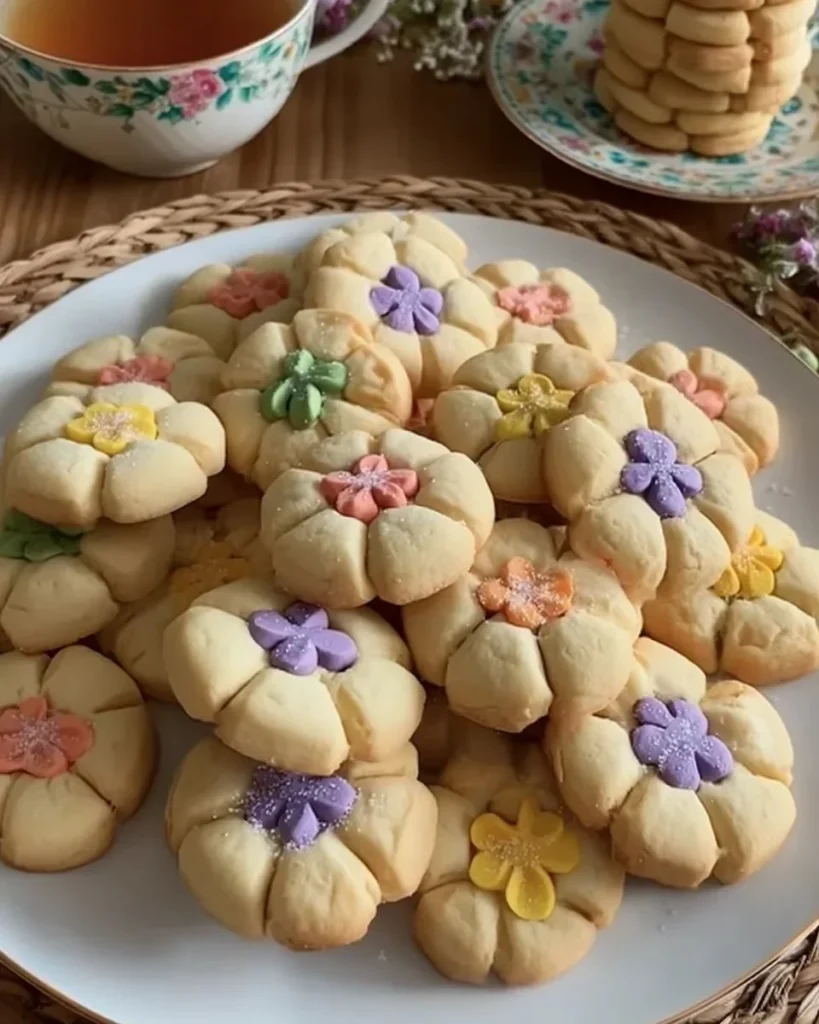
Spring Flower Shortbread Cookies
Ingredients
Method
- Preheat your oven to 350°F (175°C) and line a baking sheet with parchment paper.
- In a mixing bowl, beat the softened butter and powdered sugar until smooth and creamy.
- Add vanilla extract and salt; mix until well combined.
- Gradually add the flour, stirring until a soft dough forms. If the dough is too soft, chill for 15 minutes.
- Turn the dough out onto a lightly floured surface and roll to ¼-inch thickness.
- Cut out desired shapes with cookie cutters and transfer to the prepared baking sheet.
- Gently press edible flowers onto the tops of the cookies and sprinkle with granulated sugar.
- Bake in the preheated oven for 12-15 minutes or until edges are lightly golden.
- Allow to cool on the baking sheet for a few minutes before transferring to a wire rack.