Spring Minestrone Soup
How I stumbled into a bowl of spring The first time I made what I now call Spring Minestrone Soup was on a wet Saturday afternoon when the farmers market was overflowing with tiny zucchinis, bright green peas, and the kind of basil that smells like summer even when it is still only April. I…
How I stumbled into a bowl of spring
The first time I made what I now call Spring Minestrone Soup was on a wet Saturday afternoon when the farmers market was overflowing with tiny zucchinis, bright green peas, and the kind of basil that smells like summer even when it is still only April. I wanted something that tasted like the market, something green and bright and warm in the belly. Over the years this little pot of comfort has become my go-to for late-spring dinners, and if you like the idea of a soup that is both homey and celebratory, you will understand why. If you want a heartier, more traditional base, I sometimes start with a classic minestrone base I found years ago and then tweak it toward spring.
What I keep on the counter when I make it is simple: 1 tablespoon olive oil, 1 onion chopped, 2 garlic cloves minced, 2 carrots diced, 2 celery stalks diced, 1 zucchini diced, 1 cup green beans trimmed and chopped, 1 cup peas whether fresh or frozen, 1 can chickpeas drained and rinsed, 4 cups vegetable broth, 1 can diced tomatoes, and 1 cup ditalini pasta. Salt and pepper to taste, and a handful of fresh herbs like basil or parsley for garnish finish it off. Saying the list out loud like that makes it feel modest, but when those colors hit the pot it is anything but.
The Secret Behind Perfect Spring Minestrone Soup
There is one small habit I swear by: get the aromatics going right at the start. In a large pot, heat olive oil over medium heat. Add onion and garlic, sautéing until translucent. That sizzling sound and the smell of garlic softening into the onion is what tells me the soup is starting to sing. After that I add the carrots and celery, cooking for about 5 minutes so they begin to loosen up and sweeten. If you rush this stage the vegetables will stay a little too raw and the broth will lack depth, so give them a gentle moment in the heat.
I also like to think about texture early on. Once the carrots and celery have softened, I stir in zucchini, green beans, and peas, cooking for an additional 5 minutes. The zucchini softens into silk while the green beans keep a snap, and frozen peas are a perfect little burst of green if you do not have fresh ones. At this point the pot looks springlike: orange, green, a little white from the onion. Pouring in the vegetable broth and the can of diced tomatoes, I bring the mixture to a boil, and that rolling bubble is when I give myself permission to step away for a minute while it calms down.
Building the flavors (and adding the heart)
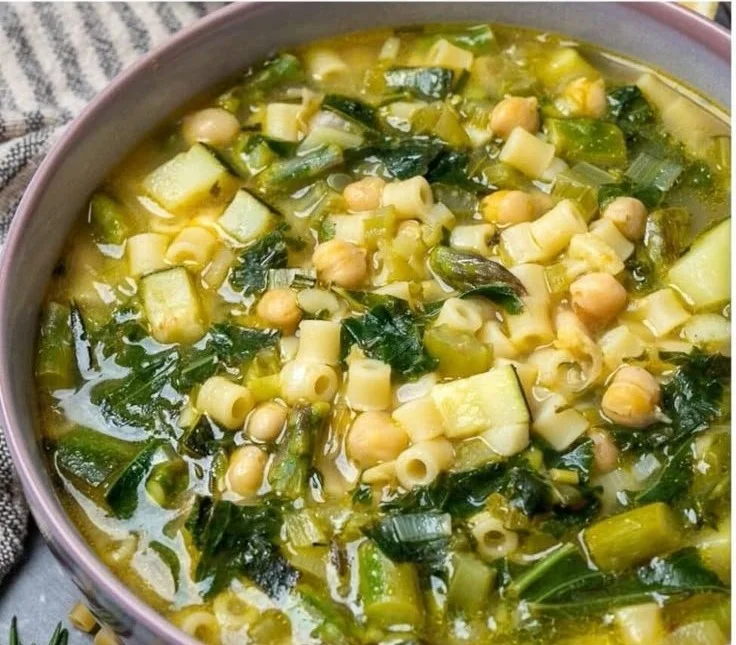
This is where the chickpeas and pasta come in. I add the chickpeas and ditalini pasta, simmering until the pasta is cooked, which takes about 8 to 10 minutes. The tiny ditalini nestle into the broth and soak up flavor without taking over. Season with salt and pepper to taste; I start modest and adjust after the pasta is done because starch can mute saltiness. A trick I learned is to taste for a balance between the tomatoes, the sweetness of the carrots, and the salt. If the tomatoes are very acidic, a tiny pinch of sugar calms it, though I rarely use it. Fresh herbs at the end bring everything alive, so I tear basil and scatter parsley on top just before serving.
For quicker weeknights when I want something similar but faster, I sometimes turn to a 25-minute black bean soup style preparation, which taught me how to speed up a satisfying soup without losing character. But for this minestrone, those slow, simple steps are part of the pleasure.
Getting the texture just right
Knowing when the soup is done is less about a clock and more about a feel. The pasta should be tender yet slightly firm in the center. The carrots and celery must be soft but not mush, and the zucchini should be silky. You know it is right when the broth tastes rounded and there is a gentle give when you bite a green bean. If you are worried about overcooking the pasta on day two, stop the pasta a minute shy in the first cooking and you can finish reheating it later. That brings me to storage: I cool the soup to room temperature, then transfer it to airtight containers and refrigerate for up to three days. If the pasta has absorbed too much broth, I add a splash of water or extra broth while reheating on the stove to bring it back to life.
A few practical tips that have saved me more than once: one, reserve a ladle of the hot broth before adding the pasta and use it later to adjust thickness without thinning the flavor; two, frozen peas are perfectly fine and often preferable when fresh peas are not available; three, if you want a richer mouthfeel, finish a bowl with a drizzle of extra virgin olive oil. I count that as my fourth tip: always taste as you go.
Small changes I make and why they matter
I love this recipe because it feels endlessly flexible. Swap the chickpeas for cannellini beans if you prefer a creamier bean, or add a handful of spinach at the end for extra green vibrance. For a non-vegetarian twist, a little pancetta crisped at the start gives smoke and depth. If you want to stretch the soup into a meal for a crowd, increase the ditalini and add another can of beans. Another variation is to use short macaroni or small shells in place of ditalini; they hold the broth differently and can be more satisfying to slurp.
When things do not go as planned and the pasta swells too much overnight, I rescue the soup with a raw splash of lemon juice and a handful of fresh herbs. It brightens everything and makes leftovers taste freshly made. If you like one-pot convenience, I sometimes borrow a timing trick from a 30-minute one pot taco soup recipe: chop everything ahead and toss it in quickly so the pot never goes empty for long.
What I serve it with is almost always the same: a chunk of crusty bread for dunking and a simple green salad with a lemon vinaigrette. On Sundays I will grate a little Parmigiano at the table, but the soup stands perfectly on its own with just those fresh herbs.
Conclusion
If you want to compare this to other takes on a spring minestrone, I like to peek at this detailed version for inspiration and swapping ideas: Spring Minestrone Soup – Simply Recipes.
Spring Minestrone Soup
Ingredients
Method
- In a large pot, heat olive oil over medium heat.
- Add chopped onion and minced garlic, sautéing until translucent.
- Add diced carrots and celery and cook for about 5 minutes until they begin to soften.
- Stir in diced zucchini, chopped green beans, and peas. Cook for an additional 5 minutes.
- Pour in the vegetable broth and canned diced tomatoes. Bring the mixture to a boil.
- Add chickpeas and ditalini pasta, then simmer until the pasta is cooked, about 8 to 10 minutes.
- Season with salt and pepper to taste.
- Before serving, tear fresh basil and scatter parsley on top.