Spring Pea Risotto
The moment I understood spring in a bowl One rainy afternoon years ago I found myself craving something bright and comforting at once, and this Spring Pea Risotto became my answer. It smells like sunshine when the peas hit the warm rice, with that lemony lift and a whisper of mint. I keep thinking of…
The moment I understood spring in a bowl
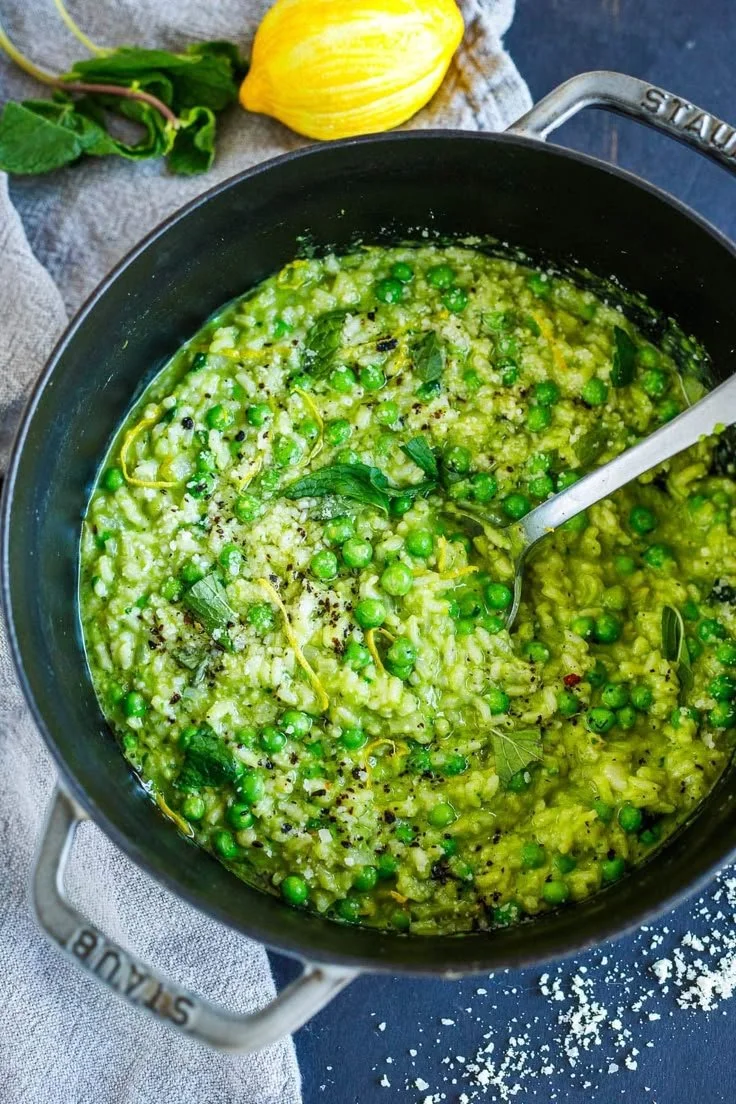
One rainy afternoon years ago I found myself craving something bright and comforting at once, and this Spring Pea Risotto became my answer. It smells like sunshine when the peas hit the warm rice, with that lemony lift and a whisper of mint. I keep thinking of it as the dinner that makes people linger at the table, quietly stirring their spoons between bites. If you like dishes that feel homemade without being fussy, I think you’ll enjoy it. If you want something light to go alongside it, I often send a friend this recipe for fresh spring rolls with peanut sauce because the flavors play nicely together.
The handful of things I always have ready
I never write the ingredients like a checklist here, but it helps to picture them as you chop: a cup of Arborio rice, about four cups of vegetable broth warming on the stove, a cup of peas — fresh if you can get them, frozen work just as well — one chopped onion and two cloves of minced garlic for that fragrant base, and two tablespoons of olive oil to start everything off. I usually pour a half cup of white wine while the rice toasts, but that is optional. At the end I stir in a quarter cup of grated Parmesan, the zest and juice of one lemon, a handful of chopped fresh mint leaves, and salt and pepper to taste. If I want to make it a proper dinner, I sear fish or scallops to sit on top.
Walking through how it comes together
I like to explain the method the way I think through it when I’m cooking. First, I get the broth simmering so it’s warm — 1. In a saucepan, heat the vegetable broth over medium heat. Keep it warm. That warmth is what keeps the rice cooking evenly. While the broth heats, I warm a separate skillet with two tablespoons of olive oil over medium heat, and add the chopped onion and minced garlic. That sizzle and the smell of onion softening is where the whole dish starts to feel like home: 2. In a separate large skillet, heat olive oil over medium heat. Add the onion and garlic, sauté until the onion is translucent.
Once the onion is soft, I add the cup of Arborio rice and stir until each grain is glossy and a little toasted, about a minute or two: 3. Stir in the Arborio rice and cook for 1-2 minutes until the rice is well-coated. If I’m using wine I pour in a half cup now and let it bubble away until it’s mostly gone, which adds a subtle acid that balances the peas and lemon beautifully: 4. Add the white wine and cook until it’s mostly evaporated.
This is where patience matters. I ladle warm broth in, one scoop at a time, stirring so the rice releases its creamy starches. You want to add liquid only when the previous addition has mostly absorbed, so the rhythm of ladling and stirring becomes almost meditative: 5. Begin adding the warm vegetable broth, one ladle at a time, stirring frequently. Wait until the liquid is mostly absorbed before adding the next ladle. After about 15 to 20 minutes the rice should be creamy and still have a gentle bite at the center — that perfect al dente texture. At that point I fold in the peas, lemon juice and zest, and the bright chopped mint so those flavors don’t cook away but meld into the rice: 6. After about 15-20 minutes, when the rice is creamy and al dente, add the peas, lemon juice, lemon zest, and chopped mint. Stir to combine.
I take the pan off the heat and finish with the cheese right away so it melts into the risotto without clumping: 7. Remove from heat and stir in the Parmesan cheese. Season with salt and pepper to taste. Serve it warm and, if I’m feeling fancy or feeding guests, I top the risotto with seared fish or scallops for a textural contrast and a little ocean flavor: 8. Serve warm, with seared fish or scallops on top if desired.
The small tricks I always pass along
There are a handful of things I’ve learned that change the outcome. Keep your broth warm – cold broth shocks the rice and slows everything down. Stir often but not viciously; you want a gentle, consistent motion so the rice releases creaminess without breaking. Taste as you go around the 15-minute mark: al dente for Arborio means the center has a tiny white dot when you bite the grain, not mush. If you’re short on time, frozen peas can be stirred in earlier than fresh peas because they need to come up to temperature; fresh peas give a sweeter pop if added right at the end. Finally, don’t underestimate the lemon zest – it feels like a tiny secret that lifts the whole dish.
Why I keep returning to it, and how to make it your own
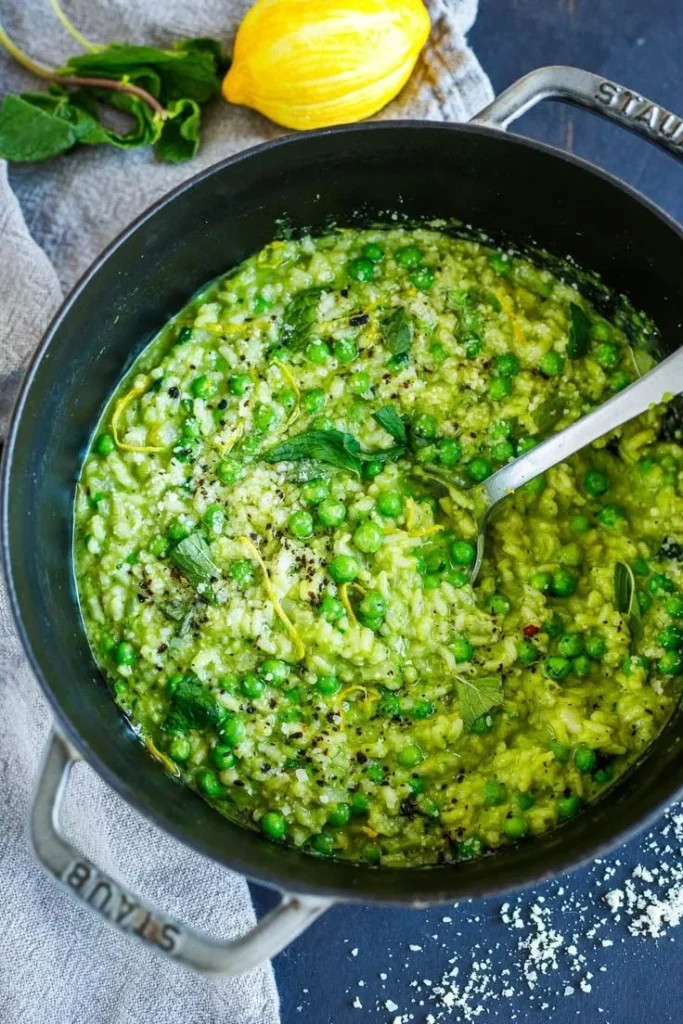
This is the kind of meal I make when I want something that reads elegant but is actually simple. The colors are spring – pale green peas, specks of mint, the pale cream of the rice – and the aroma is a mix of lemon and garlic that somehow feels celebratory. For variations, try folding in blanched asparagus tips for extra crunch, swap mint for basil if you like a sweeter herb note, or stir in a spoonful of pesto instead of mint for a twist. If you want a richer version, finish with a pat of butter before the Parmesan. For a lighter take, skip the cheese and use a little extra lemon.
When people ask what to serve with it, I usually suggest something textural or bright: a simple green salad, crusty bread to mop up the creamy edges, or a platter of quick pickled vegetables. If you want to keep the meal light and handheld, pair it with a spring roll bowl like this spring roll bowl with creamy peanut dressing which echoes the herb and lemon notes.
Leftovers, make-ahead notes, and a memory
I remember making a double batch once for a small dinner party and feeling smug until I realized risotto doesn’t keep its texture like soup. If you have leftovers, cool them quickly and store them in an airtight container in the refrigerator for up to two days. To reheat, add a splash of warm broth or water and gently warm on the stove, stirring so it loosens back up. If you want to prepare part of it ahead, you can keep the broth heated and have the onions and rice toasted; then finish the ladling shortly before guests arrive to keep that fresh-toasted rice flavor. One of my favorite memories is serving this after a long walk in April, watching friends close their eyes at the first bite and say something like, "this tastes like spring."
If you’re experimenting, try two small variations: fold in a handful of pea shoots and swap Parmesan for ricotta at the finish for a silkier mouthfeel, or mix in a little smoked pancetta at the stage you toast the rice for a smoky-salty contrast. Both work, depending on whether you want to keep it vegetarian or add a savory edge.
I also sometimes link foods that match the risotto’s vibe, like a crunchy salad; here’s a suggestion for a spring roll salad that pairs well: spring roll salad with peanut dressing. If you want a simpler, more bowl-focused side, try this spring roll bowl with peanut sauce which echoes the fresh herbs and bright citrus.
Conclusion
If you want another take on sweet peas mingling with creamy rice, I like to compare notes with recipes like Spring Pea Risotto with Parmesan & Basil – The Original Dish for inspiration, and Gaby’s fresh pea risotto is a lovely reference for technique and timing at Spring Pea Risotto – What’s Gaby Cooking. Give it a try, and let me know whether you topped yours with seared scallops or kept it vegetarian – either way, it always makes the table feel like something to celebrate.
Spring Pea Risotto
Ingredients
Method
- First, get the vegetable broth simmering in a saucepan over medium heat to keep it warm during cooking.
- In a separate large skillet, heat the olive oil over medium heat, then add the chopped onion and minced garlic, sautéing until the onion is translucent.
- Stir in the Arborio rice and cook for 1-2 minutes until each grain is glossy and slightly toasted.
- If using, pour in the white wine and allow it to cook until mostly evaporated.
- Begin adding the warm vegetable broth, one ladle at a time, stirring frequently. Wait until the liquid is mostly absorbed before adding the next ladle.
- After about 15-20 minutes, when the rice is creamy and al dente, add the peas, lemon juice, lemon zest, and chopped mint, stirring to combine.
- Remove from heat and stir in the Parmesan cheese. Season with salt and pepper to taste.
- Serve warm, topped with seared fish or scallops if desired.