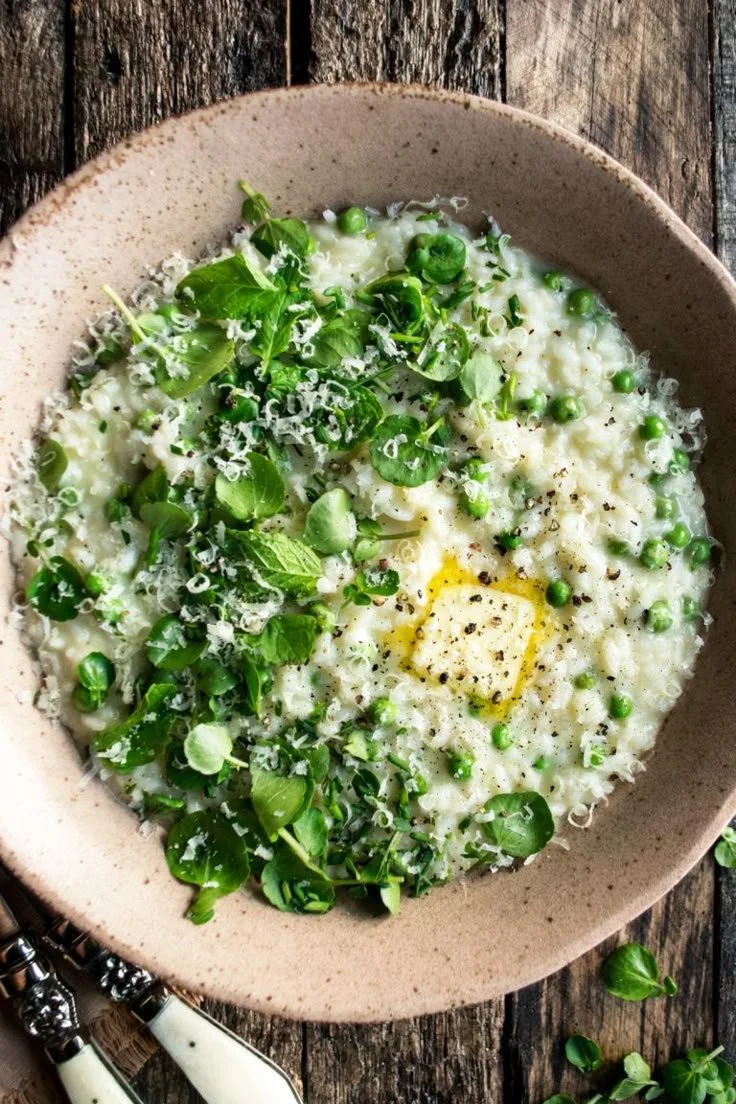
Spring Pea Risotto with Parmesan & Basil
A spring memory that became dinner The first time I made what I now call Spring Pea Risotto with Parmesan & Basil, it was for a tiny, impromptu dinner party when peas were popping up in every farmer’s market basket. The kitchen smelled like lemon zest and melting butter, and everyone kept drifting back to…
A spring memory that became dinner
The first time I made what I now call Spring Pea Risotto with Parmesan & Basil, it was for a tiny, impromptu dinner party when peas were popping up in every farmer’s market basket. The kitchen smelled like lemon zest and melting butter, and everyone kept drifting back to the stove to steal a spoonful while I stirred. That green color and the way the risotto sat on the spoon—thick, silky, alive—made me realize this would be my new go-to for spring entertaining.
If you want something light to go alongside it, I often throw together a crisp salad; once I paired this risotto with a bright spring green salad with lemon basil vinaigrette and it felt like the perfect spring meal. If you’re building a full menu, I sometimes start with fresh spring rolls with peanut sauce as an appetizer so the table flows from bright to cozy.
To make it you will need 2 tbsp olive oil, 1 large shallot, thinly sliced, 6 garlic cloves, roughly chopped, 6 oz peas (fresh or frozen), 1 ½ cups + 1 qt chicken (or vegetable) stock, kosher salt, freshly cracked black pepper, ½ cup packed parsley leaves, 1 cup packed basil leaves, 1 tbsp lemon zest, 4 tbsp butter, 1 cup arborio rice, ½ cup white wine, 2 tbsp fresh lemon juice, ¾ cup freshly grated parmesan cheese, plus more for serving, 2 tbsp chopped fresh chives, pea greens, for serving (optional). Saying the list out loud feels almost like the start of a song: olive oil, shallot, garlic, peas, herbs, lemon, butter, rice, wine, and parmesan. Simple, but together they sing.
The secret behind perfect Spring Pea Risotto with Parmesan & Basil
For me the secret is twofold: balancing heat and patience. You want the pan warm enough to coax flavor out of the shallots and wine, but not so hot that the rice panics. I always heat a 5-6-quart Dutch oven (or heavy-bottomed pot) over medium heat. Add the olive oil. Once hot, add the shallots. Cook for about 3 minutes until tender and slightly caramelized, stirring often. Stir in the garlic. Cook for another minute. Add the peas and 1 ½ cups of chicken stock. Season well with salt and black pepper. Bring to a boil, reduce the heat to medium-low, cover the pot, and simmer for 5 minutes. Transfer the mixture to a high-powered blender. Add the parsley, basil, and lemon zest. Blend for 90 seconds until smooth. Set the purée aside.
That puree is the green heart of the dish. It brightens the flavor and creates that vivid color without needing a mountain of butter. I like to wipe out the pot and return it to medium heat. Add 2 tablespoons of butter and let it melt. Meanwhile, pour the remaining 1 quart of stock into a small saucepan over low heat. Keep warm as you make the risotto. Toasting the arborio briefly gives the grains a nutty note: stir the arborio rice into the butter. Allow it to toast for a minute or so. Add the white wine. Use a wooden spoon to stir until the rice has absorbed the liquid. Start to ladle the heated stock into the pot, one ladle (or about a ½ cup measurement) at a time, stirring after each addition until the liquid has been absorbed. Continue until you’ve added all of the liquid. This process should take about 20-25 minutes.
You want to hear a steady gentle hiss and the soft scrape of the wooden spoon as the rice breathes. At the very end, stir in the pea puree. Allow some of the liquid to absorb as you stir. Lastly, stir in the remaining 2 tablespoons of butter, lemon juice, and parmesan cheese. Once the butter and cheese have melted, serve the risotto immediately (the risotto should be thick, yet still silky and spoonable). Garnish with more parmesan cheese, the chives, pea greens (optional), freshly cracked black pepper, and a drizzle of olive oil (if desired).
Little tricks I rely on
I learned a few small things that make a big difference. Keep the stock warm in a separate pot so each ladle you add doesn’t shock the rice. Use a wooden spoon because it lets you feel the rice; stainless steel hides the subtle pull you want to watch for. When blending the peas, parsley, basil, and lemon zest, I blend them for a solid 90 seconds so the puree is smooth and fully aromatic. If you’re using frozen peas, there’s no shame—brief simmering with 1 ½ cups of stock wakes up their sweetness. Salt early and taste often. Finally, when you stir in the parmesan and the last butter, take the pot off the heat for a moment; residual warmth will melt everything into silk without overcooking the rice.
A few personal tips: first, if you see the rice getting stubborn, add a little more stock or a splash of white wine and keep stirring. Second, avoid overblending the peas to the point where they lose that fresh flavor; the 90 seconds I mention is long enough for creaminess, not so long that it gets dull. Third, serve right away; risotto doesn’t like to sit.
How you know it’s done, and what to serve with it
The moment you know the risotto is right is when it clings to the spoon but still slides slowly when you tilt it. The rice should be tender with a little bite at the center, not mushy. The texture should be thick, yet still silky and spoonable. I like to pair this risotto with something that won’t overpower it. Grilled shrimp or a simply roasted chicken work beautifully, or for something heartier try serving it beside a slow-braised beef and letting the sauce mingle; the rich slow roast is a lovely contrast and brings out the parmesan notes as in recipes like slow braised pot roast with creamy parmesan risotto. For a lighter meal, a spring-roll bowl is a fun contrast to the creaminess: I sometimes serve a spoonful next to a spring-roll bowl with creamy peanut dressing for a colorful plate.
A couple of variations and a note about leftovers
If you want to tweak the base, try swapping half the basil for fresh mint for a herbal lift, or add blanched asparagus tips in the final minutes for a vegetable-forward version. For a nuttier finish swap part of the parmesan for pecorino, or make it vegetarian by using vegetable stock instead of chicken stock.
Leftovers are always a bit different but still delicious. Store cooled risotto in an airtight container for up to three days in the refrigerator. When reheating, do it gently on the stove with a splash of stock or water to loosen the texture; microwave reheating works if you add a little liquid and stir halfway through. Freezing is possible but the texture will be affected, so I prefer to avoid it.
Conclusion
If you want to see another take on a spring pea risotto, I like the balance in The Original Dish’s spring pea risotto which emphasizes bright lemon notes. For a slightly different herb-forward version, check out Barley & Sage’s spring pea risotto recipe for inspiration.
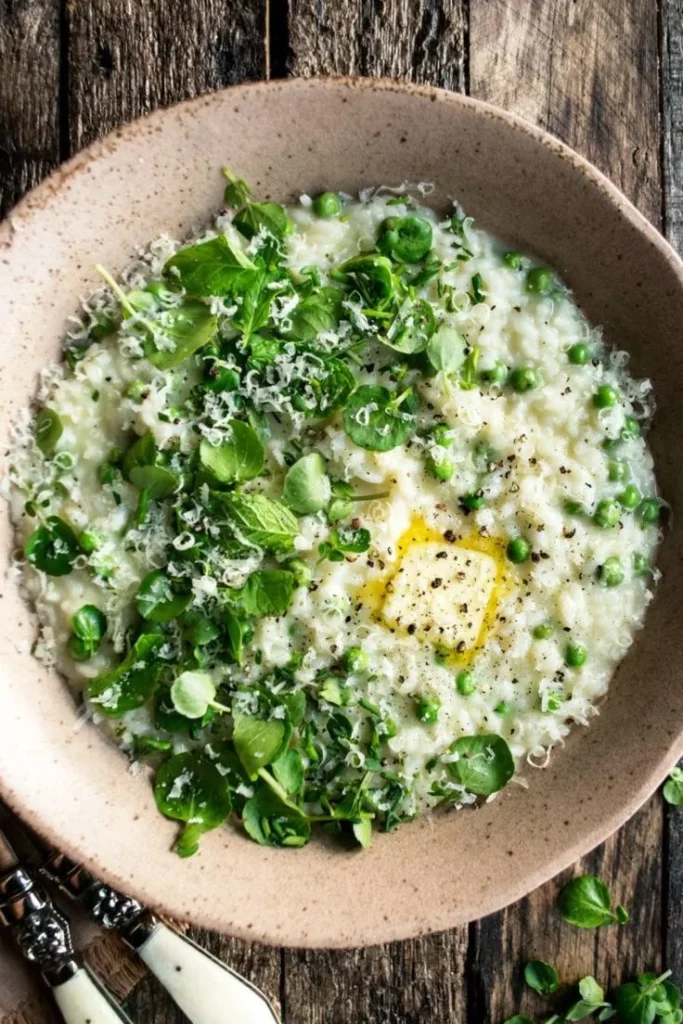
Spring Pea Risotto with Parmesan & Basil
Ingredients
Method
- Heat a 5-6-quart Dutch oven over medium heat and add olive oil.
- Once hot, add the sliced shallots and cook for about 3 minutes until tender and slightly caramelized, stirring often.
- Stir in the chopped garlic and cook for another minute.
- Add the peas and 1.5 cups of chicken stock. Season well with salt and black pepper. Bring to a boil, reduce the heat to medium-low, cover, and simmer for 5 minutes.
- Transfer the mixture to a high-powered blender. Add the parsley, basil, and lemon zest. Blend for 90 seconds until smooth and set aside.
- Wipe out the pot and return it to medium heat. Add 2 tablespoons of butter and let it melt.
- In a small saucepan, pour the remaining 1 quart of stock and keep warm over low heat.
- Stir the arborio rice into the melted butter and toast for about a minute.
- Add the white wine and stir until the rice absorbs the liquid.
- Begin ladling in the heated stock, about a half cup at a time, stirring until each addition is absorbed before adding the next. Continue this process for 20-25 minutes.
- At the end, stir in the pea purée, allowing some liquid to absorb, followed by the remaining 2 tablespoons of butter, lemon juice, and Parmesan cheese.
- Serve the risotto immediately, garnished with extra Parmesan cheese, chives, pea greens (if desired), cracked black pepper, and a drizzle of olive oil.