Sticky Toffee Pudding Cookies
How I Fell in Love with Sticky Toffee Pudding Cookies The first time I made these, my kitchen smelled like a cozy café: warm brown sugar, a whisper of molasses, and spices that reminded me of autumn evenings. I call them Sticky Toffee Pudding Cookies because they borrow that same soft, caramel-soaked idea but in…
How I Fell in Love with Sticky Toffee Pudding Cookies
The first time I made these, my kitchen smelled like a cozy café: warm brown sugar, a whisper of molasses, and spices that reminded me of autumn evenings. I call them Sticky Toffee Pudding Cookies because they borrow that same soft, caramel-soaked idea but in cookie form—tender, slightly cakey, and finished with velvet buttercream and a ribbon of toffee sauce. I made them for a friend’s birthday and watched people’s faces change from “this is nice” to “where did you get this?” after the first bite. That reaction is why I keep this recipe in my back pocket.
The Ingredient That Changes Everything
You don’t need a pantry full of fancy stuff to get there. What matters are a few key ingredients and good timing. For this recipe I use 113 g unsalted butter (softened) and 200 g dark brown sugar as the backbone; the butter brings richness, the dark brown sugar gives that deep molasses note. Then there’s 1 large egg, 1 tsp vanilla extract, and 1 tbsp molasses to layer extra caramel flavor. For the structure, 200 g all-purpose flour is combined with 1 tsp baking soda, 0.5 tsp salt, 0.5 tsp ground cinnamon, and 0.25 tsp ground nutmeg. To finish, you’ll need 1 cup buttercream frosting (homemade or store-bought) and 0.5 cup toffee sauce (homemade or store-bought) for that true sticky-toffee experience.
I like to line up ingredients and smell the molasses and brown sugar together before I start—it’s a small, indulgent moment that sets the tone.
Getting the Texture Just Right
When I’m mixing, I always start by creaming. Cream together softened butter and dark brown sugar until light and fluffy. That step is where air gets folded in and where the cookie’s tender crumb begins. Add in the egg, vanilla extract, and molasses. Mix until well combined. In a separate bowl, whisk together the flour, baking soda, salt, cinnamon, and nutmeg. Gradually add the dry ingredients to the wet mixture and mix until a soft dough forms.
A key trick I learned is to chill the dough. Chill the dough in the fridge for 30 minutes to help the flavors develop and prevent spreading. It makes a real difference: chilled dough puffs up and sets without collapsing into a flat disc. While the dough is resting, preheat oven to 350°F (175°C) and line a baking sheet with parchment paper; I always preheat early so the oven is steady.
When it’s time to bake, I scoop cookie dough and place on the baking sheet, spaced apart. These aren’t huge cookies—think generous spoonfuls rather than golf-ball-sized mounds. Bake for 9–11 minutes, or until edges are set and centers are puffed. Listen for quiet: a cookie is done when the edges are firm but the center still looks slightly soft and puffy. id=”instruction-step-9″>9. Cool completely on a wire rack before frosting. That cooling step is non-negotiable if you want clean, pretty frosting instead of a sliding, melted mess.
Little Tricks I Swear By
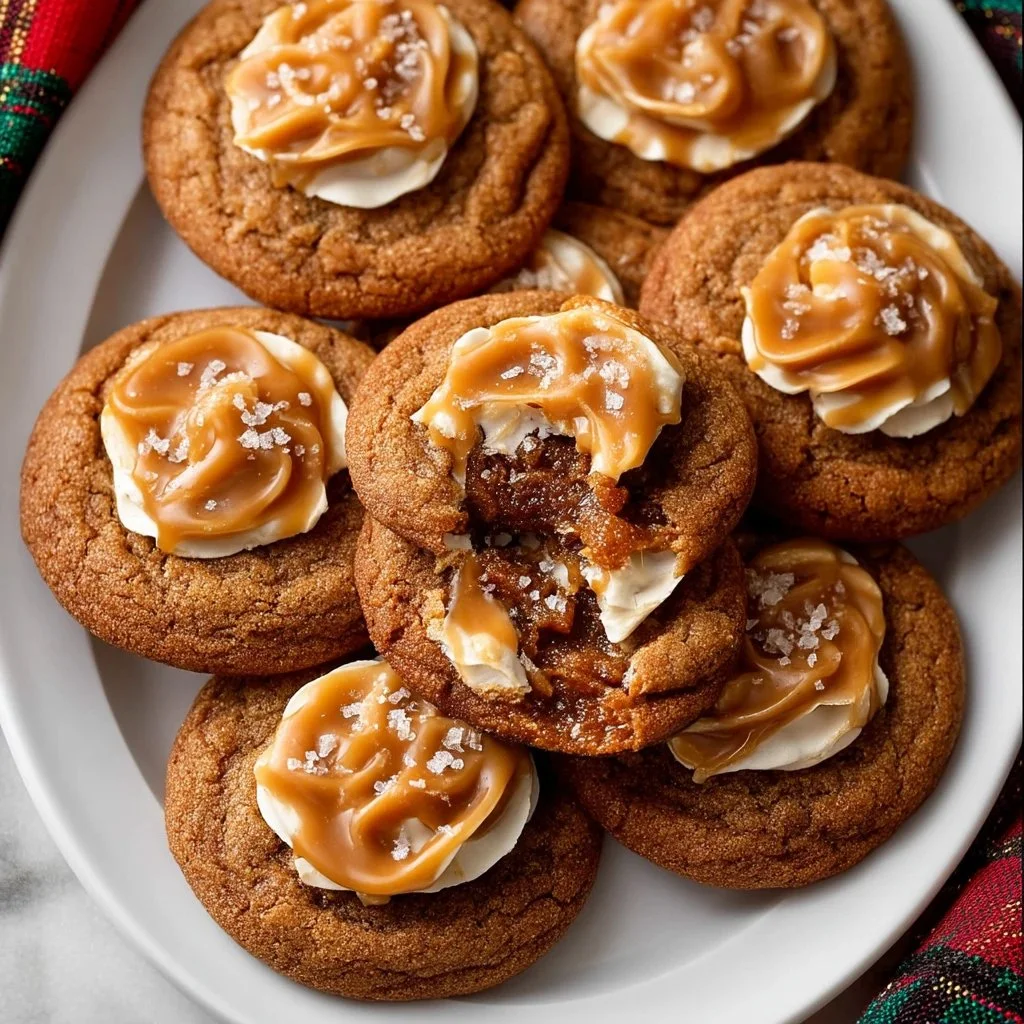
Pipe or spread buttercream frosting on each cookie when they’re completely cool. If the buttercream seems too stiff, loosen it with a teaspoon of milk—small adjustments matter. Warm the toffee sauce slightly and drizzle over the frosted cookies. Warm sauce melds into the frosting and makes the whole thing feel like a miniature sticky toffee pudding.
Optional: Add flaky sea salt for a finishing touch. The salt contrasts the sweetness and makes the toffee flavor sing. A few personal tips: first, don’t overbake; those extra two minutes can turn tender cookies into something dry. Second, measure your flour carefully—too much flour makes the cookies cakey in a bad way. Third, if your kitchen is warm, chill the dough a little longer so the cookies keep their shape while baking.
Memories and a Few Variations
There’s a memory tied to these cookies: my grandmother used to make sticky toffee pudding at Christmas, and I wanted to capture that nostalgia in something easier to hand out at parties. The buttercream plus toffee sauce on a soft, spiced cookie seems to do the trick. If you want to play with it, there are a couple of easy directions to go. Fold in a handful of chopped dates to lean more into the classic pudding vibe; soft, chopped dates simmered briefly in a bit of hot water and then cooled before adding do wonders. Or, for grown-up depth, add a teaspoon of espresso powder to the dry mix to highlight the caramel notes. If you prefer a simpler finish, skip the buttercream and sandwich two cookies with a spoonful of toffee sauce between them.
When I want simpler, faster cookies for weekday treats, I’ll cut the frosting and drizzle and just make a light glaze of powdered sugar and a splash of toffee sauce—less fuss but the same idea.
When It’s Done and How to Keep It
How do you know you’ve nailed it? The edges should be set with a slight chew, the center tender and springy, and the aroma should be rich and caramel-like with cinnamon and nutmeg warming the background. After cooling, the frosting should sit neatly on top with toffee pooling in little glossy ribbons.
If you’re thinking make-ahead, these are forgiving. You can store leftovers in an airtight container at room temperature for up to three days. If you’ve already iced them, place parchment between layers so the frosting doesn’t stick; if not iced, freeze the baked, cooled cookies for up to two months, then thaw and frost when you need them. For a party, I often make the dough the night before and bake and finish on the day—chilling helps the flavors, and it saves frantic last-minute work.
Conclusion
If you want a cookie that feels like a warm hug and gets better with a little attention to technique, these Sticky Toffee Pudding Cookies will become one of your go-tos. They’re great with a strong cup of coffee, a late-afternoon tea, or a glass of dessert wine. For another take on the sticky-toffee cookie idea and inspiration, check out Sticky Toffee Cookies – Justine Doiron.
Sticky Toffee Pudding Cookies
Ingredients
Method
- Cream together softened butter and dark brown sugar until light and fluffy.
- Add in the egg, vanilla extract, and molasses. Mix until well combined.
- In a separate bowl, whisk together flour, baking soda, salt, cinnamon, and nutmeg.
- Gradually add the dry ingredients to the wet mixture and mix until a soft dough forms.
- Chill the dough in the fridge for 30 minutes.
- Preheat the oven to 350°F (175°C) and line a baking sheet with parchment paper.
- Scoop cookie dough and place on the baking sheet, spaced apart.
- Bake for 9–11 minutes until edges are set and centers are puffed.
- Cool completely on a wire rack before frosting.
- Pipe or spread buttercream frosting on each cookie when they’re completely cool.
- Warm the toffee sauce slightly and drizzle over the frosted cookies.
- Optional: Add flaky sea salt for a finishing touch.