Swirled Garlic Herb and Cheese Bread: 10 Steps to Pure Bliss
I still remember the first time I tore into a warm, cheesy swirl of garlic-and-herb bread and felt like the kitchen had rewarded me for trying something a little ambitious. I started this loaf on a rainy afternoon while I had a pot of soup on the stove and a podcast playing, and I found…
I still remember the first time I tore into a warm, cheesy swirl of garlic-and-herb bread and felt like the kitchen had rewarded me for trying something a little ambitious. I started this loaf on a rainy afternoon while I had a pot of soup on the stove and a podcast playing, and I found myself glancing at other recipes for inspiration—like this take on rich pasta that pairs beautifully with garlicky bread: cracked garlic steak tortellini in creamhouse sauce. That little detour is how I often learn new tricks.
Ingredients (what I measured)
- About four cups of plain all-purpose flour (I weighed it when precise counts mattered).
- Warm water, roughly one and a half cups, heated so it felt warm to my wrist but not hot — think 100–110°F.
- One packet of active dry yeast (roughly 2¼ teaspoons).
- A small spoon of salt.
- A couple of tablespoons of olive oil for richness.
- Four garlic cloves, minced until fragrant.
- Close to half a cup of mixed fresh herbs, chopped (I used mostly parsley with a little thyme).
- A cup of shredded cheese — I split between mozzarella and sharp cheddar.
Kneading and timing (a practical take)
I proofed the yeast in the warm water until tiny bubbles rose and it smelled faintly yeasty—about five to ten minutes. In the bowl I mixed the flour with salt, then poured in the bloomed yeast and the oil. The dough came together into a slightly tacky ball; I kneaded for 8–10 minutes until it was smooth and springy. If you have doubts about texture, press with a finger—if it bounces back slowly, it’s ready. I let the dough rise in a lightly oiled bowl until doubled, which took about an hour at room temperature.
Filling and shaping (how I got the swirl)
Once the dough had risen, I flattened it into a rectangle on a floured board. I spread the minced garlic, then scattered the chopped herbs and the shredded cheese across the surface. To encourage even distribution of flavor I pressed the filling in gently with my fingertips. Rolling it tightly from one long edge produced long coils of cheese and herb; then I sliced the roll lengthwise and twisted the two halves together into a loose braid. If you prefer a different presentation, you can coil the roll into a round or lay it in a loaf pan.
Baking notes and temperatures
I preheated the oven to a hot temperature so the crust would blister and color nicely—around 425°F. A quick brush of olive oil on the surface before baking brought out a glossy sheen and helped the herb bits brown without burning. Bake time hovered around 20–30 minutes for my free-form loaf; a deeper pan or thicker braid will need a bit longer. I listen for a hollow sound when I tap the bottom; that’s my cue that it’s done. If the top is browning too quickly, tent lightly with foil.
A few tweaks I tried
- For extra pull-apart gooeyness I folded a little more cheese into the dough at the end of kneading.
- If you want a milder garlic, roast the cloves first—they become sweet and buttery.
- I sometimes swap half the olive oil for melted butter for a richer crumb. For bread made in a covered pot, I leaned on this Dutch-oven approach that I’d read about: a garlic-herb Dutch oven bread technique, which encouraged me to try higher initial steam and then finish uncovered.
Tips for flavor balance and melting
Fresh herbs are bright but delicate; add a tablespoon at a time if you’re unsure. I learned that the cheese ratio matters: straight mild mozzarella gives great stretch but less flavor, while mixing in sharp cheddar or aged fontina gives a savory kick. If you’re concerned about the garlic intensity, sprinkle half the minced cloves in the dough and reserve the rest for the surface so you can control the punch.
Leftovers, storage, and repurposing
My leftover slices toast up beautifully the next day. I wrap cooled bread in foil and keep it at room temperature for a day or in the fridge up to three days; for longer storage I slice and freeze. To revive frozen slices, I warm them in a 350°F oven for 10–12 minutes. And if I have stale ends, I dice them and make an herby, cheesy strata or use them as croutons—nothing goes to waste in my kitchen. For inspiration mixing savory breads into other bakes, I sometimes look at sweet bun techniques like these raspberry treats that influenced my shaping: raspberry and rose cheesecake buns for blissful mornings.
Common pitfalls I avoid
- Too-hot water: kills the yeast.
- Over-packed flour: makes the loaf heavy.
- Underbaking: melted cheese looks done but the interior can be gummy. If you want a foolproof method, measure by weight and test for that hollow tap. For a contrasting texture, consider combining this with bold mains—the contrast reminds me of a crispy, saucy chicken dish I use as a repeat pairing: the crusted chicken Romano idea.
Short method summary (if you like a quick checklist)
- Bloom yeast in warm water. 2. Mix with flour, salt, and oil; knead until smooth. 3. Let double. 4. Roll, layer with garlic/herbs/cheese, and shape into a swirl. 5. Bake hot until crusty and golden.
Conclusion
If you want to read a fun roundup of new festival foods that keep me inspired when testing crowd-pleasing bites, check this review of the new state-fair creations: Reviewing All the New Minnesota State Fair Foods in 2025. One limitation I discovered while making this bread is that the garlic intensity can overwhelm the herbs if you’re not careful with raw versus roasted cloves, so I now almost always taste and adjust the filling before sealing the loaf.
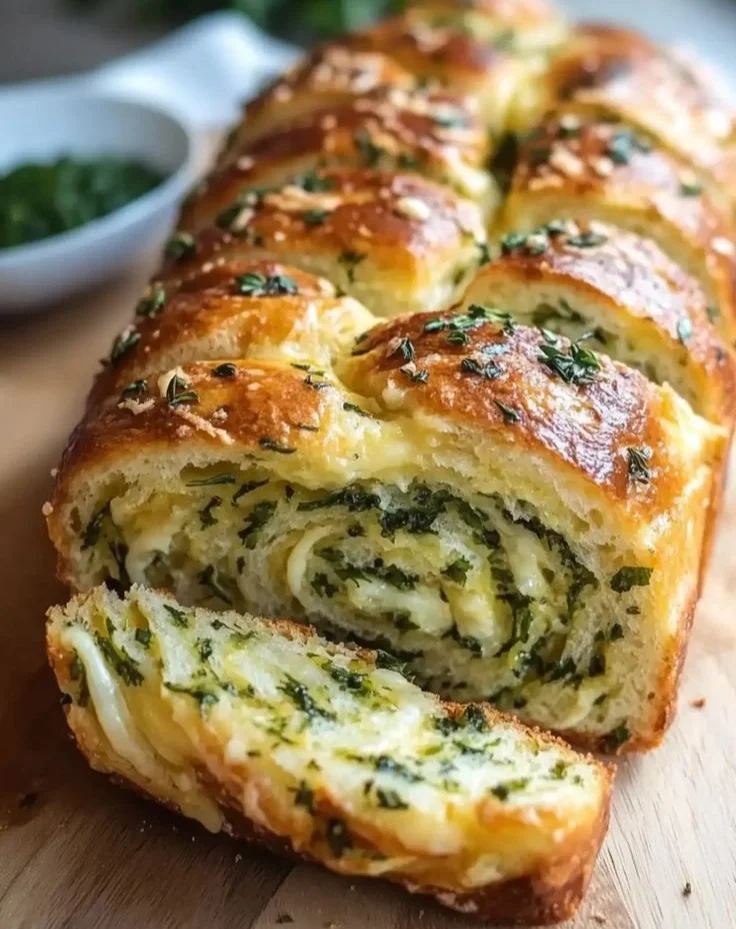
Garlic and Herb Bread
Ingredients
Method
- Proof the yeast in warm water for 5-10 minutes until tiny bubbles rise.
- Mix flour with salt in a bowl, then pour in the bloomed yeast and olive oil.
- Knead the dough for 8-10 minutes until smooth and springy.
- Let the dough rise in a lightly oiled bowl until doubled, about 1 hour.
- Flatten the risen dough into a rectangle on a floured board.
- Spread the minced garlic, then scatter the herbs and cheese across the dough.
- Press the filling in gently, roll tightly from one long edge, and slice the roll lengthwise.
- Twist the two halves together into a loose braid.
- Preheat the oven to 425°F.
- Brush the surface of the dough with olive oil before baking.
- Bake for 20-30 minutes, or until the crust is blistered and golden.
- Tap the bottom for a hollow sound to check doneness.