Texas Roadhouse Style Baked Salmon – Restaurant Flavor at Home
How I found my shortcut to a restaurant-quality salmon The first time I tried a salmon that made me stop mid-bite and say out loud, "This is it," was at a chain restaurant that somehow made sweet and savory feel like a hug. I wanted to recreate that sticky, smoky, slightly sweet glaze at home…
How I found my shortcut to a restaurant-quality salmon
The first time I tried a salmon that made me stop mid-bite and say out loud, "This is it," was at a chain restaurant that somehow made sweet and savory feel like a hug. I wanted to recreate that sticky, smoky, slightly sweet glaze at home without spending half a day fussing. After a handful of experiments and a few happy accidents, I landed on what I now call Texas Roadhouse Style Baked Salmon – Restaurant Flavor at Home. If you like playing with salmon, you might enjoy the same idea turned into baked salmon meatballs or even salmon cakes down the road baked salmon meatballs.
The shopping list is surprisingly short when you think about it: salmon fillets (6-8 ounces each, 1 to 1.5 inches thick), unsalted butter, brown sugar, garlic powder, onion powder, smoked paprika, salt, freshly ground black pepper, cayenne pepper (optional), fresh lemon wedges, fresh parsley, and Worcestershire sauce. I say this out loud because seeing everything laid out makes it feel achievable and because a lot of the magic is really in that butter, brown sugar, and Worcestershire combo.
The ingredient that changes everything
I used to think smoked paprika was optional until I tried the version without it and realized the color, the scent, and that whisper of smokiness were missing. Smoked paprika gives the glaze that restaurant-like depth that makes people ask how you did it. I melt unsalted butter and whisk in brown sugar, garlic powder, onion powder, smoked paprika, salt, freshly ground black pepper, and a splash of Worcestershire sauce. The Worcestershire brightens the brown sugar in a way that salt alone cannot. If you like a little heat, add a pinch of cayenne pepper; I keep it optional because sometimes I want my kids to eat it without complaining.
When I prepare the fish, I always make sure the salmon fillets are about 1 to 1.5 inches thick. Thinner pieces dry out too fast, and thicker ones need longer time in the oven. Preheat your oven to 400°F (200°C) and line a baking sheet with aluminum foil or parchment paper. Pat the salmon fillets dry with paper towels and place them skin-side down on the prepared baking sheet. In a small microwave-safe bowl, melt the unsalted butter and stir in the brown sugar, garlic powder, onion powder, smoked paprika, salt, black pepper, and Worcestershire sauce until well combined.
How I bake it and the tricks I whisper to myself
With the butter mixture ready, I use either a pastry brush or the back of a spoon to generously coat the top and sides of each salmon fillet with the butter and spice mixture. The first time I tried just a thin glaze the flavor was fine but not memorable, so my unsolicited advice is to be generous. Using more glaze creates that slightly caramelized crust you get at the restaurant.
Bake the salmon in the preheated oven for 12-18 minutes, checking for doneness at the 12-minute mark. I always check early because ovens vary and salmon can go from perfect to overcooked faster than you think. For a golden finish, turn on the oven’s broiler for the last 1-2 minutes of cooking, keeping a close eye to avoid burning. The broiler is the secret to that browned, slightly tacky top that makes people think you slaved over the stove. Remove the salmon from the oven and let it rest for about 5 minutes before serving. Garnish with fresh lemon wedges and parsley.
A few practical tips I use every time: first, pat the salmon very dry; moisture is the enemy of caramelization. Second, don’t skip the resting period; it lets the juices redistribute and the glaze settle. Third, if you have a meat thermometer, aim for an internal temperature of about 125°F for medium-rare to medium, unless you prefer it fully done. I like the fish to flake easily but still feel tender and moist.
When it’s done right and what to put on the plate
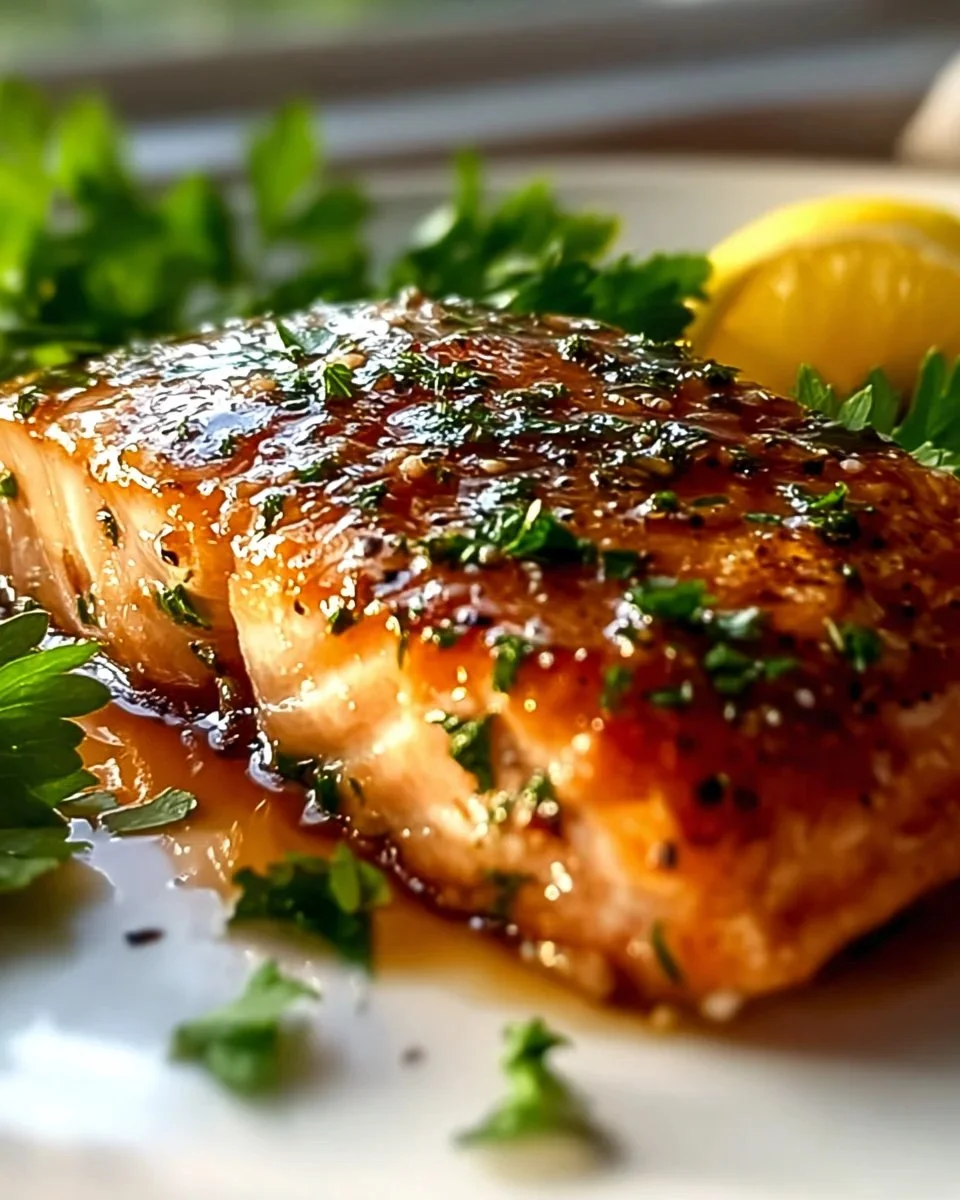
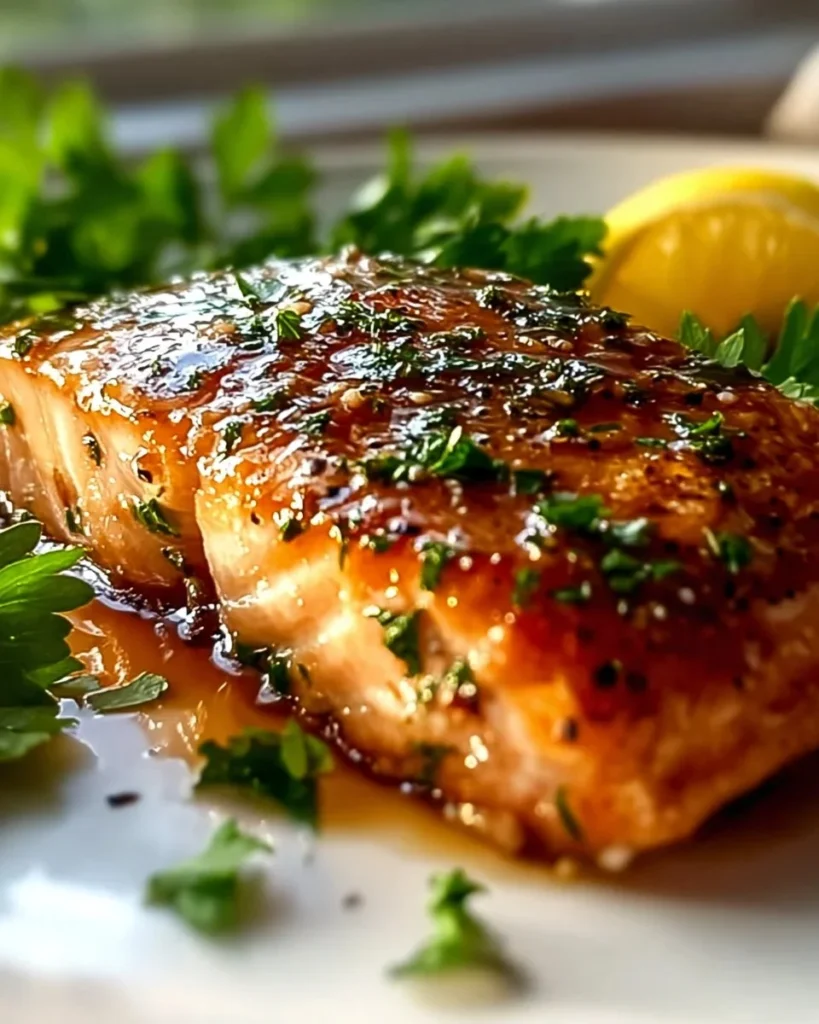
You’ll know the salmon is done when the top is glossy and slightly crusted, the flesh has turned opaque, and a fork slides through it with gentle resistance. The center should be just flaky and still juicy. The aroma will be a warm mix of caramelized brown sugar, butter, and smoky paprika; it’s the kind of smell that makes the whole house pause.
I often serve this with simple sides. Steamed green beans or a crisp salad are my go-tos because the salmon is already pretty rich. Lately I’ve been pairing it with an avocado mango poke salad for a bright contrast avocado mango poke salad. If you’re after something heartier, a bowl of buttery mashed potatoes or rice works beautifully, and if you love variety I sometimes make Asian-style baked chicken alongside this for the family Asian-style baked chicken. I mention that because this salmon plays well with other mains on a casual dinner night.
Leftovers, make-ahead ideas, and two ways to switch it up
If you’re lucky enough to have leftovers, let the salmon cool, then store it in an airtight container in the refrigerator for up to 3 days. Reheat gently in a low oven or flake cold over a salad. I sometimes transform cold flakes into salmon cakes the next day by mixing them with breadcrumbs, an egg, and green onion, then pan-frying until golden baked salmon cakes. Another time-saving trick is to make the butter-brown sugar glaze ahead of time and keep it in the fridge for a couple of days; bring it back to room temperature or warm it slightly before brushing.
If you want to vary the flavor, try two small tweaks. First, swap the brown sugar for maple syrup and add a splash of soy sauce for a sweet-salty twist that borders on teriyaki. Second, for a smoky-spicy version, add more smoked paprika and a bigger pinch of cayenne pepper and finish with chopped cilantro instead of parsley. If you are feeding a crowd and want a comfort-food vibe, pairing the salmon with a simple homestyle meat loaf on another night gives the menu a family-style balance homestyle meat loaf.
I remember the first time I brought this dish to a potluck; someone asked if I ordered it, and when I said I made it at home someone else asked for the recipe on the spot. That little moment, the surprised faces and the sticky napkins, is exactly why I keep this in my regular rotation. It’s fast enough for a weeknight and pretty enough for guests.
Conclusion
If you want a refresher on the inspiration or a similar copycat idea, the recipe that originally nudged me toward this flavor is thoughtfully recreated in a blog post about a Texas Roadhouse Salmon copycat that I read when I was first experimenting Texas Roadhouse Salmon copycat. If you want to peek at the original menu that inspired this style, the official Texas Roadhouse menu is a handy reference for sides and flavors to pair with your dish Texas Roadhouse menu.
Try this tonight, and don’t be surprised if it becomes the dish you’re asked to bring to every get-together.
Texas Roadhouse Style Baked Salmon
Ingredients
Method
- Preheat your oven to 400°F (200°C) and line a baking sheet with aluminum foil or parchment paper.
- Pat the salmon fillets dry with paper towels and place them skin-side down on the prepared baking sheet.
- In a small microwave-safe bowl, melt the unsalted butter and stir in brown sugar, garlic powder, onion powder, smoked paprika, salt, black pepper, and Worcestershire sauce until well combined.
- Generously coat the top and sides of each salmon fillet with the butter and spice mixture.
- Bake the salmon in the preheated oven for 12-18 minutes, checking for doneness at the 12-minute mark.
- For a golden finish, turn on the oven's broiler for the last 1-2 minutes of cooking, keeping a close eye to avoid burning.
- Remove the salmon from the oven and let it rest for about 5 minutes before serving.
- Garnish with fresh lemon wedges and parsley before serving.