Traditional Irish Soda Bread
The Heart of My Kitchen: Traditional Irish Soda Bread There’s a certain magic in the air when the smell of freshly baked bread wafts through the house. It brings back memories of my grandmother, who had an endless supply of love, laughter, and loaves in her tiny kitchen in County Kerry. Whenever she’d whip up…
The Heart of My Kitchen: Traditional Irish Soda Bread
There’s a certain magic in the air when the smell of freshly baked bread wafts through the house. It brings back memories of my grandmother, who had an endless supply of love, laughter, and loaves in her tiny kitchen in County Kerry. Whenever she’d whip up her traditional Irish soda bread, the scent would hug you tight and draw the whole family to the table. It’s this warm and inviting atmosphere that I try to recreate every time I make this bread. So let’s talk about how to bring that joy into your own home.
The Key Ingredients for Heartfelt Baking
To prepare this lovely loaf, you won’t need anything too fancy—just some basic pantry staples that come together to create something truly delightful. You’ll need about 3 ½ cups of unbleached all-purpose flour, which gives the bread that lovely texture. Don’t forget the ¾ teaspoon of kosher salt to bring out the flavors, as well as ¾ teaspoon of baking soda for that essential rise.
Now, the heart of soda bread is the buttermilk—1 ½ cups of it. This ingredient not only adds a rich creaminess but also reacts with the baking soda to give the bread its iconic lightness.
Mixing Memories and Dough
Let’s dive into the process! First, preheat your oven to 450°F. There’s something satisfying about that click of the oven dial, isn’t there? As you do this, line a baking sheet with parchment paper, setting it aside like a blank canvas waiting for your masterpiece.
In a large mixing bowl, combine the flour, salt, and baking soda. Grab a whisk and blend them together well; it’s almost soothing, wouldn’t you agree? Now, using a wooden spoon, create a charming well in the center of this floury mixture. This is where the magic happens—pour in that buttermilk and watch how the dry ingredients eagerly absorb it.
As you begin to stir the mixture together, start from the center and work your way outwards. The dough will be shaggy and messy, and that’s exactly how it should look! Don’t stress about making it perfect; this is a rustic bread, after all.
Kneading through Memories
Next, lightly flour your work surface and pour out the shaggy dough. This is my favorite part—using your hands to gently knead the dough about four times until it starts coming together. You want it to be a little rough around the edges, not overworked. Just imagine how it feels as you knead it, warm and slightly sticky. Then, shape it into a round loaf.
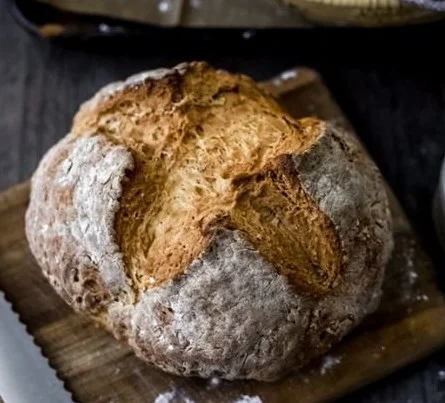
Transfer your loaf to that lined baking sheet, and here’s a fun little secret: lightly sprinkle the top with flour for a charming rustic appearance. Use a sharp chef’s knife to slash a large X on the top. This not only looks beautiful but also allows it to rise evenly in the oven—trust me, this step is crucial.
Timing is Everything
Now it’s time to bake! Pop your loaf right into the oven for 15 minutes at 450°F. The sound of that initial sizzle is something I always look forward to. After that time, lower the temperature to 400°F, and don’t forget to rotate the pan 180 degrees to ensure even baking. Let it bake for another 25-30 minutes, and just wait to see how it transforms into a beautifully golden brown.
You’ll know it’s done when it sounds hollow when tapped on the bottom. The anticipation builds as it cools on the counter for at least 20 minutes. The aroma envelops the kitchen, giving you a moment to pause and appreciate the sensory delight you’ve created.
The Best Part About This Dish
Serve your warm soda bread with a generous slather of Kerrygold Salted Butter. Honestly, is there anything better? That creamy, salty goodness melting into the warm bread—pure bliss! I often enjoy it with a steaming cup of tea or coffee, while reminiscing about those cozy afternoons with my grandmother.
A Few Things I’ve Learned Along the Way
As with any family recipe, I’ve picked up little tips over the years that may come in handy for you, too. One is not to be too fussy about the kneading. Traditionally, soda bread is meant to have that rustic character, which means less is more. If you find some thick clumps of flour left behind, don’t worry—they’ll work themselves out in the oven.
If you want to shake things up, consider adding ingredients like raisins or caraway seeds to the dough for a different taste experience. These variations bring a whole new personality to your bread, but honestly, I love it in its purest form, too.
Savoring Leftovers
If, by chance, you have any leftovers (which is rare in my household), just cover it well and store it at room temperature. It stays fresh for a couple of days, but I find it’s delightful toasted with more butter, just adding to the warmth of this comforting recipe.
A Final Note
Every time I make this traditional Irish soda bread, I feel my grandmother’s spirit in my kitchen, guiding my hands and filling my heart. It’s not just a recipe; it’s a connection to my roots, my family, and the lovely memories we shared over bread and butter. So, gather your ingredients, roll up your sleeves, and make this loaf. I promise it will bring a touch of warmth and a sprinkle of love into your own home, just as it has always done for me.
Traditional Irish Soda Bread
Ingredients
Method
- Preheat your oven to 450°F and line a baking sheet with parchment paper.
- In a large mixing bowl, combine the flour, salt, and baking soda with a whisk.
- Create a well in the center of the dry ingredients and pour in the buttermilk.
- Stir the mixture together, starting from the center and working your way outwards.
- Lightly flour your work surface and pour out the shaggy dough.
- Gently knead the dough about four times until it starts coming together.
- Shape the dough into a round loaf and transfer it to the lined baking sheet.
- Lightly sprinkle the top with flour and slash a large X on the top with a sharp chef’s knife.
- Bake the loaf in the oven for 15 minutes at 450°F.
- Lower the temperature to 400°F and rotate the pan 180 degrees.
- Bake for an additional 25-30 minutes until golden brown and sounds hollow when tapped on the bottom.
- Allow the soda bread to cool on the counter for at least 20 minutes before slicing.