The Ultimate Tteokguk (Korean Rice Cake Soup) for New Year’s!
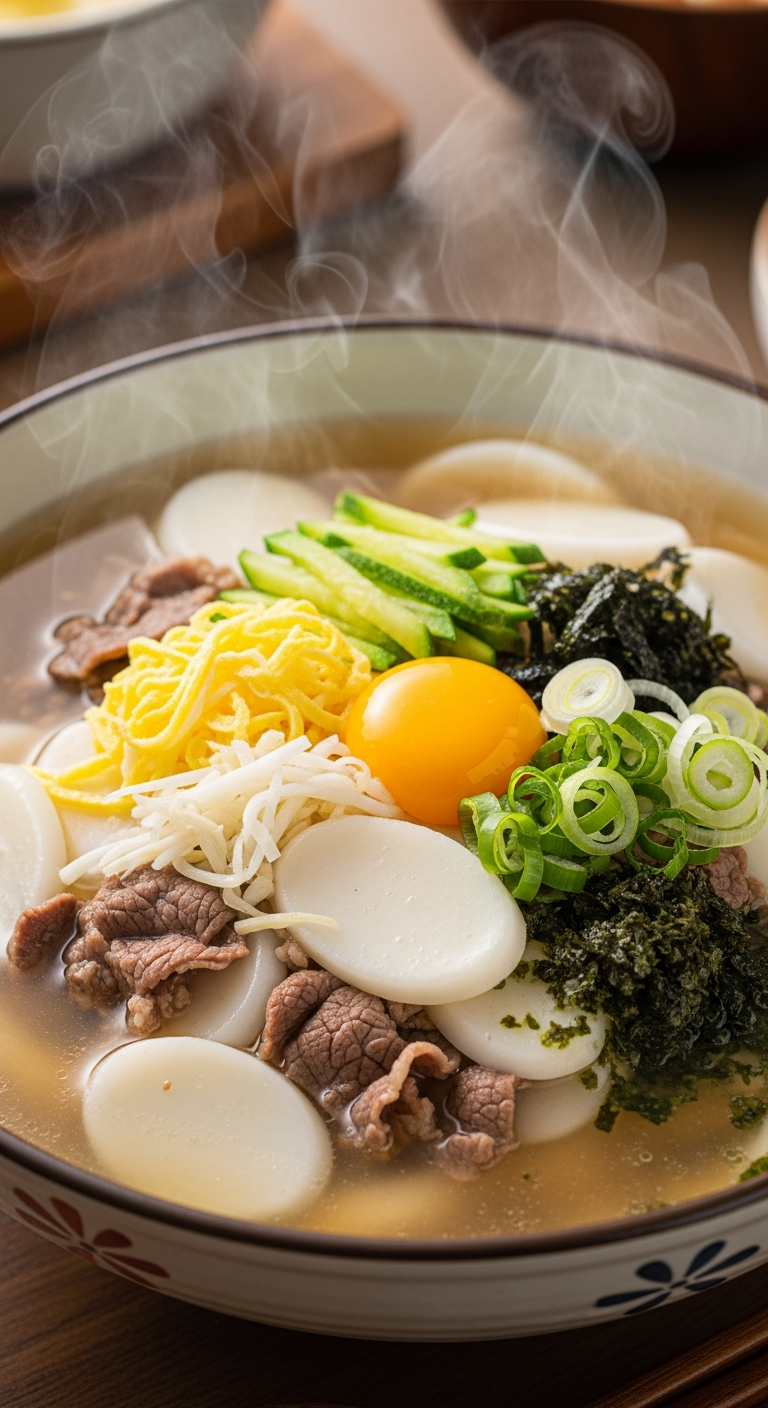
Imagine a warm, comforting bowl of soup with a clear, deeply savory beef broth, filled with delightfully soft and chewy rice cakes, and adorned with a beautiful mosaic of colorful, flavorful toppings. That, my friends, is the soulful, celebratory magic of Tteokguk, Korean Rice Cake Soup. This isn’t just a simple soup; it’s a cherished…
Imagine a warm, comforting bowl of soup with a clear, deeply savory beef broth, filled with delightfully soft and chewy rice cakes, and adorned with a beautiful mosaic of colorful, flavorful toppings. That, my friends, is the soulful, celebratory magic of Tteokguk, Korean Rice Cake Soup. This isn’t just a simple soup; it’s a cherished tradition, a symbol of new beginnings, and a dish that is, without a doubt, one of the most comforting and delicious meals you will ever make.
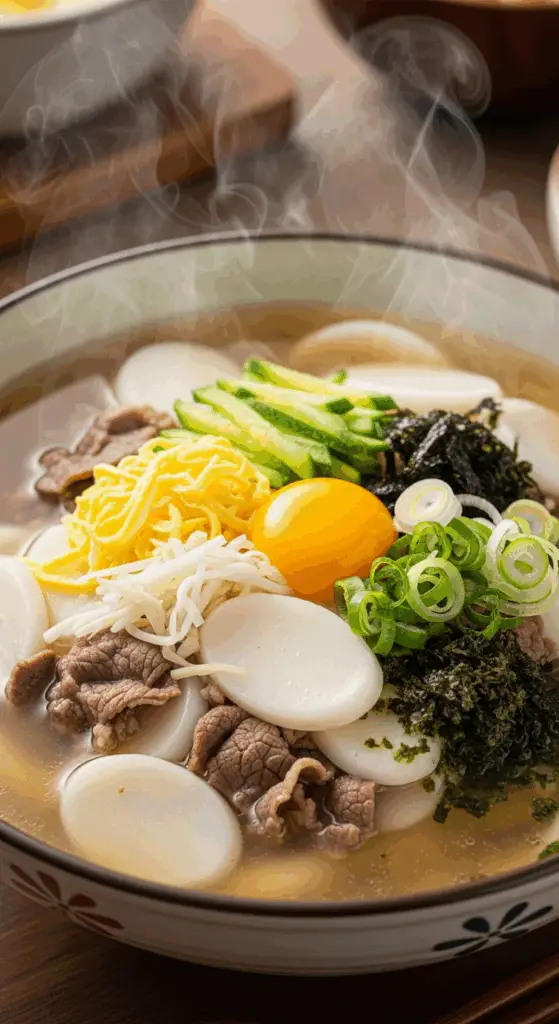
I promise you, making this soup from scratch is a deeply rewarding process. Simmering the beef brisket creates a broth that is unbelievably rich and flavorful, far superior to anything from a carton. The final bowl, garnished with seasoned shredded beef, delicate egg strips, savory roasted seaweed, and fresh green onion, is a true work of art. It’s a complete, satisfying meal that is as beautiful to look at as it is to eat.
Get ready to master a beloved Korean classic and create a stunning, authentic soup that will warm you from the inside out.
Why This Will Be Your New Favorite Comforting Soup!
You are going to be completely captivated by the clean, savory flavors and delightful textures of this beautiful soup. It is a guaranteed hit. Here’s why you have to make it:
- A True Taste of Korean Tradition: This recipe is an authentic and delicious way to experience one of Korea’s most cherished celebratory dishes, perfect for ringing in the New Year or any special occasion.
- Incredibly Rich and Flavorful Broth: The secret to an amazing Tteokguk is the broth. By slowly simmering beef brisket with aromatics, you create a clear, deeply savory, and nourishing soup base.
- Delightfully Chewy Texture: The star of the show, the tteok (rice cakes), become wonderfully soft, chewy, and satisfying as they cook in the hot, savory broth.
- A Beautiful, Complete Meal in a Bowl: With the hearty broth, chewy rice cakes, tender beef, and a variety of colorful garnishes, this is a stunning and well-rounded meal all in one.
- Surprisingly Simple to Prepare: While the final presentation is impressive, the steps are straightforward. The broth simmers away on its own, and the toppings are simple to prepare while you wait.
Recipe Snapshot
| Prep Time | 20 minutes |
| Cook Time | 1 hour 15 minutes |
| Total Time | 1 hour 35 minutes |
| Servings | 4 servings |
| Calories | ~550 kcal per serving |
| Course | Main Course, Soup |
| Cuisine | Korean |
| Difficulty/Method | Intermediate / Stovetop |
Your Shopping List for This Korean Classic
This recipe uses traditional Korean ingredients to create its authentic, delicious flavor. Here’s what you’ll need:
→ For the Rich Beef Broth
- 8 ounces (227g) beef brisket → Cut into large cubes. This cut creates a beautifully rich and flavorful broth.
- 10 cups (2.4 liters) water → The base of our soup.
- 4 garlic cloves & 3 green onions → The simple, essential aromatics for the broth.
- 1 1/2 tbsp Korean soup soy sauce (Guk-Ganjang) → This is key for authentic flavor! It’s saltier and has a different flavor than regular soy sauce.
- 1 tablespoon sesame oil → For a final touch of nutty aroma.
→ For Assembly & Garnishes
- 21 ounces (600g) sliced rice cakes (tteok) → Look for the oval-shaped slices, usually found in the refrigerated or frozen section of an Asian market.
- 3 large eggs → Separated, to create beautiful yellow and white garnish strips (jidan).
- 2 sheets Gim (roasted seaweed) → For a savory, crunchy topping.
- The reserved cooked beef → Shredded and seasoned.
- 1 garlic clove, minced → For seasoning the beef garnish.
- Reserved green onion tops → Thinly sliced for a fresh, sharp finish.
Let’s Get Cooking! Your Step-by-Step Guide
Ready to create a beautiful and soulful Korean soup? We’ll break it down into three parts: the broth, the garnishes, and the final assembly.
Part 1: The Rich Beef Broth
- Start the Broth: Rinse the beef cubes in cold water. In a large pot, combine the 10 cups of water, beef, whole garlic cloves, and the white/light green parts of the green onions. Bring to a rolling boil over high heat.
- Simmer to Perfection: Once boiling, reduce the heat to a low simmer. Cover the pot and let it cook for 1 to 1-1/2 hours, until the meat is very tender. During the first few minutes, skim off and discard any foam that rises to the surface.
Part 2: Prepare the Garnishes (Jidan & More!)
- Soak the Rice Cakes: While the broth simmers, place the sliced rice cakes in a large bowl and cover them with cold water. Let them soak for about 30 minutes to soften, then drain.
- Prepare the Egg Garnish (Jidan): Separate the egg yolks and whites into two small bowls. Lightly grease a non-stick skillet and place it over medium-low heat. Lightly beat the yolks, then pour them into the warm skillet, tilting to create a thin, even crepe. Cook for about a minute until set, then flip to cook the other side briefly. Remove to a cutting board. Repeat the process with the egg whites. Thinly slice both the yellow and white crepes into beautiful, delicate strips.
- Toast the Seaweed: Place a sheet of gim on a dry, hot skillet for a few seconds per side until crisp and fragrant. Slice into thin strips or crumble with your hands.
Part 3: Strain, Season, and Assemble
- Finish the Broth and Beef: Once the beef is tender, strain the broth into a clean pot, discarding the cooked garlic and green onions. Shred the reserved beef pieces and place them in a small bowl. Season the shredded beef with the minced garlic, 1 teaspoon of sesame oil, and a pinch of black pepper.
- Season and Cook Rice Cakes: Place the strained broth back over medium heat. Season it with the soup soy sauce and sesame oil, plus salt and pepper to taste. Bring the broth to a boil, then add the drained rice cakes. Cook, stirring occasionally, for 5-8 minutes, until the rice cakes are soft and chewy.
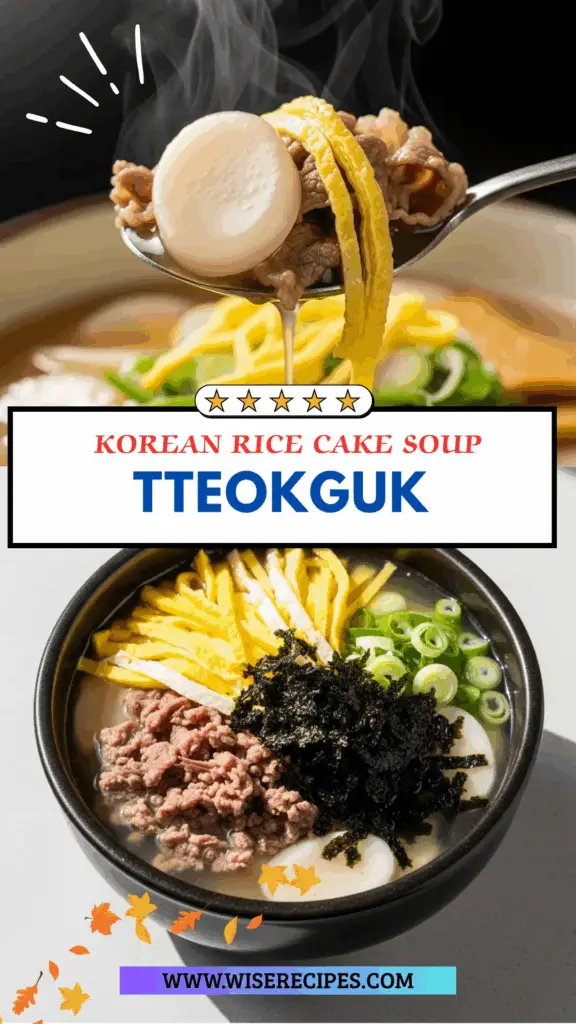
- Assemble and Serve: Divide the hot soup and rice cakes among four large bowls. Artfully arrange the toppings on each bowl: a pile of the seasoned beef, a sprinkle of seaweed, a cluster of the yellow and white egg strips, and a final scattering of the sliced green onion tops. Serve immediately!
Tteokguk (Korean Rice Cake Soup)
Ingredients
Equipment
Method
- In a large pot, add 10 cups water, rinsed beef, whole garlic cloves, and the white/light green parts of the green onions. Bring to a boil, then reduce to a simmer. Skim off any foam. Cover and cook for 1 to 1-1/2 hours until the meat is tender.
- While the broth simmers, place the rice cakes in a bowl and cover with cold water. Soak for 30 minutes, then drain.
- Make the egg garnish (jidan): Lightly beat the separated yolks and whites. In a lightly greased skillet over low heat, cook each into a thin, flat crepe. Do not brown. Remove, slice into thin strips, and set aside.
- Lightly toast the gim sheets in a dry skillet until crisp. Slice into strips or crumble.
- Strain the broth into a clean pot, discarding the aromatics. Shred the cooked beef and season it in a small bowl with the minced garlic, 1 tsp sesame oil, and black pepper.
- Bring the strained broth back to a boil over medium heat. Season it with the soup soy sauce and 1 tbsp sesame oil. Add salt and pepper to taste.
- Add the drained rice cakes to the boiling broth and cook, stirring occasionally, for 5-8 minutes until soft and chewy.
- Divide the soup and rice cakes among four bowls. Top artfully with the seasoned beef, crumbled seaweed, yellow and white egg strips, and the reserved sliced green onions. Serve immediately.
Notes
WiseRecipes’ Top Tips for Authentic Tteokguk
These simple secrets will ensure your Korean Rice Cake Soup is flawless and delicious.
- Use Korean Soup Soy Sauce (Guk-Ganjang). This is key for the authentic taste. It’s lighter in color but saltier and more complex in flavor than regular soy sauce. You can find it at any Korean or well-stocked Asian grocery store.
- Don’t Skip Soaking the Rice Cakes. Soaking the tteok in cold water for 30 minutes is crucial. It rehydrates them and ensures they cook up to be perfectly soft and chewy, not hard or brittle, in the hot soup.
- Skim the Broth for a Clean Flavor. In the first few minutes of boiling the beef, foam and impurities will rise to the surface. Skimming these off with a spoon is the secret to a beautifully clear and clean-tasting final broth.
- Low and Slow for the Egg Crepes. The key to beautiful jidan (egg garnish) is to cook the thin layers of egg white and yolk over very low heat. You want them to set without getting any brown color, which keeps them tender and vibrant.
- Garnish is Everything. The garnishes are not optional in Tteokguk; they are an integral part of the dish! The combination of the savory beef, salty seaweed, and delicate egg adds layers of flavor and texture that complete the experience.
Keep It Fresh! Storing Your Leftovers
This soup is best enjoyed fresh, but leftovers can still be delicious.
- Refrigerator: It’s best to store the broth and the toppings separately in airtight containers in the refrigerator for up to 3 days. The rice cakes will continue to soften and can become mushy if left in the broth overnight.
- Reheating: To serve leftovers, bring the broth back to a boil, add fresh or leftover rice cakes, and cook for a few minutes until they are soft. Then, top with the reserved garnishes.
FAQs: Your Tteokguk Questions, Answered!
Can I use a different cut of beef?
Yes, while brisket is traditional and yields a fantastic flavor, other slow-cooking cuts like beef shank or chuck would also work well to create a rich and flavorful broth.
What if I can’t find Korean soup soy sauce?
If you can’t find guk-ganjang, you can substitute it with regular soy sauce or fish sauce, but you’ll need to use less as they have different salt levels. Start with about half the amount, and then add more salt to taste to make up the difference.
Can I make this soup with a different broth?
Yes. A traditional alternative to beef broth is a clear anchovy and kelp broth (myeolchi-yuksu). You can also find pre-made Korean bone broth (sagol) in many Korean markets, which makes for a delicious and quick alternative.
My rice cakes are sticking to the bottom of the pot. What should I do?
The starches in the rice cakes can make them a bit sticky. Just be sure to stir them occasionally, especially right after you add them to the boiling broth, to prevent them from clumping together or sticking to the bottom of the pot.
Final Thoughts: A Bowl of Good Fortune
There is something so special about making a dish that is steeped in tradition and meaning. This Tteokguk is more than just a soup; it’s a celebration of family, new beginnings, and the simple joy of a perfectly crafted bowl of comfort. I hope this recipe brings warmth, flavor, and a little bit of good fortune to your home. Happy cooking!