The Ultimate French Macarons: A Foolproof Guide!
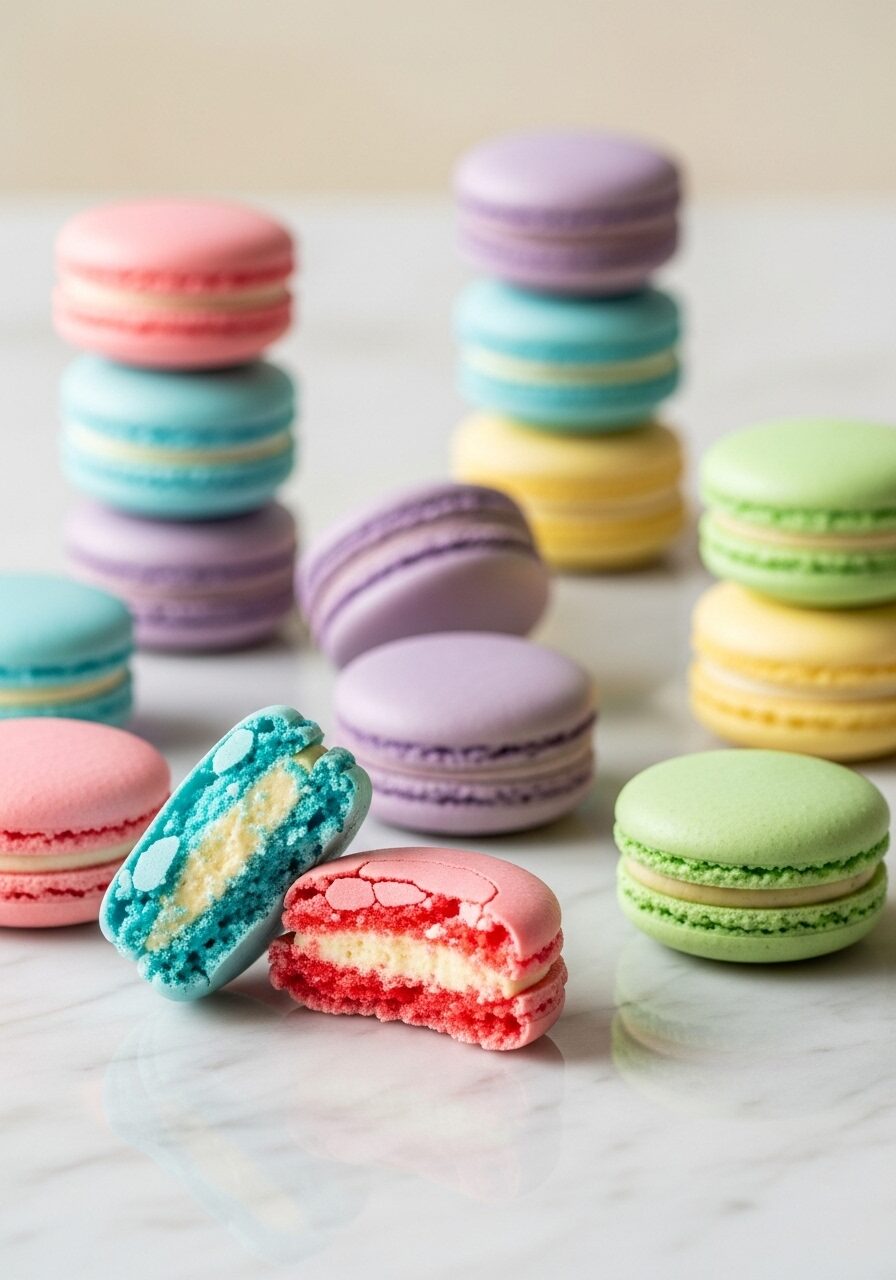
Imagine a tiny, perfect jewel of a cookie: a delicate, crisp shell that shatters ever so slightly at first bite, giving way to a wonderfully soft and chewy almond meringue center, all sandwiching a sweet, creamy buttercream filling. That, my friends, is the sublime, elegant magic of a perfect French macaron. For many home bakers,…
Imagine a tiny, perfect jewel of a cookie: a delicate, crisp shell that shatters ever so slightly at first bite, giving way to a wonderfully soft and chewy almond meringue center, all sandwiching a sweet, creamy buttercream filling. That, my friends, is the sublime, elegant magic of a perfect French macaron. For many home bakers, it is the ultimate pastry conquest, and today, we are going to conquer it together.
Here’s the thing about macarons: they have a reputation for being notoriously fussy, diva-like, and impossibly difficult. I will be the first to admit, my own journey to mastering them was paved with many cracked, footless, and hollow failures! But through all that (delicious) trial and error, I discovered that the magic isn’t in being a professional pastry chef; it’s in understanding a few key, non-negotiable steps. This recipe is my tried-and-true, foolproof guide, breaking down the entire process into simple, manageable stages.
I promise you, there is no greater baking triumph than pulling a tray of perfect, smooth-topped macarons, complete with those beautiful, frilly “feet,” from your oven. It is a moment of pure, unadulterated joy. This recipe will give you the confidence to achieve that moment.
Get ready to demystify the macaron, master the art of the “macaronage,” and create a batch of stunning, professional-looking cookies that will have everyone convinced you trained in a Parisian patisserie.
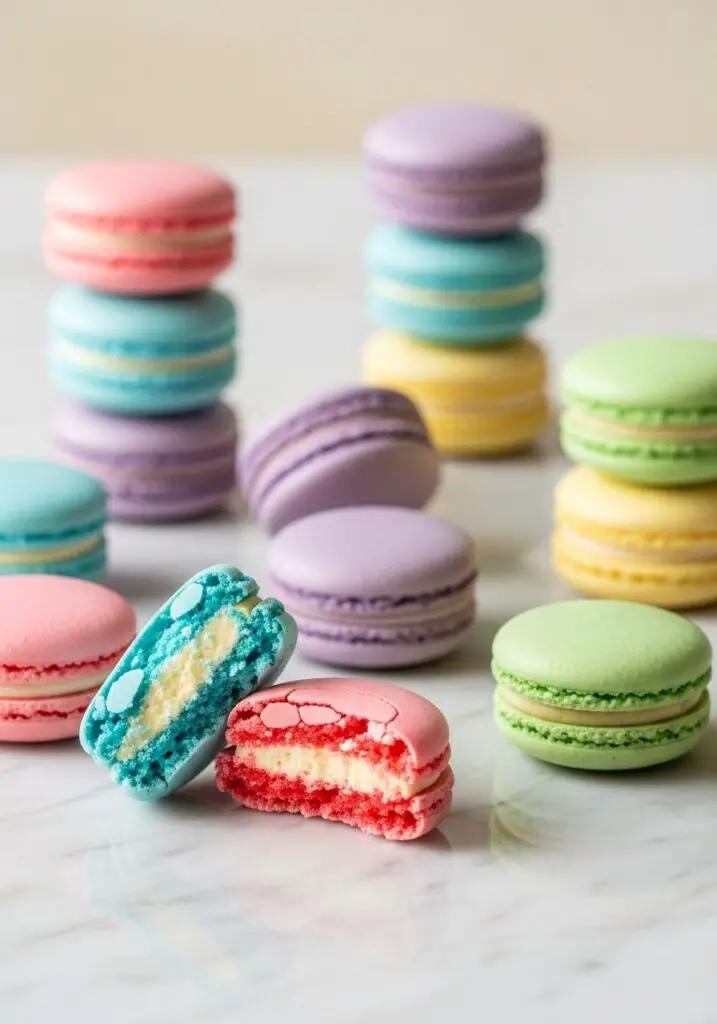
Why You Absolutely Can (and Should!) Make These Macarons!
You are going to be so incredibly proud of these cookies. They are a true labor of love that is worth every single step, and this guide will hold your hand the whole way. Here’s why this is the recipe to try:
- A True Step-by-Step Foolproof Guide: We’re breaking down the notoriously tricky macaron process—from the meringue to the “macaronage”—into clear, easy-to-follow steps with all the visual cues you need for success.
- The Ultimate Baking Accomplishment: Successfully baking a batch of perfect macarons is one of the most satisfying feelings a baker can experience. This recipe will get you there!
- That Unforgettable Texture: There is nothing in the world quite like the texture of a perfect macaron—that delicate, crisp outer shell, the chewy almond meringue, and the smooth, creamy filling.
- Endlessly Customizable: Once you master this base recipe, you can play with endless color and flavor combinations for the shells and the fillings.
- Perfect for Gifting: A box of beautiful, homemade macarons is one of the most elegant and impressive gifts you can give.
Recipe Snapshot
| Prep Time | 45 minutes |
| Cook Time | 17 minutes |
| Resting Time | 45 minutes |
| Total Time | 1 hour 47 minutes |
| Yield | 48 macarons (96 shells) |
| Calories | 104 kcal per macaron |
| Course | Dessert |
| Cuisine | French |
| Difficulty/Method | Advanced / Baking |
Your Shopping List for Macaron Magic
Macarons require precision. For the best, most consistent results, a kitchen scale for measuring ingredients by weight is your absolute best friend!
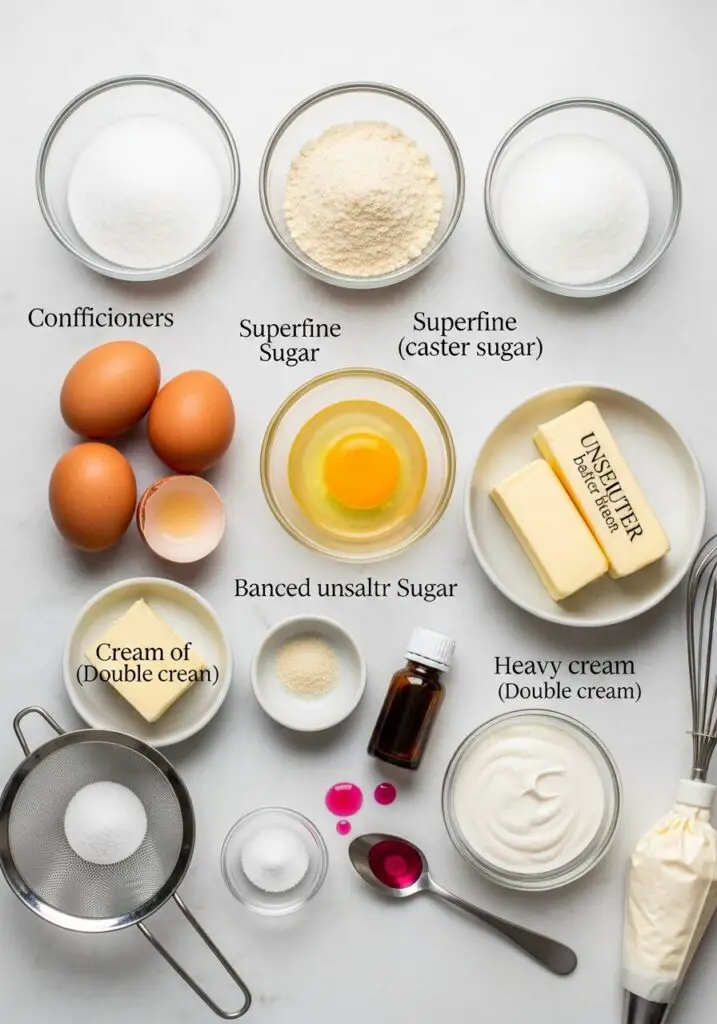
→ For the Macaron Shells
- 1 ¾ cups confectioners’ sugar → Also known as powdered sugar.
- 1 cup blanched almond flour → It MUST be blanched (skins removed) and super-fine for smooth shells. This is non-negotiable!
- 1 tsp salt, divided
- 3 large egg whites → They absolutely MUST be at room temperature.
- ¼ tsp cream of tartar → A stabilizer that helps the egg whites whip up into a strong, stable meringue.
- ¼ cup superfine sugar → Also known as caster sugar. Its fine texture dissolves easily into the meringue.
- ½ tsp vanilla extract
- 2 drops gel food coloring → Gel is essential, as liquid coloring can add too much moisture.
→ For the Classic Buttercream Filling
- 1 cup unsalted butter, softened
- 3 cups confectioners’ sugar
- 3 tbsp heavy cream
- 1 tsp vanilla extract
Let’s Bake! Crafting Perfect French Macarons, Step-by-Step
Ready to tackle the Mount Everest of cookies? Don’t worry, we’re going to break it down. Read through all the steps first, take a deep breath, and let’s go!
Part 1: The Foundation (Sifting)
- Sift, Sift, Sift!: In the bowl of a food processor, combine the 1 ¾ cups confectioners’ sugar, the almond flour, and ½ teaspoon of salt. Pulse a few times to make it extra-fine. Now, sift this entire mixture through a fine-mesh sieve into a large bowl. This double-processing is the secret to a perfectly smooth, lump-free macaron top. Discard any large bits left in the sifter.
Part 2: The French Meringue
- Whip the Egg Whites: In the bowl of a stand mixer with the whisk attachment, beat the room-temperature egg whites, the remaining ½ teaspoon of salt, and the cream of tartar on medium speed until they are frothy, like the top of a bubble bath.
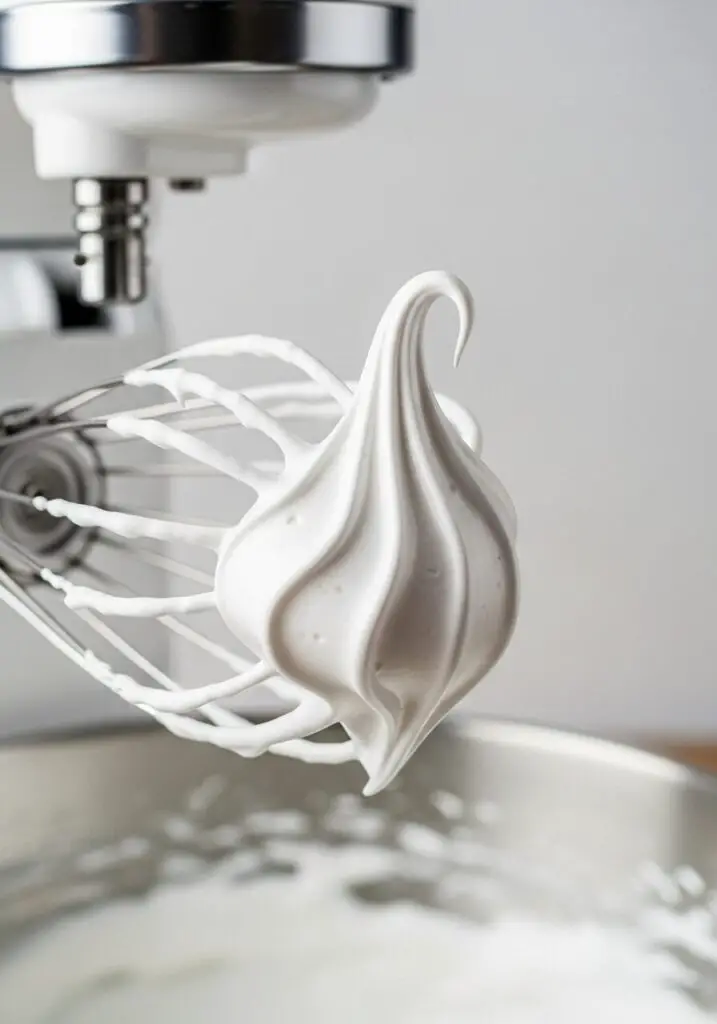
- Build the Meringue: With the mixer still running, gradually add the superfine sugar, one spoonful at a time. Once all the sugar is in, increase the speed to medium-high and continue to beat until stiff peaks form. The meringue should be thick and glossy. When you lift the whisk, the peak should hold its shape but have a very slight curl at the very tip, like a little bird’s beak. Be careful not to overbeat!
Part 3: The “Macaronage” (The Make-or-Break Step)
- First Fold: Add one-third of your sifted almond flour mixture to the meringue. Gently fold it in with a rubber spatula.
- Add Color and Finish Folding: Add the rest of the almond flour mixture in two more additions, along with the gel food coloring. Now, begin the true “macaronage.” This involves a motion of scraping around the edge of the bowl and then pressing the spatula through the middle of the batter to gently deflate some of the air.
- Test for the “Lava Flow”: After every few folds, test the batter. Lift your spatula and let the batter drizzle off. It should fall in a continuous, thick ribbon, like slow-moving lava. You should be able to draw a figure 8 with the ribbon without it breaking. The ribbon should sink back into the main batter within about 20-30 seconds. If it’s too stiff, do a few more folds and test again. This is the most important step to master!
Part 4: Pipe, Rest, and Bake!
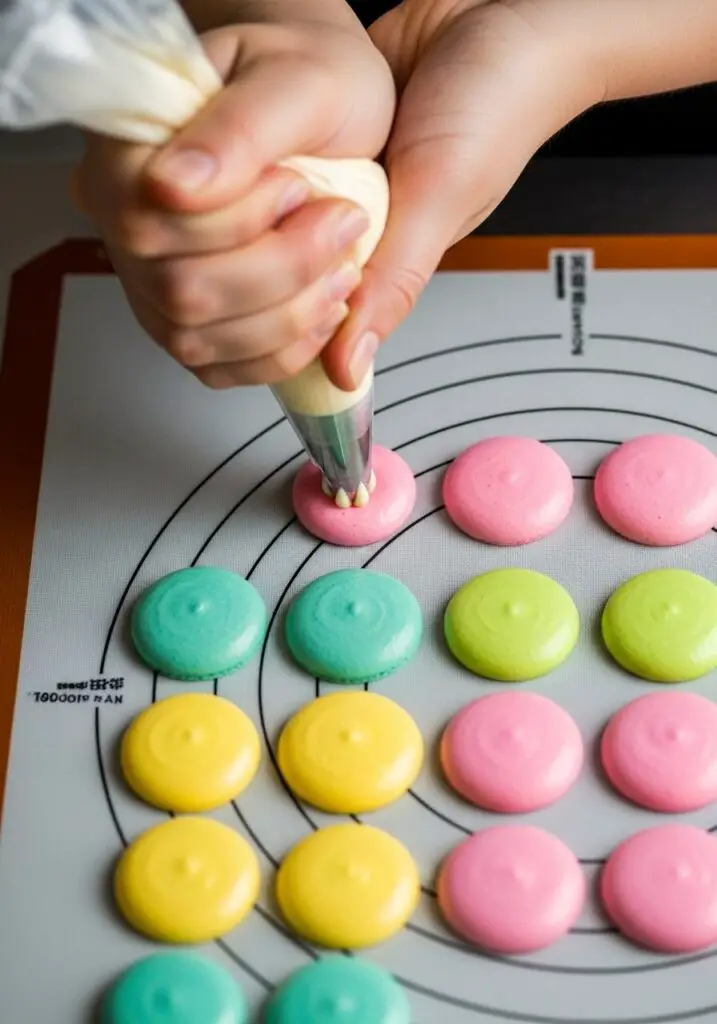
- Pipe the Shells: Transfer the batter to a piping bag with a round pastry tip. On baking sheets lined with silicone macaron mats or parchment paper, pipe small, uniform circles.
- Tap and Rest: Firmly tap the baking sheets on the counter 4-5 times to release any air bubbles. Now, let the piped macarons rest at room temperature for 30 minutes to 1 hour. This is another CRUCIAL step. They are ready to bake when they’ve formed a dry “skin” and you can gently touch one without any batter sticking to your finger.
- Bake!: Preheat the oven to 300°F (150°C). Bake one sheet at a time for 17 to 20 minutes, rotating the sheet halfway through. They are done when the tops don’t wiggle from the “feet” (the frilly bottom part).
- Cool Completely: Let the shells cool completely on the baking sheet before trying to remove them.
Part 5: The Buttercream & Assembly
- Make the Buttercream: While the shells cool, beat the softened butter until creamy. Gradually add the confectioners’ sugar, then add the heavy cream and vanilla, and beat until smooth and fluffy.
- Fill and Sandwich: Transfer the buttercream to a piping bag. Pipe a small dollop onto the flat side of one macaron shell and gently sandwich it with a partner shell. Repeat with the rest. For the best texture, let the filled macarons “mature” in an airtight container in the fridge overnight before eating.
WiseRecipes’ Top Tips for Macaron Mastery
I have made many, many failed batches so you don’t have to. These are the non-negotiable rules for success.
- Use a Kitchen Scale. I cannot stress this enough. Macarons are pure science. Measuring your almond flour, sugars, and egg whites by weight (grams) is the single most important thing you can do for consistent, successful results.
- Room Temperature Egg Whites are a MUST. Cold egg whites will not whip up properly into a stable meringue. It’s best to separate your eggs and let the whites sit on the counter for at least 30-60 minutes before you begin.
- The Macaronage is Everything. This is the step that takes the most practice. Under-mixing will lead to lumpy, pointed tops. Over-mixing will cause the batter to be too thin, and your macarons will spread and won’t develop feet. Watch videos of the “lava flow” stage to get a good visual!
- The “Resting” Period is Crucial. Letting the piped shells rest and form a dry skin before baking is what forces them to rise upwards in the oven and develop their signature “feet.” If you skip this, they will likely crack and spread.
- Let Them “Mature”! I know it’s torture, but letting the filled macarons rest in an airtight container in the fridge for 24 hours is the final secret. This allows the moisture from the filling to soften the inside of the shell, creating that perfect crisp-then-chewy texture.
Best French Macarons (Foolproof Guide)
Ingredients
Equipment
Method
- Combine confectioners’ sugar, almond flour, and 1/2 teaspoon salt in a food processor and pulse until extra-fine. Sift through a fine-mesh sieve into a large bowl.
- Beat egg whites with the remaining 1/2 teaspoon salt and cream of tartar in a stand mixer with a whisk attachment until frothy.
- Gradually add superfine sugar and vanilla and continue to beat on medium speed until stiff peaks form (tips should hold their shape but curl over slightly).
- Gently fold 1/3 of the almond flour mixture into the egg whites. Drop in food coloring. Add remaining almond flour mixture in 2 additions, gently folding until the batter falls off the spatula in thick, continuous ribbons (the ‘macaronage’ stage).
- Transfer batter to a piping bag with a round pastry tip. Pipe batter into circles on silicone macaron mats. Tap baking sheets 4 times against the counter to release air bubbles.
- Let macarons sit at room temperature until a dry skin forms, 30 minutes to 1 hour.
- Preheat the oven to 300°F (150°C). Bake macarons until bottoms rise to form ‘feet’, 17 to 20 minutes, switching baking sheet positions halfway through.
- Let macarons cool on the mats for 15 minutes, then transfer to a wire rack to cool completely.
- Meanwhile, for the buttercream, beat butter and confectioners’ sugar together until creamy. Add heavy cream and vanilla extract; beat until combined.
- Transfer buttercream to a piping bag. Pipe buttercream onto the flat side of half of the macarons and top with the other halves to create sandwiches.
Notes
Keep Them Perfect! Storing Your Macarons
Macarons are divas, and they need to be stored properly to maintain their perfect texture.
- Refrigerator: The finished, matured macarons must be stored in an airtight container in the refrigerator. They are at their absolute best on days 2 and 3 and will keep for up to 1 week.
- Serving: For the best texture and flavor, take the macarons out of the refrigerator about 20-30 minutes before you plan to serve them to let them come to room temperature.
- Freezing: Macarons freeze beautifully! You can freeze the filled macarons in an airtight container for up to 1 month. Let them thaw in the refrigerator.
FAQs: Your Macaron Questions, Answered!
Why did my macaron shells crack?
Cracked tops are the arch-nemesis of the macaron baker! It’s usually caused by one of three things: not resting the shells long enough to form a proper skin, having too much air left in the batter (you need to tap the trays firmly!), or an oven that is too hot.
My macarons don’t have “feet”! What happened?
The lack of those signature frilly “feet” is most often due to the batter being too wet or overmixed during the macaronage stage. It could also happen if you didn’t let the shells rest long enough to form a skin, which forces them to spread out instead of up.
Can I make these on a rainy or humid day?
You can, but you need to be aware that humidity is the enemy of meringue! On a humid day, your piped shells will take much longer to rest and form their skin (sometimes over an hour), and your meringue might be a little softer. If you’re a beginner, I highly recommend trying them for the first time on a dry day.
Can I reduce the amount of sugar?
Unfortunately, no. The sugar in macarons is not just for sweetness; it is a critical structural component of both the meringue in the shell and the buttercream filling. Reducing it will cause the recipe to fail.
Final Thoughts: Your Sweetest Baking Victory
There is no feeling quite like achieving a batch of perfect, beautiful French Macarons. They are a true labor of love, a delicious science experiment, and one of the most rewarding bakes you’ll undertake. I hope this guide gives you the confidence to tackle this incredible project and create some truly stunning and delicious memories!