Vanilla French Beignets
A Crisp Memory and a Warm Kitchen The very first time I made Vanilla French Beignets I was trying to recreate a sleepy Saturday morning from a trip I took years ago. The street vendors had long since closed, but the smell of frying dough and powdered sugar lived in my memory. I pulled out…
A Crisp Memory and a Warm Kitchen
The very first time I made Vanilla French Beignets I was trying to recreate a sleepy Saturday morning from a trip I took years ago. The street vendors had long since closed, but the smell of frying dough and powdered sugar lived in my memory. I pulled out a few basic pantry staples and, in between the clatter of plates and a pot of coffee, I made what has become my favorite lazy-weekend treat. If you want something that feels like a little festival in your kitchen, you’ll love how simple these are to pull off—especially when you have everything lined up just right. If you like the idea of transforming ordinary breakfast ingredients into something special, you might also enjoy this riff I tried later on baked cardamom saffron French toast that leans into aromatic spice the way beignets lean into vanilla.
The Secret Behind Perfect Vanilla French Beignets
There’s one ingredient that really makes these feel indulgent: vanilla. The little perfume of 1 teaspoon vanilla extract stitched into the batter lifts the whole thing. The base is unpretentious, though: you’ll use 2 cups all-purpose flour, 1/4 cup granulated sugar, 1 teaspoon baking powder, 1/2 teaspoon salt, and a whisper of 1/4 teaspoon nutmeg. For the wet side of things, I whisk together 1/2 cup milk with 2 large eggs, then add that teaspoon of vanilla and 2 tablespoons melted butter. Of course you need Vegetable oil for frying and Powdered sugar for dusting to finish them off. When you can smell the caramelizing sugar and the faint vanilla wafting through the house, you know you’ve got something good.
How the Ingredients Come Together
I like to start by bringing the dry and wet parts together separately so nothing gets overworked. In a bowl, whisk together the flour, sugar, baking powder, salt, and nutmeg. In another bowl, combine the milk, eggs, vanilla extract, and melted butter. Then, gradually add the wet ingredients to the dry ingredients and mix until just combined. The batter should be slightly thick but still loose enough to drop from a spoon; you do not want to overmix it because that’s the easiest way to get dense beignets instead of light, airy puffs. One trick I always use here is to leave the batter to sit for five minutes while I heat the oil. It relaxes the gluten and gives you a better texture.
When It’s Time to Fry
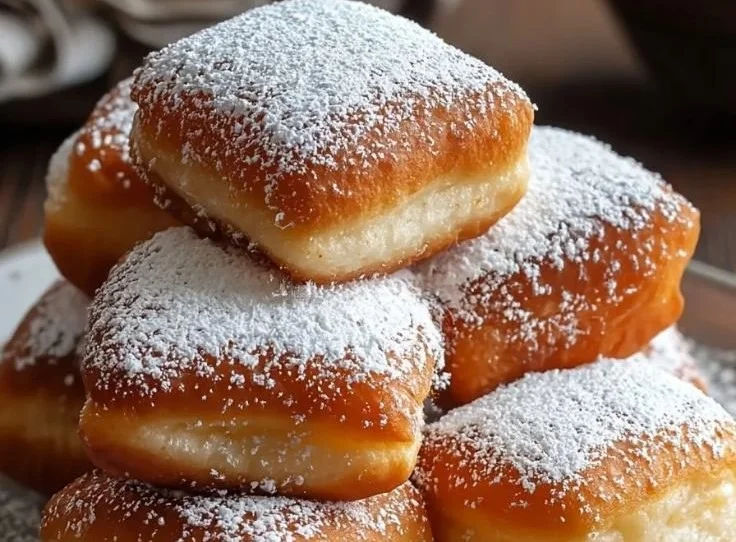
Heat oil in a deep fryer or large pot to 350°F (175°C). I can’t stress enough how important the temperature is. If the oil is too cool the beignets will soak up oil and feel greasy. If it’s too hot they’ll color on the outside while remaining raw inside. I test the oil with a small drop of batter; if it sizzles and rises steadily to the surface, you’re good to go. Drop spoonfuls of the batter into the hot oil, frying until golden brown on each side. Don’t overcrowd the pot. You want a gentle chorus of little pops and a golden color that’s even—about two to three minutes per side depending on how big you make them. Remove from oil and drain on paper towels. Then, while they are still warm, dust with powdered sugar before serving. Enjoy your beignets warm. The first bite should be a little crisp, then soft and pillowy, and when you press them between your fingers they should spring back slightly. If they’re heavy or oily, you know the oil temperature was off or the batter was overmixed.
My Grandmother’s Trick and a Few Things I’ve Learned
My grandmother always told me to watch the oil like it was a kettle on the stove. That meant a steady temperature, a slotted spoon ready, and never turning your back. One practical tip I picked up from her is to keep a metal cooling rack above a baking sheet nearby—transfer the beignets there after the paper towels so they won’t sit in residual oil and will retain their crisp edges. Another tip is to use two spoons to shape the batter if you don’t have a piping bag; it gives you control over size and keeps your hands clean. If you like them extra fluffy, use a slightly warmer milk and make sure the melted butter isn’t hot when you mix it into the eggs; tempering matters. And if you want to keep the powdered sugar from melting too fast, dust them just before you plan to eat them.
The Best Part About This Dish and What to Serve With It
There’s nothing like a pile of warm beignets on a table surrounded by steaming cups of coffee. I serve mine with a strong roast or a café au lait and sometimes a small bowl of raspberry jam or chocolate sauce for dunking. Crème anglaise or a drizzle of honey makes them feel a little fancier when friends stop by. If you’re hosting a brunch I’ll often pair them with something savory so the beignets feel like a treat rather than the whole meal—think scrambled eggs or a simple cheese plate. If you’re curious how I adapt other breakfast treats for guests, I often turn to my notes on baked vanilla protein oatmeal for a lighter, make-ahead option to balance the indulgence.
A Few Ways to Make Them Your Own
There are easy ways to riff on this basic Vanilla French Beignets. One variation is to fold in a teaspoon of lemon zest for a bright edge that pairs beautifully with powdered sugar. Another is to substitute a little of the milk for buttermilk to add a gentle tang. If you want to go sweet and filled, drop the fried beignets on a cooling rack and, once cool enough to handle, pipe raspberry jam or pastry cream into the center. I’ve also rolled them in a cinnamon-sugar mix as soon as they come out of the oil for a slightly different finish. When I want to make a savory version for a dinner party, I mix in finely grated cheese and a pinch of thyme, though that’s a departure from the classic vanilla charm.
I keep leftovers in an airtight container for up to two days. They’re best reheated in a 350 degree oven for 5 to 8 minutes to bring back the crispness. I avoid the microwave because it makes them chewy. If I’m making these ahead for a crowd, I fry them in batches and keep them in a low oven, then dust them with the Powdered sugar right before serving so they look fresh and snow-dusted.
When things don’t go as planned, like if the batter is too thin, I add a tablespoon of flour at a time until it holds together. If the beignets are dense, I remind myself to whisk gently and not overwork the dough next time. Cooking these has become a kind of Sunday ritual for me—comforting, a little messy, and always worth the sticky counter.
Conclusion
If you want a slightly different New Orleans approach or another recipe to compare techniques with, I sometimes look at Preppy Kitchen’s New Orleans-style beignets recipe for inspiration.
Vanilla French Beignets
Ingredients
Method
- In a bowl, whisk together the dry ingredients: flour, sugar, baking powder, salt, and nutmeg.
- In another bowl, combine the wet ingredients: milk, eggs, vanilla extract, and melted butter.
- Gradually add the wet ingredients to the dry ingredients and mix until just combined, avoiding overmixing.
- Let the batter sit for 5 minutes while heating the oil.
- Heat oil in a deep fryer or large pot to 350°F (175°C).
- Test the oil temperature with a small drop of batter; it should sizzle and rise.
- Drop spoonfuls of the batter into the oil, frying until golden brown on each side (about 2-3 minutes).
- Remove the beignets from oil and drain on paper towels.
- Dust while still warm with powdered sugar before serving.