Vegan Lemon Curd Shortbread Cookies
How I Found This Little Joy The first time I tasted a Vegan Lemon Curd Shortbread Cookie I thought someone had bottled sunshine. I was at a small picnic, the kind where the blanket is a little damp and the conversation skips from gardening to guilty-pleasure TV shows, and a friend passed me a cookie…
How I Found This Little Joy
The first time I tasted a Vegan Lemon Curd Shortbread Cookie I thought someone had bottled sunshine. I was at a small picnic, the kind where the blanket is a little damp and the conversation skips from gardening to guilty-pleasure TV shows, and a friend passed me a cookie that crumbled in the best possible way and left my tongue puckering in a happy, lemony way. I begged for the recipe and then tweaked it in my kitchen until it felt like my own. If you like the bright lemon angle, you might also enjoy how lemon plays with berries in other treats I love, like this Blueberry Lemon Heaven Cookies, which is where my obsession with combining citrus and tender crumbs began.
What Goes into Them (and why I always keep these things on hand)
I never talk about a recipe without showing you the ingredients because the magic is in the small details. For the lemon curd you need 1/3 cup canned coconut milk (I used reduced fat but full fat will also work), 1/3 cup organic cane sugar, 1/4 cup lemon juice (about 1 lemon), zest from 1 lemon, 1 tablespoon cornstarch, 1 tablespoon vegan butter, and a pinch of turmeric for color (totally optional). For the shortbread itself you want 1 cup vegan butter softened, 2/3 cup organic powdered sugar plus more for dusting, 2 teaspoons vanilla extract, 2 cups gluten free all purpose baking flour plus more for dusting (measure for measure), and 1/4 teaspoon finely ground salt. Say that out loud and you can almost smell the buttery lemon already.
A quick note about the coconut milk: the reduced-fat version keeps the curd from getting too heavy, but sometimes I use full fat when I want that silky mouthfeel. The cornstarch is the hero of texture in the curd; it helps it set without eggs. Also, when a recipe mentions "measure for measure" for gluten free flour, it means you can swap a regular cup-for-cup all purpose flour if you do not need gluten free—just be consistent with how you measure.
Making the Lemon Curd (what to watch for)
I make the curd first because it needs to cool before assembly. Put the 1/3 cup canned coconut milk in a small saucepan and whisk in the 1/3 cup organic cane sugar until mostly dissolved. Add the 1/4 cup lemon juice and the zest from 1 lemon. In a small bowl combine the 1 tablespoon cornstarch with a tablespoon or two of cold water to make a smooth slurry, then whisk that into the lemon mixture. Heat gently over medium-low, stirring constantly, until the mixture thickens and becomes glossy; this usually takes about 6 to 8 minutes. At the very end stir in 1 tablespoon vegan butter for richness and a pinch of turmeric if you want that deep yellow color. The smell here is unreal: bright lemon with a whisper of coconut and butter. Remove from heat and let it cool completely before using; the curd will thicken as it cools. If you prefer a very smooth curd, press it through a fine-mesh sieve before chilling.
Tip: Stir constantly and keep the heat moderate or you’ll risk grainy curd. If it seems too thin when cooled, reheat gently and whisk in a touch more cornstarch slurry until it reaches the consistency that coats the back of a spoon.
Baking the Shortbread (soft and snap in the right places)
Shortbread is simple but temperamental in a sweet way. Cream 1 cup softened vegan butter with 2/3 cup organic powdered sugar until light and fluffy; this should take a few minutes with a hand mixer or a bit longer by hand. Add 2 teaspoons vanilla extract and mix. Gently fold in the 2 cups gluten free all purpose baking flour plus 1/4 teaspoon finely ground salt until just combined; you want to avoid overworking the dough so the cookies remain tender. If the dough feels sticky, dust your surface with a little extra flour (remember, the recipe allows more for dusting). Chill the dough for at least 30 minutes; this makes it easier to roll and keeps the cookies from spreading too much.
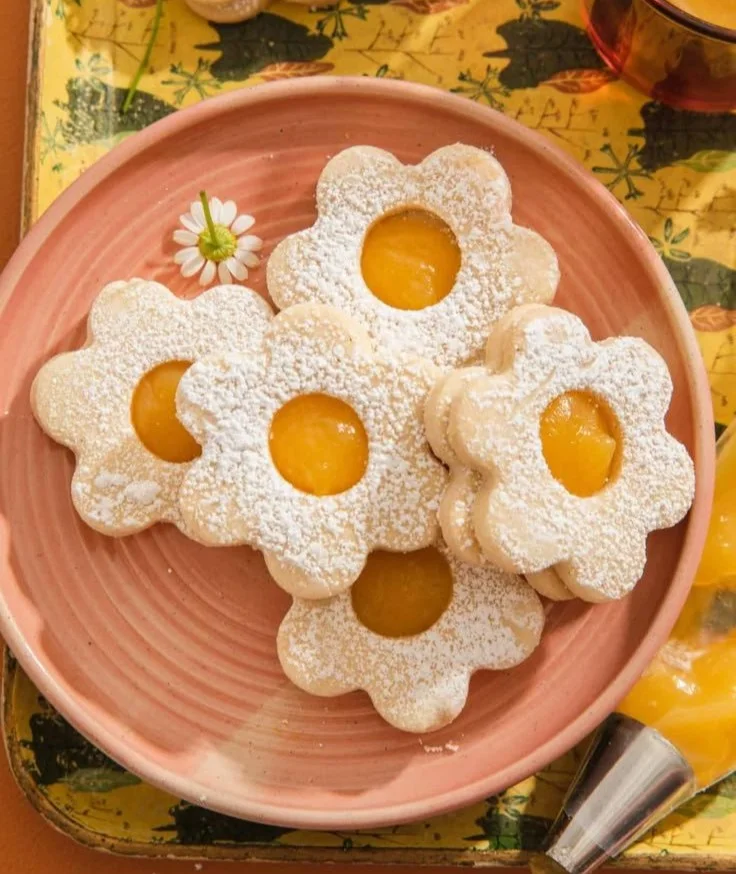
I roll mine about 1/4 inch thick and use a round cutter. Place the shapes on a baking sheet lined with parchment and bake in a preheated oven at 325 degrees Fahrenheit for 12 to 15 minutes, until the edges are a very pale golden color. The sound they make as they cool is one of my favorite things: the gentle settling and the slightly audible crisp as they firm. While the cookies are still warm, you can press a small indentation in the center of each with the back of a measuring spoon to make a little well for the curd, or leave them flat and sandwich two together with a spoonful of curd between them. Once cooled, dust with a little extra powdered sugar.
Tip: Don’t overbake. Shortbread should be light-colored with a faint golden edge. They will firm up as they cool, so pull them just before you think they are done.
A Few Things I’ve Learned (variations, serving, and storage)
I love this recipe because it feels fancy but is shockingly forgiving. One of my favorite variations is to fold in a teaspoon of poppy seeds to the shortbread for a lemon-poppy version, or switch the lemon curd to lime for a sharper kick. You can also swap the gluten free flour for regular all purpose if you are not avoiding gluten. If you want a richer sandwich cookie, add a drop of almond extract to the filling or dot a ring of curd and top with a thin smear of raspberry jam.
Serve these with simple black tea or a cold glass of vegan milk; they are perfect for an afternoon when you need a little lift. If you are bringing them to a party, make the curd a day ahead—store it in an airtight jar in the fridge and spoon it into the cookies just before serving. For leftovers, keep extra curd refrigerated where it will last about one week; the baked cookies themselves stay best in an airtight container at room temperature for up to four days, or freeze assembled sandwiches in a single layer for up to one month.
Tip: If you plan to make them for a crowd, bake the shortbread ahead and assemble on the day. It saves time and the cookies stay crisp.
When Things Don’t Go As Planned (and how to fix it)
I once under-whisked my curd and it set with tiny lumps. I saved it by reheating gently and straining through a sieve, which smooths things out. If your shortbread spreads too much in the oven, your butter was probably too soft or the oven was too hot; next time chill the dough longer and check your oven temperature with a thermometer. And if your curd is too tart, a tablespoon more cane sugar will mellow it out without making it cloying.
If you are curious about similar eggless shortbread techniques, I adapted a few tricks from an old recipe for eggless butterfly shortbread cookies that helped me perfect the crumb.
A little ritual I do: while the curd cools, I clean up the counter, make a cup of tea, and poke the dough back into the fridge for five extra minutes. It’s silly, but that pause has saved more than one recipe.
Conclusion
If you want a reference that inspired some of my measurements and presentation, I often look back at a lovely rendition of these cookies from another home baker, which gave me ideas for the filling and shapes; you can read that post at Vegan Lemon Curd Shortbread Cookies – Peanut Butter + Chocolate.
Vegan Lemon Curd Shortbread Cookies
Ingredients
Method
- In a small saucepan, whisk together the coconut milk and cane sugar until mostly dissolved.
- Add the lemon juice and lemon zest.
- In a small bowl, mix cornstarch with a tablespoon or two of cold water to create a smooth slurry, then whisk into the lemon mixture.
- Heat gently over medium-low heat, stirring constantly until the mixture thickens and becomes glossy, about 6 to 8 minutes.
- Stir in vegan butter and a pinch of turmeric if desired, remove from heat, and let cool completely.
- Cream together the softened vegan butter and powdered sugar until light and fluffy.
- Mix in vanilla extract.
- Gently fold in the gluten-free flour and salt until just combined.
- Chill the dough for at least 30 minutes, then roll to 1/4 inch thickness and cut into shapes.
- Place on a baking sheet lined with parchment and bake at 325°F for 12 to 15 minutes until edges are pale golden.
- While warm, create an indentation for the curd, and cool completely before dusting with powdered sugar.