Vegan Mediterranean Roasted Vegetables Bowl for Comfort and Flavor
I never set out to make a picture-perfect bowl; I was chasing comfort on a chilly evening and ended up roasting a panful of everything delicious I had on hand. The first bite — warm, slightly smoky potatoes with a bright dollop of tangy plant-based yogurt — felt like a little, leafy hug. For a…
I never set out to make a picture-perfect bowl; I was chasing comfort on a chilly evening and ended up roasting a panful of everything delicious I had on hand. The first bite — warm, slightly smoky potatoes with a bright dollop of tangy plant-based yogurt — felt like a little, leafy hug. For a different kind of bowl-project I’ve done before, I referenced techniques I liked from my burger bowl guide to balance textures and assembly. my burger bowl guide
What I used (short and pragmatic)
- About 4 cups of diced Yukon Gold potatoes — I sometimes swap in sweet potatoes if I want a sweeter, softer bite.
- One can of chickpeas, rinsed and dried thoroughly; the drier they are, the crisper they’ll roast.
- One large red bell pepper and a medium red onion, cut into chunky pieces; zucchini or eggplant work well if you want a more classic Mediterranean vibe.
- Olive oil (I stick to 3 tablespoons), and a spice mix: smoked paprika, cumin, coriander, garlic powder, oregano, plus red pepper flakes to taste.
- For the creamy layer: roughly 1 cup of plant-based yogurt, or you can make a tahini-lemon dressing instead (I sometimes add 2 tablespoons tahini to the yogurt).
- Fresh brightness from about 2 tablespoons of lemon juice and a couple of tablespoons of chopped fresh herbs — I used dill and parsley, though basil or mint can turn this in a different direction.
How I roasted things (not a rigid step list)
I heat the oven until it’s properly hot — think 425°F (220°C) — because I want color, not slow baking. The potatoes go into a bowl with most of the oil and half the spice mix; toss until every piece is slick. The chickpeas get their own little toss, a touch of oil and spices, and I space them out on the pan so they can crisp rather than steam. The bell pepper and onion are happier with a lighter hand on the oil so they caramelize instead of blackening quickly.
I use two pans when I’m feeling particular: one for the potatoes, another for chickpeas and the peppers and onion. It sounds fussier, but separating starchy items from legumes keeps textures distinct — the potatoes become tender with edges that brown, and the chickpeas get that nutty crunch. After about 20–30 minutes, I check often: the potatoes are done when a fork slides in and their skins are browned; the chickpeas should be golden and a bit crackly.
Building the bowl
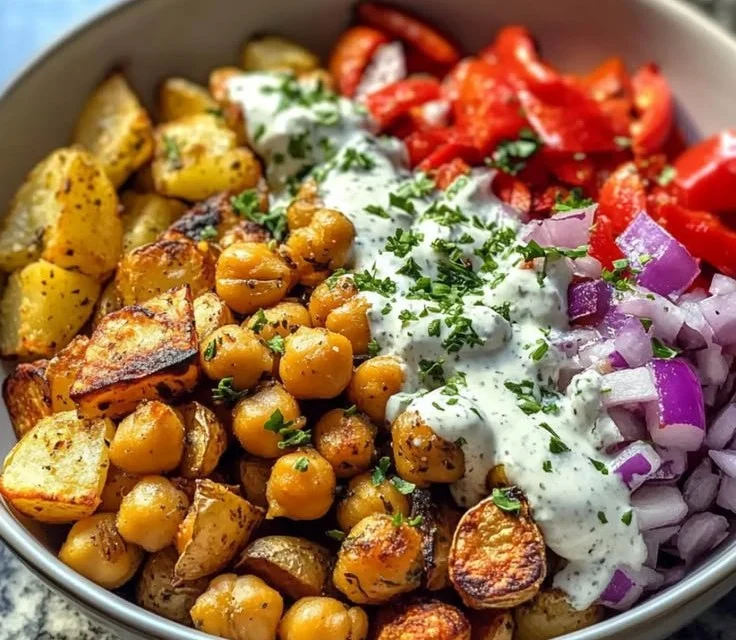
I like to lay down a smear of the yogurt-tahini sauce first (1 cup yogurt mixed with 2 tablespoons tahini, 2 tablespoons lemon juice, and a pinch of salt; thin with water if it feels too thick). Then the potatoes, a scattering of peppers and onions, and a generous handful of chickpeas for crunch. Finish with more chopped herbs and an optional dusting of smoked paprika or red pepper flakes for heat.
A short note on seasonings and timing
Adjust the smoked paprika, cumin, coriander, garlic powder, and oregano to your taste. I usually split the spices — half goes on the veggies before roasting, and I save the other half to sprinkle after roasting for freshness. If I’m short on time, I’ll roast everything together for convenience, but I accept softer chickpeas in that trade-off.
A practical variation I adore
If I want richer mouthfeel, I skip the yogurt and whisk tahini with lemon juice and a little warm water until glossy; it clings to the potatoes beautifully. For a day when I want comfort with a hands-off approach, I borrow ideas from slow-cooker recipes I admire to prep components ahead; that technique has saved me on busy nights. I learned a lot from that hands-off mindset
Serving, storing, and small tricks
Serve warm, though leftovers are excellent cold the next day. Store components separately if you can — yogurt/tahini sauce in its own container, roasted veg and chickpeas in another — so the chickpeas keep their crunch. Reheat the potatoes briefly in a hot skillet to revive edges without turning them gluey. If you want to make this gluten-free, vegan, or meal-prep friendly, no extra steps are necessary; it’s naturally flexible.
A couple of quick tips I came to rely on
- Dry chickpeas well on a clean towel before oiling; that little extra patience makes a huge difference in texture.
- Use fresh lemon juice. It brightens the entire bowl in a way bottled lemon never quite manages.
- If you add sweet potatoes, reduce the roasting time slightly or cut them a bit smaller so they don’t become too soft.
Conclusion
If you want a Mediterranean-inspired roasted vegetable bowl that balances warmth, crunch, and tang, this approach is forgiving and adaptable; for a pasta-focused twist that I sometimes riff on when I have extra veggies, I find inspiration in recipes like Mediterranean Roasted Veggie Pasta Salad – Lexi’s Clean Kitchen. One limitation I discovered while making this: if I don’t separate the chickpeas from the potatoes on the pan, the chickpeas rarely reach the same level of crispness.
Mediterranean Roasted Vegetable Bowl
Ingredients
Method
- Preheat the oven to 425°F (220°C).
- In a bowl, toss the diced Yukon Gold potatoes with most of the olive oil and half of the spice mix until evenly coated.
- In a separate bowl, toss the chickpeas with a little olive oil and remaining spices, and spread them out on a roasting pan.
- Toss the bell pepper and onion with a drizzle of olive oil and place them on a separate pan.
- Roast the potatoes and chickpeas for 20-30 minutes, checking frequently until the potatoes are tender and browned, and the chickpeas are golden and crunchy.
- In a bowl, smear the yogurt-tahini mixture on the bottom, then layer in the roasted potatoes, followed by the peppers, onions, and chickpeas.
- Finish with more chopped herbs and a sprinkle of smoked paprika or red pepper flakes.