Vegetarian Ricotta & Eggplant Casserole
How I Found This Dish There are recipes that come into your life quietly, and this Vegetarian Ricotta & Eggplant Casserole is one of those. I first made it on a rainy Sunday when I was avoiding the grocery store and rummaging through what I had on hand: a couple of eggplants, some ricotta, and…
How I Found This Dish
There are recipes that come into your life quietly, and this Vegetarian Ricotta & Eggplant Casserole is one of those. I first made it on a rainy Sunday when I was avoiding the grocery store and rummaging through what I had on hand: a couple of eggplants, some ricotta, and a jar of marinara. It smelled like comfort before it even went into the oven. If you like casseroles and the kind of weeknight cooking that gets better the next day, you might enjoy it as much as I do. By the way, if you ever want more simple casserole inspiration, I sometimes pair this kind of dish with ideas from the same family, like a 5-ingredient chicken parmesan casserole I adapted once for company.
This casserole uses two medium eggplants, sliced, 2 cups ricotta cheese, 1 cup marinara sauce, 2 cups shredded mozzarella cheese, 1/2 cup grated Parmesan cheese, 1 teaspoon dried oregano, 1 teaspoon garlic powder, salt and pepper to taste, and fresh basil for garnish. The list looks modest, but the textures and flavors sing together — the soft, almost silky eggplant, creamy dollops of ricotta, and browned, stringy mozzarella on top.
The Secret Behind Perfect Vegetarian Ricotta & Eggplant Casserole
If I had to name a secret, it is this: patience with the eggplant. Before you do anything else, preheat your oven to 375°F (190°C). Then you want to salt the eggplant slices and let them sit for about 30 minutes to draw out moisture. That step is small but transformative. After they rest, rinse and pat them dry so they will saute nicely instead of turning spongy under the sauce.
Once they are dry, heat a skillet and lightly sauté the eggplant slices until they are soft. There is a satisfying sound as the slices sizzle and change color, and the kitchen begins to smell faintly sweet, like roasted summer vegetables. The sautéing takes the edge off the eggplant’s bitterness and gives the layers a little structure so your casserole does not become a watery mess.
Building It, Step by Step
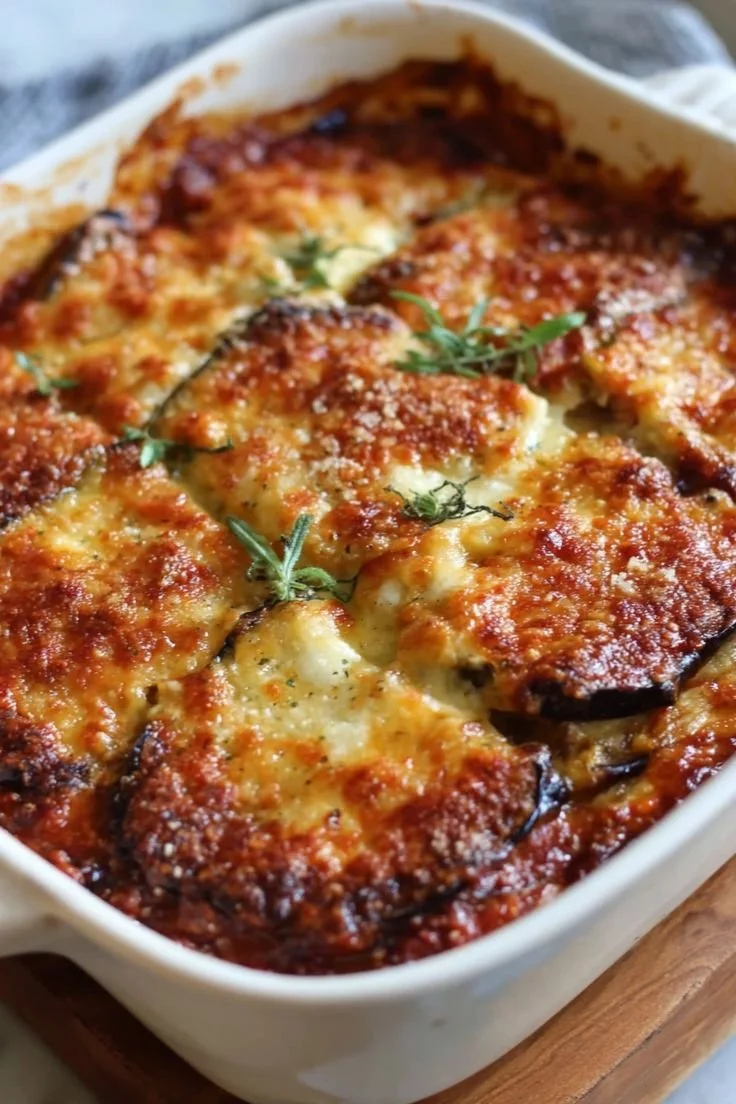
I almost never measure the rhythm of cooking by timers alone, but this assembly benefits from a steady order. In a baking dish, smear half of the marinara sauce across the bottom, followed by half of the eggplant, half of the ricotta, and half of the mozzarella. Repeat the layers once more, finishing with marinara sauce, remaining mozzarella, and Parmesan cheese on top. I like to sprinkle the top with 1 teaspoon dried oregano, 1 teaspoon garlic powder, and a little salt and pepper to taste. Cover the dish with foil and bake for 25 minutes. Then remove the foil and bake for an additional 15 minutes, or until the cheese is bubbly and golden. Let it cool slightly, garnish with fresh basil, and serve.
When I describe the method this way, people often ask how you know when it is done. The visual cues are clear: the cheese should be bubbly and have golden brown spots; the sauce should be gently simmering at the edges; and a knife inserted into the center should meet tender slices of eggplant without resistance. The internal temperature is not critical here, but the texture speaks for itself.
Little Tricks I Swear By
I have a few personal tips that always make this casserole better. First, don’t skip salting the eggplant. I know it feels like an extra step, but it keeps the layers from turning into a watery stew. Second, use whole-milk ricotta if you can. It gives a creamier mouthfeel and a richer finish. Third, when sautéing, use medium heat and be patient; you want the eggplant to soften and take on a little color without burning. Fourth, if the top starts to brown too quickly after you remove the foil, loosely tent it again with foil to avoid a charred finish while the center finishes heating.
Another small trick: when laying down the ricotta, spoon it in small dollops rather than spreading, so each bite has pockets of creamy cheese. It creates a pleasing contrast to the stringy mozzarella. I also sometimes mix a pinch of salt and pepper into the ricotta before layering to make those pockets sing.
Variations and What To Serve It With
I love this recipe because it is elastic; it adapts easily. If you want a greener casserole, stir a couple of handfuls of baby spinach into the ricotta before layering so it wilts under the cheese. For an earthier version, add sauteed mushrooms with the eggplant. If you crave spice, swirl in a spoon of harissa or add red pepper flakes to the marinara. One more option if you like a meaty texture is to include slices of roasted portobello; they play well with ricotta.
What to serve with it depends on the occasion. For a cozy weeknight, a simple green salad and crusty bread are enough. For something more celebratory, a lemony arugula salad and a glass of medium-bodied red wine complement the tomato and cheese notes beautifully. This is also one of those recipes that reheats well and pairs nicely with roasted vegetables or a grain salad.
I sometimes think about how different recipes echo each other, which is why I also return to quick ricotta ideas like the 5-ingredient ricotta and tomato sourdough toast when I need a fast ricotta fix.
Making It Ahead, Leftovers, and Comfort Memories
This casserole is a dream for making ahead. Assemble it up to the point of baking, cover tightly, and refrigerate for a day. When you are ready, take it from the fridge, let it sit at room temperature while the oven preheats to 375°F (190°C), then bake as instructed. If you have leftovers, store them in an airtight container in the refrigerator for up to three days. Reheat gently in a 350°F oven until warmed through so the cheese loosens back up and the eggplant regains softness. I also sometimes portion leftovers into single-serving containers and freeze them for up to a month; thaw overnight in the fridge before reheating. If you decide to freeze pre-baked slices, wrap tightly to avoid freezer burn.
A quick memory: the first time I made this, my partner came home while it was cooling, and we ate it straight from the dish with a fork, basil leaves stuck to our cheeks. It was one of those small, domestic moments that made the recipe feel like ours.
If you want more casserole ideas that are comforting and simple, I often look through recipes like the apple fritter breakfast casserole when I am planning a weekend brunch rotation. It is funny how different ingredients can yield the same warm, communal feeling.
Conclusion
If you want to compare notes or see a slightly different take, this version from Vegetarian Ricotta & Eggplant Casserole – Not Enough Cinnamon has lovely photos and another helpful perspective. There is also a classic riff over at Eggplant Ricotta Bake – Shutterbean that I sometimes consult for inspiration. Give the recipe a try on a quiet evening, and let the simple combination of eggplant, ricotta, and melted cheese become one of your weeknight comforts.
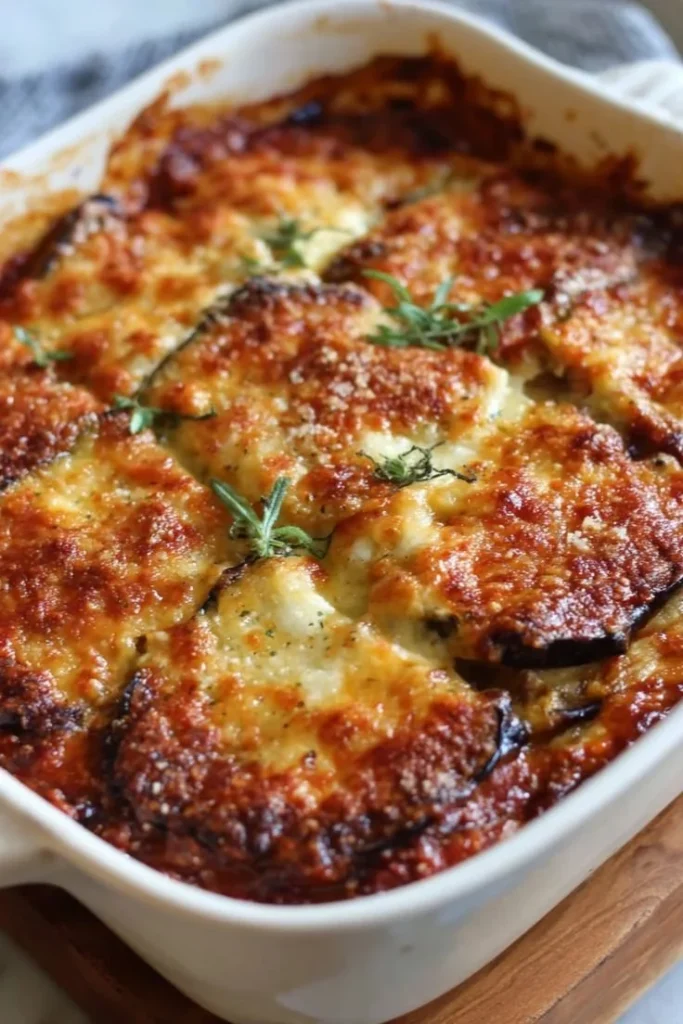
Vegetarian Ricotta & Eggplant Casserole
Ingredients
Method
- Preheat your oven to 375°F (190°C).
- Slice the eggplants and salt them. Let sit for about 30 minutes to draw out moisture, then rinse and pat dry.
- Heat a skillet and sauté the eggplant slices until they soften.
- In a baking dish, smear half of the marinara sauce on the bottom.
- Layer half of the eggplant, half of the ricotta, and half of the mozzarella.
- Repeat the layers, finishing with marinara sauce, remaining mozzarella, and Parmesan cheese.
- Sprinkle the top with oregano, garlic powder, salt, and pepper.
- Cover with foil and bake for 25 minutes, then remove the foil and bake for an additional 15 minutes.
- Let it cool slightly, garnish with fresh basil, and serve.