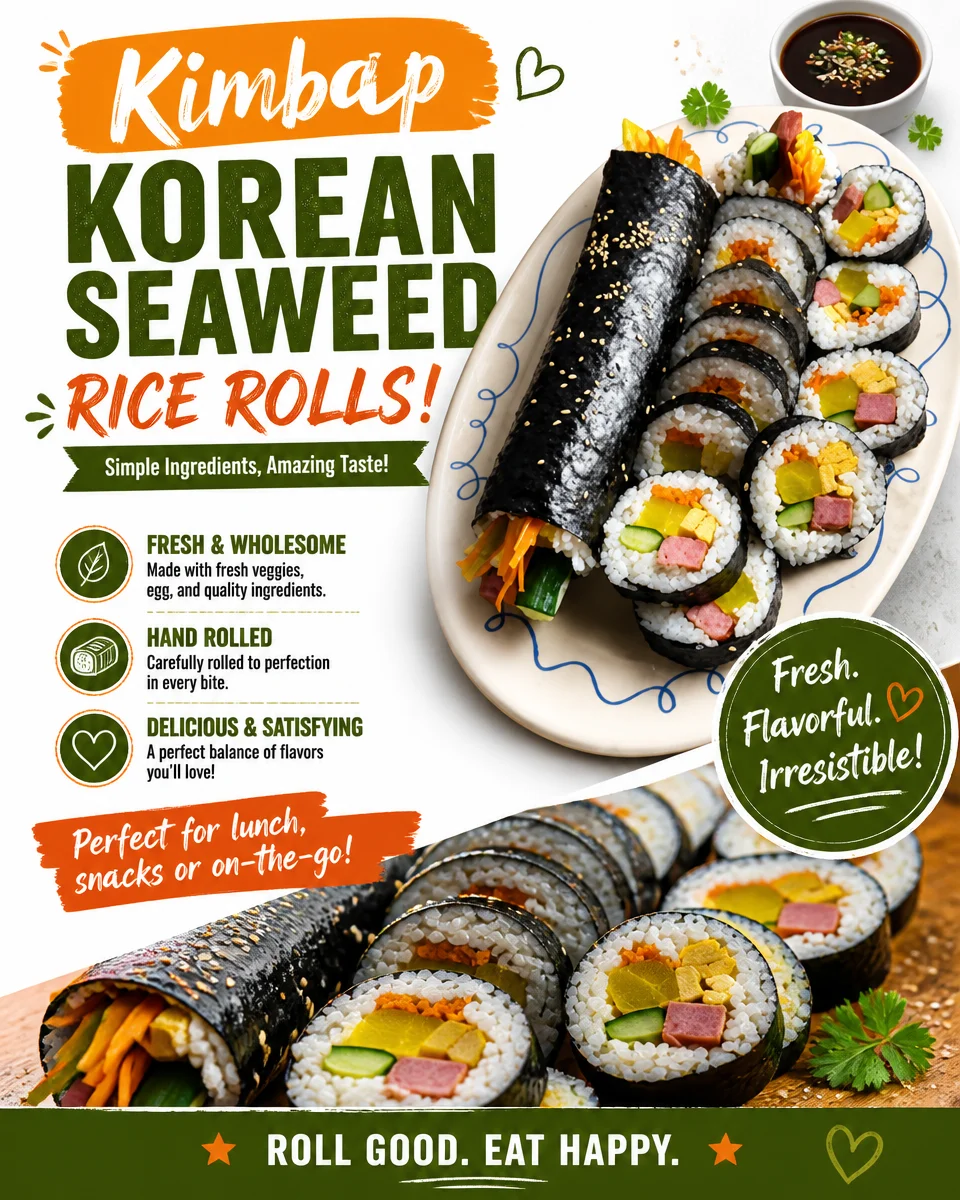
Kimbap (Korean Seaweed Rice Rolls)
The Joy of Making Kimbap (Korean Seaweed Rice Rolls) There’s something about preparing kimbap that feels like crafting a tasty little gift. Picture yourself standing in your kitchen, the sunlight streaming in, and you’re about to create these vibrant, flavorful seaweed rice rolls. Kimbap is not just a meal; it’s an experience—one that reminds me…
The Joy of Making Kimbap (Korean Seaweed Rice Rolls)
There’s something about preparing kimbap that feels like crafting a tasty little gift. Picture yourself standing in your kitchen, the sunlight streaming in, and you’re about to create these vibrant, flavorful seaweed rice rolls. Kimbap is not just a meal; it’s an experience—one that reminds me of picnics in the park and sharing meals with friends. Its colorful ingredients all wrapped up in tender short-grain rice and savory seaweed create a perfect balance of textures.
When I first stumbled upon this dish, it was during a Korean cooking class a few years ago. The instructor shared her family’s recipe with such enthusiasm that I couldn’t resist diving into the preparation. Now, I want to share that joy with you, along with my insights and tips learned through trial and error.
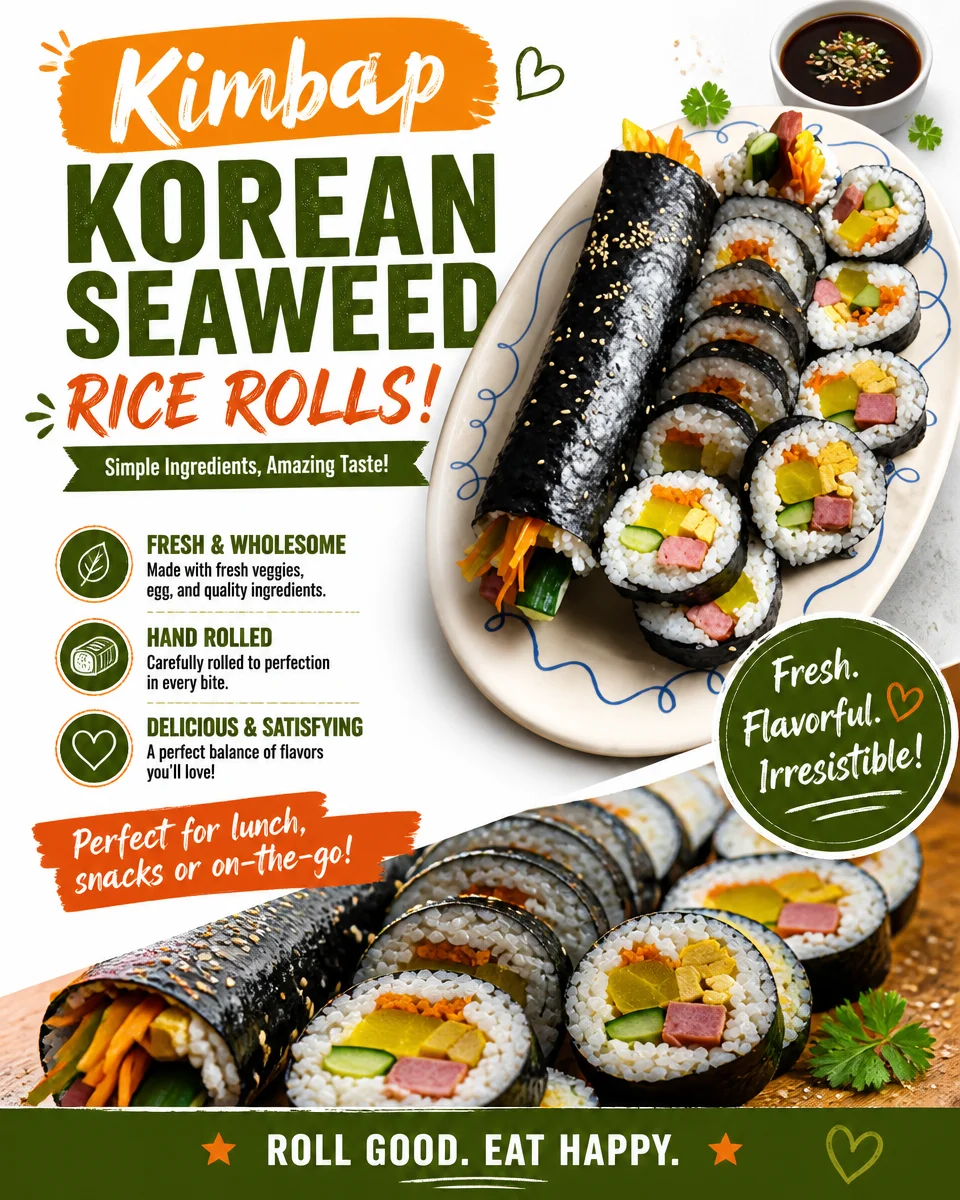
The Ingredients That Make It Special
To get started on this delightful dish, gather your ingredients. You’ll need about three eggs, one crisp cucumber, three bright orange carrots, a pickled yellow radish (known as danmuji), and a can of Spam—because let’s be honest, it’s a classic in kimbap. Get yourself two cups of short-grain white rice, cooked and slightly cooled, plus four sheets of seaweed, also called gim or nori. If you’re feeling adventurous, consider adding a drizzle of sesame oil and a sprinkle of sesame seeds for extra flavor.
Crafting Each Layer with Love
The magic happens in the preparation. Begin by beating your eggs in a bowl, then pour them into a lightly greased pan. I like to cook them until they’re just set, and then slice them into thin strips. The golden-yellow egg strips look so lovely amidst the other colors!
Next up, the vegetables. Cut the cucumber and carrots into thin strips, and if you want to avoid bitterness, feel free to scoop out the cucumber seeds. Then, toss your carrot strips with about a tablespoon of salt and let them sit for about 15 minutes. This might seem simple, but trust me—the salt draws out excess moisture and brings out the flavor. Rinse and squeeze them out before sautéing for around four minutes to soften them nicely.
Once the carrots are off the heat, it’s time to turn your attention to the Spam. Slice it into strips and toss them into the same pan, perhaps adding a splash of vegetable oil. Cook until they’re golden brown on both sides—not just for the sake of flavor, but that crispy texture adds another delightful layer to each bite.

The Art of Rolling
Now comes the fun part: rolling everything together! Lay a sheet of seaweed on your bamboo mat, making sure it’s shiny side down. Wet your fingers—it helps keep the rice from sticking—and spread a thin layer of rice over the seaweed, leaving about an inch at the top. Arrange your golden egg strips, vibrant carrot and cucumber, plus the crispy Spam and bright yellow radish in a neat line across the center.
With gentle yet firm movements, lift the bamboo mat and fold it over the filling, pressing down as you go to ensure a snug roll. Continue rolling until the entire kimbap is sealed. Sometimes, I like to dab a bit of extra rice on the edge to help it stick better. The anticipation builds as you reveal your vibrant creation—what a joy!
Getting the Texture Just Right
A common question I get is how to know if the kimbap is done right. The key is in the roll’s firmness and the distribution of ingredients. When you slice into it, you want to see all those beautiful colors come together without spilling out. If it does come apart, no worries! Just embrace it as a deliciously imperfect piece of art—sometimes those are the most memorable!
I’ve learned that serving kimbap is as important as making it. Usually, I accompany mine with a side of kimchi or pickled vegetables for that crunchy, tangy contrast. And if I make too much (which is often the case because I can’t resist rolling a few extra), storing leftovers is a breeze. Just wrap them tightly in plastic wrap and refrigerate. They typically keep well for a day or two, though I recommend consuming them fresh.
Spice It Up a Bit
Kimbap is wonderfully versatile, and there are so many variations worth trying. For instance, if you’re looking for a vegetarian option, feel free to swap out the Spam for sweet potatoes or tofu! You could also experiment with adding cooked beef, fresh sprouts, or even a splash of sriracha for those who enjoy a bit of heat. Whatever you decide to fill them with, the experience of rolling and sharing remains the same.
My Special Touch
If I were to share a personal tip, it would be the addition of a tiny sprinkle of sesame seeds right before slicing. It not only looks stunning but adds a nutty crunch that perfectly complements the soft rice and veggies. Also, brushing the finished rolls lightly with sesame oil brings everything together with a rich, fragrant finish.
Remembering the Moments
Every time I make kimbap, I think back to that sunny day in class, the laughter and the shared enthusiasm of everyone trying their hand at rolling. It’s a dish that transcends simple meal preparation; it’s about stories, connections, and shared experiences. Each bite brings back memories of picnics or family gatherings, and more than just satisfying my appetite, it warms my heart.
Conclusion
Kimbap is, without a doubt, a dish worth mastering. With its colorful layers and satisfying bite, it can turn any meal into an occasion. If you’re interested in diving deeper into this wonderful recipe, check out this detailed Kimbap Recipe – Korean Bapsang for more variations and tips. Happy rolling!
Kimbap
Ingredients
Method
- Beat the eggs in a bowl, then pour them into a lightly greased pan and cook until set. Slice into thin strips.
- Cut the cucumber and carrots into thin strips. Optionally, scoop out the cucumber seeds.
- Toss the carrot strips with salt and let sit for 15 minutes, then rinse, squeeze out moisture, and sauté for about 4 minutes.
- Slice Spam into strips and sauté in the same pan with a splash of vegetable oil until golden brown.
- Lay a sheet of seaweed on a bamboo mat, shiny side down. Wet your fingers and spread a thin layer of rice over the seaweed, leaving about an inch at the top.
- Arrange the egg strips, carrot, cucumber, Spam, and yellow radish in a line across the center.
- Lift the bamboo mat and fold it over the filling, pressing down to ensure a snug roll. Dab a bit of extra rice on the edge to help it stick.
- Slice the kimbap into bite-sized pieces and serve with kimchi or pickled vegetables.
- Wrap any leftovers tightly in plastic wrap and refrigerate. Best consumed fresh.