Lemon Lavender Cake
How I Found This Cake The first time I tasted a lemon lavender cake I was convinced someone had bottled a spring morning. The scent of lemon zest mixed with a soft floral whisper of lavender, the crumb somehow both tender and springy — it felt like a secret worth stealing. If you want to…
How I Found This Cake
The first time I tasted a lemon lavender cake I was convinced someone had bottled a spring morning. The scent of lemon zest mixed with a soft floral whisper of lavender, the crumb somehow both tender and springy — it felt like a secret worth stealing. If you want to see another take on the classic, I once bookmarked a similar lemon lavender cake that nudged me to experiment with creamier frostings and a brighter glaze. Over the years this recipe has become the one I bring to picnics and the cake I make when I want to impress without panicking.
Gathering What You Need
Before you start, make sure you have the full cast: 2 ½ cups all-purpose flour, 2 teaspoons baking powder, ½ teaspoon baking soda, ½ teaspoon salt, ½ cup unsalted butter (softened), 1 ½ cups granulated sugar, 3 large eggs, 1 tablespoon finely grated lemon zest (from about 2 lemons), ¼ cup fresh lemon juice, 1 cup whole milk, 2 tablespoons dried lavender buds (culinary grade), 1 teaspoon vanilla extract. For the bright finish you’ll also want ingredients for a glaze — 1 ½ cups powdered sugar, 2 tablespoons fresh lemon juice, 1 tablespoon lemon zest, 1 tablespoon dried lavender buds (culinary grade) — and for a more indulgent buttercream there’s ½ cup unsalted butter (softened), 4 cups powdered sugar, 2 tablespoons heavy cream, 2 tablespoons fresh lemon juice, 1 tablespoon lemon zest, 1 tablespoon dried lavender buds (culinary grade), Pinch of salt. It sounds like a lot when you say it out loud, but most of these things are pantry basics, and the lavender is what turns it into something special.
The Secret Behind Perfect Lemon Lavender Cake
I always start the same way: Preheat your oven to 350°F (175°C). Grease and flour two 9-inch round cake pans or line them with parchment paper. That little bit of ritual calms me. Next, the step that really builds the flavor: Infuse the Lavender. In a small saucepan, heat the milk over low heat. Add the dried lavender buds and steep for about 5 minutes. Remove from heat, let cool, and strain out the lavender buds. This gives you a gently perfumed milk that reads as floral but never soapy if you don’t overdo the lavender.
While the milk is steeping, Mix Dry Ingredients: In a medium bowl, whisk together the flour, baking powder, baking soda, and salt. Set aside. Then in a larger bowl I Cream Butter and Sugar: In a large bowl, beat the softened butter and granulated sugar together with an electric mixer on medium speed until light and fluffy (about 3–4 minutes). The texture should go from lumpy to pale and cloud-like; that air is what helps the cake rise and keeps it tender. Add the eggs one at a time, mixing well after each addition. Then mix in the lemon zest, lemon juice, and vanilla extract. I always zest directly over the bowl so none of that bright citrus oil escapes.
Combine Wet and Dry Ingredients by Gradually adding the dry ingredients to the butter mixture, alternating with the lavender-infused milk, starting and ending with the dry ingredients. Mix until just combined. Overmixing is the enemy here; stop when the batter looks homogenous and a touch glossy. Divide the batter evenly between the prepared cake pans and Bake: Bake for 25–30 minutes, or until a toothpick inserted into the center comes out clean. You’ll know it’s done when the top is set, edges pull back slightly from the pan, and a light spring returns when you press it. Cool: Allow the cakes to cool in the pans for 10 minutes, then turn them out onto a wire rack to cool completely.
A Few Tricks for Texture and Flavor
One of my favorite tiny cheats is steeping the lavender in warm milk rather than tossing the buds straight into the batter. It makes the floral note smoother and less likely to jump to a medicinal edge. If you want to experiment with portion size, I took what I learned here and adapted it into smaller treats — these mini lemon cakes came out just as bright and were perfect for a tea party. Another variation I tried used a slightly different glaze technique found in this recipe for mini lemon cakes with lavender glaze which helped me refine how much zest to fold into the icing.
Three quick tips I always tell friends: don’t skimp on the lemon zest, because the oils are where the real aroma lives; steep the lavender gently and strain well so the texture stays silky; and always start and end with the dry ingredients when you’re alternating with a liquid — that keeps the batter from getting gluey. If you ever worry about overbaking, set a timer for 20 minutes and check every 3 minutes after that.
The Finishing Touches
For the Lemon Lavender Glaze: combine 1 ½ cups powdered sugar with 2 tablespoons fresh lemon juice, 1 tablespoon lemon zest, and 1 tablespoon dried lavender buds (culinary grade). I usually warm the lemon juice a touch, steep a pinch of lavender in it for a minute, strain, then whisk it into the powdered sugar. It makes a thin, shiny glaze that soaks just a little into the top of each layer for instant flavor.
For the Lemon Buttercream Frosting: beat ½ cup unsalted butter (softened) until smooth, then gradually add 4 cups powdered sugar. Add 2 tablespoons heavy cream, 2 tablespoons fresh lemon juice, 1 tablespoon lemon zest, 1 tablespoon dried lavender buds (culinary grade), and a Pinch of salt. Beat until fluffy and spreadable. If it’s too stiff, add a splash more cream; if it’s too loose, a touch more powdered sugar. I sometimes toast the lavender briefly in a dry pan to deepen its note before folding it into the buttercream, but be gentle — burned lavender is bitter.
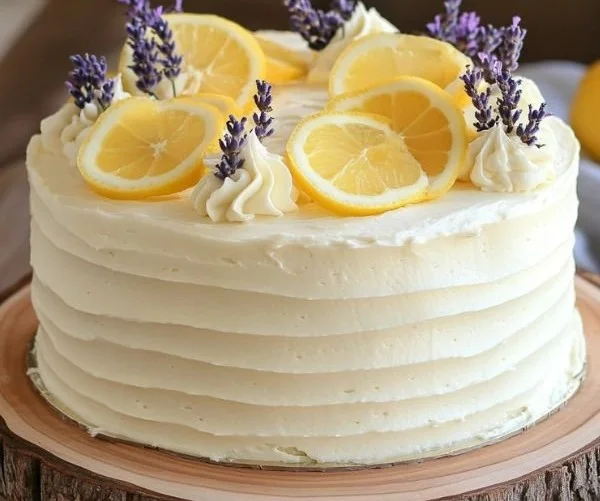
Assemble the Cake: place one layer on your cake plate, spread a thin layer of buttercream or a spoonful of jam if you like, then top with the second layer. I often pour the glaze over the top and let it drip down the sides for a rustic look, then add dollops of buttercream and a few extra lavender buds and zest as decoration. It always looks fancier than it is.
What to Serve and What to Do with Leftovers
This cake is a companion for afternoon tea, long brunches, and birthdays when people want something light rather than heavy. I often serve it with fresh berries and a pot of Earl Grey, though it is equally happy beside a strong coffee. If you’re pairing, something creamy like whipped mascarpone with a little honey bridges the flavors nicely. For a different pairing, try serving small slices alongside fruity mini desserts such as these blueberry lavender cheesecake minis for a themed spread.
Leftovers keep well. I typically store slices in an airtight container in the refrigerator for up to four days because of the buttercream. If you want to freeze a layer, wrap it tightly in plastic wrap and then foil; it will keep for a couple of months. Thaw slowly in the fridge and then bring to room temperature before serving so the texture loosens back up.
I love this recipe because it feels both comforting and a little adventurous. The lemon is joyful and immediate, while the lavender lingers like a sensible secret. One memory that always makes me smile is baking this for my grandmother’s birthday; she ate a sliver and said it reminded her of the old herb garden she tended as a child. That was all the approval I needed.
If you want to make it more your own, try two or three variations: swap half the lemon juice for orange for a sweeter citrus lift, fold in poppy seeds for a contrasting texture, or replace lavender with rosemary for a savory twist. Each change teaches you something new about how delicate floral and citrus flavors play together.
Conclusion
If you want another perspective or a beautifully photographed version to compare notes with, I often look at the Lemon Lavender Cake Recipe – Sugar & Sparrow for inspiration and plating ideas.
Lemon Lavender Cake
Ingredients
Method
- Preheat your oven to 350°F (175°C). Grease and flour two 9-inch round cake pans or line them with parchment paper.
- In a small saucepan, heat the milk over low heat. Add the dried lavender buds and steep for about 5 minutes. Remove from heat, let cool, and strain out the lavender buds.
- In a medium bowl, whisk together the flour, baking powder, baking soda, and salt. Set aside.
- In a large bowl, beat the softened butter and granulated sugar together with an electric mixer on medium speed until light and fluffy (about 3–4 minutes).
- Add the eggs one at a time, mixing well after each addition. Then mix in the lemon zest, lemon juice, and vanilla extract.
- Gradually add the dry ingredients to the butter mixture, alternating with the lavender-infused milk, starting and ending with the dry ingredients. Mix until just combined.
- Divide the batter evenly between the prepared cake pans and bake for 25–30 minutes, or until a toothpick inserted into the center comes out clean.
- Allow the cakes to cool in the pans for 10 minutes, then turn them out onto a wire rack to cool completely.
- For the lemon lavender glaze, combine powdered sugar with fresh lemon juice, lemon zest, and dried lavender buds. Whisk until smooth.
- For the buttercream frosting, beat softened butter until smooth, then gradually add powdered sugar. Add heavy cream, fresh lemon juice, lemon zest, dried lavender buds, and a pinch of salt.
- Place one layer on your cake plate, spread a thin layer of buttercream or a spoonful of jam if desired, then top with the second layer.
- Pour the glaze over the top and let it drip down the sides, then add dollops of buttercream and a few extra lavender buds and zest as decoration.