Overnight Pumpkin Breakfast Casserole
I remember the first time I set out to make a pumpkin-forward breakfast that didn’t feel like a single-serving soufflé or a spice cake masquerading as morning food. I wanted something forgiving: make-ahead, custardy, and able to sit warm and fragrant while I finished a pot of coffee. I tweaked a few proportions and kept…
I remember the first time I set out to make a pumpkin-forward breakfast that didn’t feel like a single-serving soufflé or a spice cake masquerading as morning food. I wanted something forgiving: make-ahead, custardy, and able to sit warm and fragrant while I finished a pot of coffee. I tweaked a few proportions and kept notes against an earlier version I consulted here, which helped shape what I ended up loving: an overnight pumpkin breakfast casserole inspiration.
A quick snapshot before we dig in: this is essentially cubed brioche soaked overnight in a spiced pumpkin custard and baked until puffy and set. I used enriched dairy to keep the texture silky (a mix of whole milk and a bit of evaporated milk), lots of pumpkin puree for depth, and a classic trio of cinnamon, ginger, and nutmeg. Granulated and brown sugars balance the earthiness, while a small pinch of kosher salt pulls the flavors together.
Ingredients I used (roughly):
- About a dozen brioche slices, torn or cubed.
- Eight large eggs to make a rich custard.
- A cup-plus of whole milk combined with a small can of evaporated milk for creaminess.
- One standard can of pumpkin puree (around 15 ounces).
- Vanilla extract to brighten (about a tablespoon).
- Warm spices: two teaspoons cinnamon, a teaspoon ground ginger, half a teaspoon nutmeg.
- Sugars: a little brown sugar and some granulated sugar mixed into the custard; extra granulated sugar plus a teaspoon of cinnamon for a crunchy topping.
- A teaspoon of kosher salt to amplify everything.
Assembly notes (this is where I stopped thinking like a recipe writer and started thinking like someone making breakfast while half-asleep): I cubed the brioche and spread it in a buttered baking dish, then whisked eggs with the milky components and pumpkin puree until smooth. I folded in the sugar, vanilla, salt, and spices, tasting a tiny bit of the custard (careful — raw eggs!) to make sure the sweetness and spice were balanced. Pour the custard over the bread, pressing gently so the cubes absorb the mixture; the goal is saturation rather than a soggy bath. If you like pockets of texture, stir lightly so some bread remains exposed. I covered the dish and chilled it overnight so every cube could take on custard.
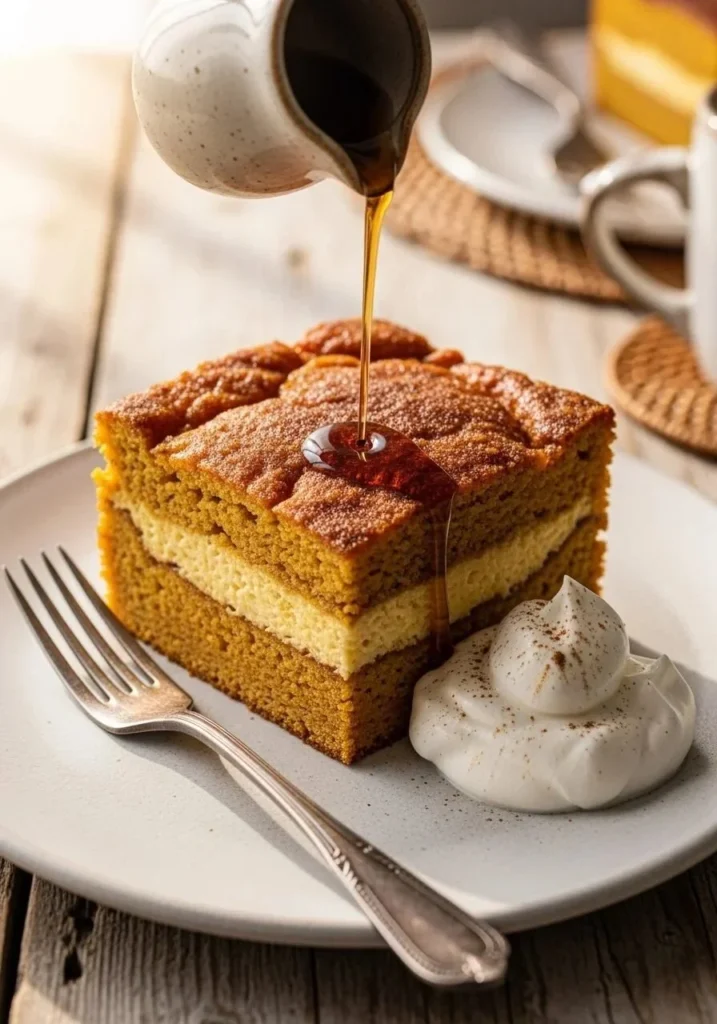
Topping and texture: right before baking, I sprinkle a mixture of granulated sugar and cinnamon on top — about two tablespoons sugar and a teaspoon of cinnamon for a medium-size dish — which gives the surface a slight crackle and caramelized note. The baking time depends on your oven and dish depth; I bake at a moderate temperature until the center is set but still slightly jiggly — it will finish as it rests. A toothpick or a gentle shake are my usual cues.
One paragraph, many tiny decisions: I experimented with swapping half the brioche for day-old croissants once, and that produced an almost melt-in-your-mouth crumb that leaned sweet and buttery; for that riff I followed an approach similar to another favorite riff I bookmarked, the apple-fritter breakfast casserole with croissants, which gave me permission to be bold with butter-rich breads. Another time I used a touch less brown sugar and more pumpkin, which brought the squash flavor forward without making it taste like dessert.
Practical tips I learned while testing:
- Use bread that’s a little stale; it soaks evenly without collapsing.
- Let the custard sit with the bread for several hours (overnight is ideal) so the interior sets more like a bread pudding than a dense cake.
- If your top browns too quickly, loosely tent with foil and keep baking until the center is done.
- For holiday serving, add toasted pecans or a drizzle of maple syrup at the table rather than before baking so the nuts stay crunchy and the syrup doesn’t make the casserole soggy.
A short how-to recap (because sometimes I like numbered steps and other times I don’t):
- Cube the bread and butter the dish.
- Whisk eggs, whole milk, evaporated milk, pumpkin, vanilla, sugars, salt, and spices.
- Combine, chill overnight, sprinkle topping, and bake until set.
If you want a slightly lighter custard, reduce the evaporated milk a bit and increase whole milk; if you prefer it richer, use a bit more egg or add a splash of heavy cream. I also found that letting the casserole rest 10–15 minutes after baking made cutting and serving cleaner slices.
Finally, a quick nod to another close variation I referenced while refining the spice balance — a different take on pumpkin french-toast style — that helped me decide on the cinnamon: another overnight pumpkin casserole exploration.
Conclusion
If you want a baseline reference for proportions and a slightly different spice profile, I often look to this well-tested guide from The Worktop for structure and timing: Worktop’s pumpkin breakfast casserole. For a comparative take that leans more French-toast than bread pudding, Little Spice Jar’s version helped me think about custard-to-bread ratio: Pumpkin French Toast Casserole recipe.
Personal note: I found that if I handled the brioche too much while cubing it, the texture compacted and the final casserole lost some of its airy pockets — next time I’ll tear rather than slice.
Pumpkin Breakfast Casserole
Ingredients
Method
- Cube the brioche bread and spread it in a buttered baking dish.
- Whisk together the eggs, whole milk, evaporated milk, pumpkin puree, vanilla extract, sugars, salt, and spices until smooth.
- Pour the custard over the bread cubes, pressing gently to ensure saturation.
- Cover the dish and chill it overnight.
- Before baking, sprinkle the topping of granulated sugar and cinnamon evenly over the surface.
- Bake at a moderate temperature until the center is set but slightly jiggly.
- If the top browns too quickly, tent with foil and continue baking until done.