Spinach & Feta Chicken Meatballs
How I Fell in Love with These Meatballs The first time I made Spinach & Feta Chicken Meatballs I was trying to use up a hodgepodge of ingredients after a busy week. I had one pound of ground chicken, a handful of fresh spinach, a small block of feta, and a craving for something bright…
How I Fell in Love with These Meatballs
The first time I made Spinach & Feta Chicken Meatballs I was trying to use up a hodgepodge of ingredients after a busy week. I had one pound of ground chicken, a handful of fresh spinach, a small block of feta, and a craving for something bright and simple. It turned into the kind of dinner that makes you pat yourself on the back while you’re washing dishes. If you’re the sort of person who likes a little variety in your weeknight repertoire, you might also enjoy the way these lean meatballs contrast with heartier variants like the baked buffalo chicken meatballs I sometimes rotate in when I need spice.
The Ingredient Lineup That Actually Matters
I’m not going to hand you a sterile list and walk away. What you need is right here in the story: 1 lb ground chicken is the backbone, and into it I fold about 1 cup fresh spinach that I finely chop so it disappears into the meat but still gives that little green speckle that makes every bite feel fresh. Half a cup of crumbled feta does the tangy, salty work — don’t skimp. A half cup of breadcrumbs and one large egg help everything stick together and stay tender, and for aroma and flavor I use 2 cloves garlic minced and a quarter cup onion finely diced. I drizzle in 1 tablespoon olive oil to keep things moist, and season with 1 teaspoon dried oregano, half a teaspoon salt, and half a teaspoon black pepper. That combination is simple but balanced: the spinach softens, the feta sharpens, and the chicken stays light.
Mix, Shape, and Let the Oven Do the Rest
Here is how I typically carry this from messy bowl to dinner plate. Preheat oven to 400°F (200°C) and line a baking sheet with parchment paper. I always do that first so I’m not scrambling later. Then I toss everything together. Combine all ingredients in a large bowl and mix gently until just combined. This is one of those moments where less is more; if you overwork the mixture the texture gets dense. I use my hands and fold until the ingredients look integrated, but you can stop when the breadcrumbs are hydrated and the feta is evenly distributed.
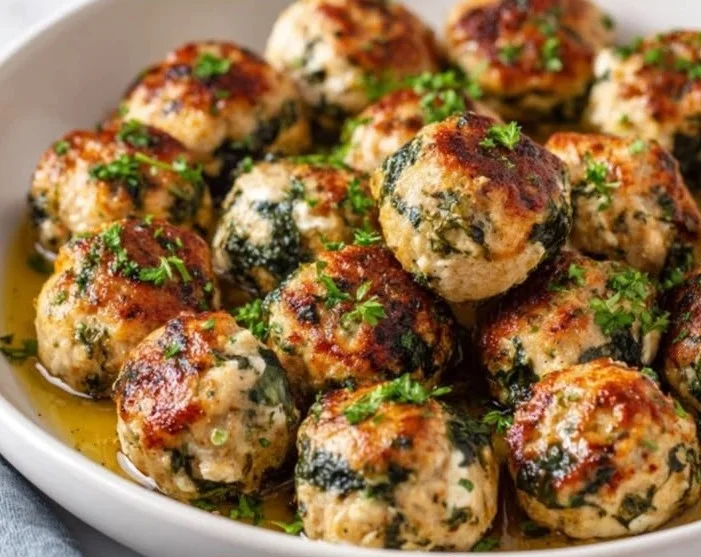
Form mixture into evenly sized meatballs and place on prepared baking sheet. I like to make them about the size of a golf ball; using a cookie scoop keeps them consistent so they cook evenly. Bake for 18–22 minutes until fully cooked and lightly golden. You will hear a soft sizzling from the oven and the tops will pick up a faint tan. Rest for 5 minutes before serving. That pause is important — the juices redistribute and the cheese settles so you don’t get a river of hot feta on your first bite.
Getting the Texture Just Right (and a Few Tricks I Use)
Knowing when these are done right is part sight, part internal temperature, and part feel. The outside should be lightly golden, not deeply browned, and the meatballs should be springy to the touch. If you like to be exact, an internal temperature of 165°F (74°C) is the safe target. A quick tip I use: spray or lightly oil the parchment paper so the bottoms don’t stick and you get clean browning. Another small trick is to refrigerate the formed meatballs for 10 to 15 minutes before baking if your kitchen is warm; it helps them hold their shape. I also find that wetting my hands with a touch of water or rubbing a little olive oil on them keeps the mixture from sticking to my palms. Finally, when folding in the feta, I try not to crush it completely; little pockets of cheese that melt slightly in the oven are my favorite.
A Few Ways to Make It Your Own
Once you have the basics down you can riff. For a brighter profile, add a teaspoon of lemon zest to the mixture before forming. If you like a creamier interior, swap half the breadcrumbs for panko for a lighter texture. For an herbier spin, toss in a tablespoon of chopped fresh dill or parsley. If you want to try a different cheese, goat cheese works well melted inside, or you can riff toward Italian flavors with a touch more oregano and some grated Parmesan. If you’re curious about other chicken-and-cheese combinations, there’s a lovely take on ricotta in baked chicken ricotta meatballs that inspired one of my first experiments with soft cheeses in meatballs.
What I Serve It With and How I Keep Leftovers Useful
I often serve these with a simple lemony yogurt sauce or tzatziki and a pile of roasted vegetables. A basic plate for me is the meatballs with a scoop of fluffy couscous, a wedge of lemon, and a crunchy salad. If I want to keep things light, I’ll use them over a bed of mixed greens or slide them into pita with tomatoes and cucumber. For mornings, they actually work surprisingly well chopped up in a warm bowl with egg and spinach; it’s a favorite that echoes a recipe I make sometimes, the breakfast bowl with egg, spinach, and feta that uses similar flavors.
Leftovers store beautifully. I put cooled meatballs in an airtight container and refrigerate for up to three days. For longer keeping, freeze them in a single layer on a tray, then transfer to a freezer bag for up to three months. Reheat gently in a 350°F oven until warmed through or pop them into a simmering sauce to defrost and finish — both ways keep them juicy. One personal tip is to freeze a double batch and pull some out on hectic nights; they thaw quickly in warm sauce and make dinner feel intentional even when it is not.
The Night I Tried to Make One Giant Meatball
I tried once to impress a crowd by rolling everything into one giant meatball. It looked epic on paper and then collapsed like a savory souffle in the oven, leaking feta everywhere. I laugh about it now because that failure taught me to respect uniformity — even sizing, the right oven temperature, and a brief rest make all the difference. After that I stuck to evenly sized balls, and they have never let me down. The smell of garlic and oregano while they bake, the soft sizzling as you pull them from the oven, and the little pops of salty feta are what make this recipe feel like home every time.
Conclusion
If you want to compare notes or try a meal-prep friendly version, this Spinach Feta Chicken Meatballs (Meal Prep) post has useful layout ideas for batching. For another voice on the classic spinach and feta pairing with chicken, this Chicken Meatballs with Spinach & Feta article offers a slightly different take that’s worth reading alongside this one.
Spinach & Feta Chicken Meatballs
Ingredients
Method
- Preheat oven to 400°F (200°C) and line a baking sheet with parchment paper.
- In a large bowl, combine all main ingredients gently until just combined, being careful not to overwork the mixture.
- Form the mixture into evenly sized meatballs about the size of a golf ball and place them on the prepared baking sheet.
- Bake the meatballs for 18-22 minutes until fully cooked and lightly golden.
- Allow the meatballs to rest for 5 minutes before serving.